wow2000.com


Business Continuity
Ensure Energy Continuity for Essential Business Loads
Energy continuity planning identifies which business loads must remain powered when the grid is unavailable, how long they must operate, and which sources can support them. For an office, cold room, or convenience store, the answer depends on the actual equipment, operating hours, and the maximum duration of an outage that the operation can tolerate.
This collection contains three planning guides. It does not specify a single universal power rating or backup duration. Its purpose is to organize the information needed before comparing solar power generation, battery storage, a generator, a backup inverter, or a coordinated combination of these sources.
Information to Gather Before an Assessment
- facility type, operating hours, and critical operating periods;
- priority loads and equipment that can be postponed;
- rated power, starting demand, and daily energy consumption;
- maximum tolerated interruption and required backup duration;
- outage pattern, grid quality, and any existing generator or UPS;
- temperature, insulation, and duty cycle constraints for refrigeration;
- available PV area, shading, ventilation, safety, and site access;
- responsible operator, maintenance, monitoring, and recovery procedures.
Choose the Right Guide
- Offices and Services: Classify IT, communications, lighting, and security loads.
- Cold rooms: Document the compressor, auxiliary loads, temperature, and operating cycles.
- Convenience stores: commercial refrigeration, checkout equipment, lighting, and hours of operation.
A useful preliminary assessment also specifies the city, site, installed equipment, and expected scope: supply only, protection, installation, commissioning, or follow-up. Use the three guides below to prepare this information before requesting a configuration. This ensures that the initial comparison is aligned with the facility’s actual operational priorities.
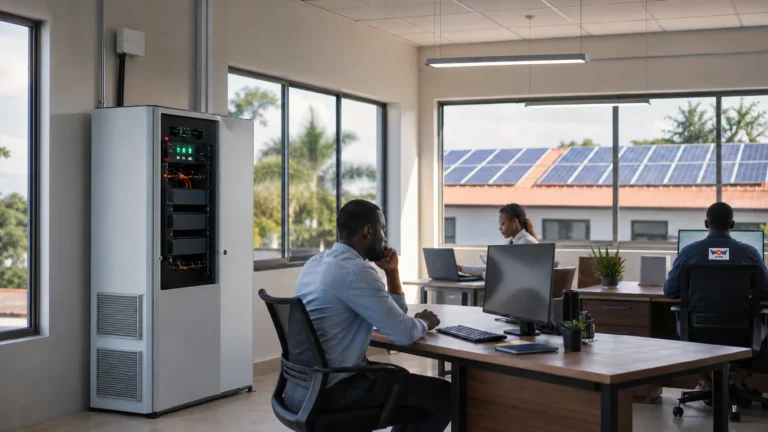
Solar Power for Offices: Identifying Priority Loads in the Event of a Power Outage
This guide helps offices distinguish between essential equipment and non-essential uses. It outlines the information that needs to be gathered for IT workstations, communications, lighting, security, and loads with high starting demand before any system estimate is prepared.
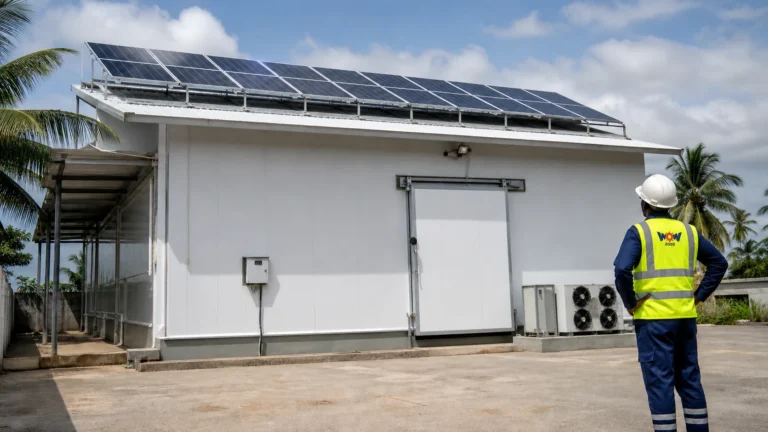
Solar-Powered Cold Room: Technical Data to Collect Before a Feasibility Study
This guide lists the information needed to evaluate a cold room: compressor nameplate, auxiliary loads, target temperature, operating cycles, volume, insulation, acceptable downtime, and the electrical power sources already available on site.
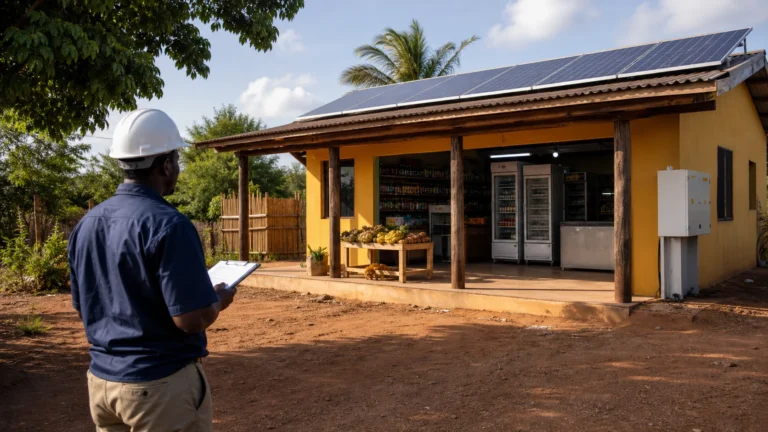
Solar Power for a Convenience Store: Determine Requirements Before Sizing the System
This guide organizes a convenience store's inventory around commercial refrigeration, lighting, point-of-sale equipment, communications, and operating hours. It explains why starting demand, daily energy consumption, and required backup duration must be determined before selecting a configuration.