wow2000.com


Residential Solar Backup Guides
Set Up a Residential Solar Backup System for Power Outages
A residential backup system does not prevent load shedding or a grid outage. It can support specific loads for a designated period when the power supply, usable energy, charging sources, system architecture, settings, and installation are compatible. This collection brings together three guides to help you make those decisions before comparing equipment.
1. Define the Critical Loads
List the appliances that must remain available, their rated power, operating hours, and which ones run at the same time. Separate essential loads from non-essential uses. Motors, pumps, refrigerators, and air conditioners may require starting power in excess of their steady-state operating demand, so that requirement must be recorded separately.
2. Set the Backup Duration
Record the frequency and duration of outages, the period to be covered, and the sources that may still be available: the grid, solar power, or a generator. Backup duration depends on the energy consumed by critical loads, available battery energy, conversion losses, power limits, state of charge, and operating conditions.
3. Keep the Quantities Separate
- kW or kVA: the inverter's continuous power output and its ability to handle starting loads;
- kWh: load energy and usable battery energy over the target period;
- kWp: nominal PV array capacity under reference conditions;
- backup duration: the result of a defined load scenario, not a promise made by a single component.
4. Choose the Architecture
Compare an off-grid system, a grid-connected hybrid system, a separate backup circuit, or a generator-assisted system. Check the backup output, transfer behavior, grid isolation and anti-islanding, charging priorities, covered loads, and restart behavior after a low-battery condition.
5. Check Compatibility, Protection, and Handover
The entire system must be inspected: PV voltage and current, battery and BMS, continuous and peak power, phases, DC/AC protection, grounding, installation environment, cables, settings, and tests. Handover documents should specify the scope, assumptions, limits, settings, and safe operating instructions.
Start with the household requirements guide, then compare system architectures, and finally use the inverter guide to verify that the component is compatible with the entire system. This process replaces vague language about “energy independence” with measurable metrics such as load, power, energy, and backup duration.
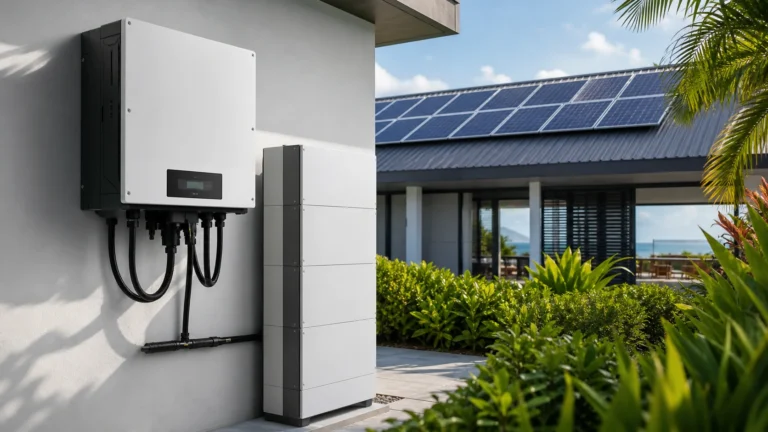
Hybrid Inverter: Questions to Ask Before Choosing Equipment
A hybrid inverter converts and controls selected energy flows, but it does not generate or store energy on its own. This guide helps readers check power, voltage, battery compatibility, PV input, backup output, operating modes, protection, and expansion options.
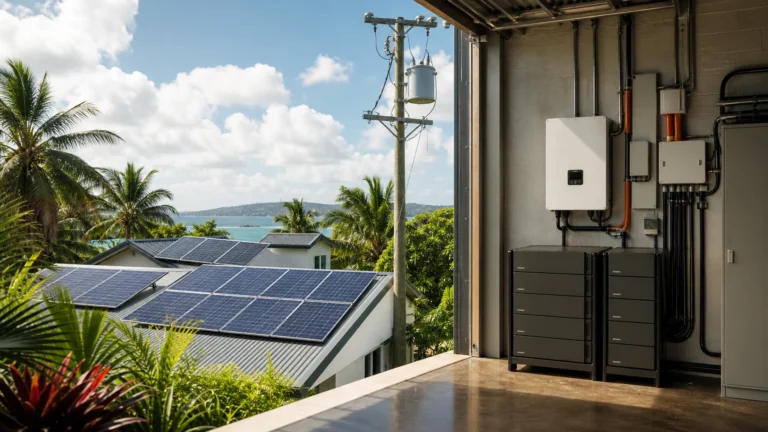
Off-Grid or Hybrid Solar System: How to Choose the Right One for Your Site
The choice depends on the load profile, grid or generator availability, outage frequency, required backup duration, charging options, and site constraints. This guide compares off-grid and hybrid architectures without prescribing a single universal configuration.
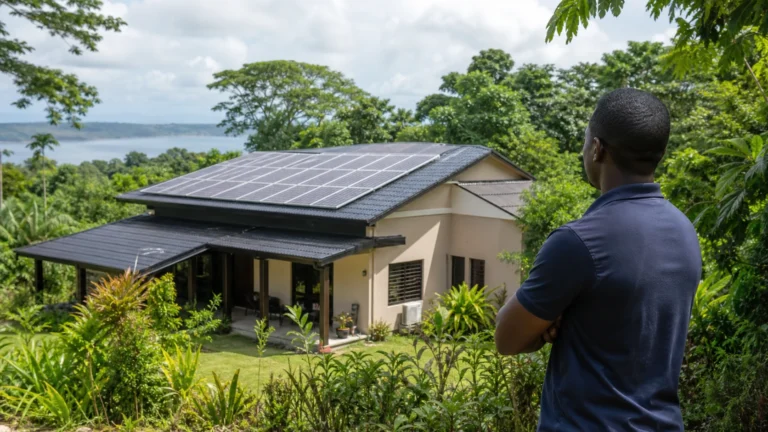
How Much Solar Capacity Should You Plan for a Home in Gabon?
This guide begins with appliances, operating hours, and the required backup duration. It distinguishes between continuous and starting power, daily energy consumption, PV capacity in kWp, inverter power in kW or kVA, and usable battery energy in kWh.