wow2000.com


How much solar power should you plan for a home in Gabon?
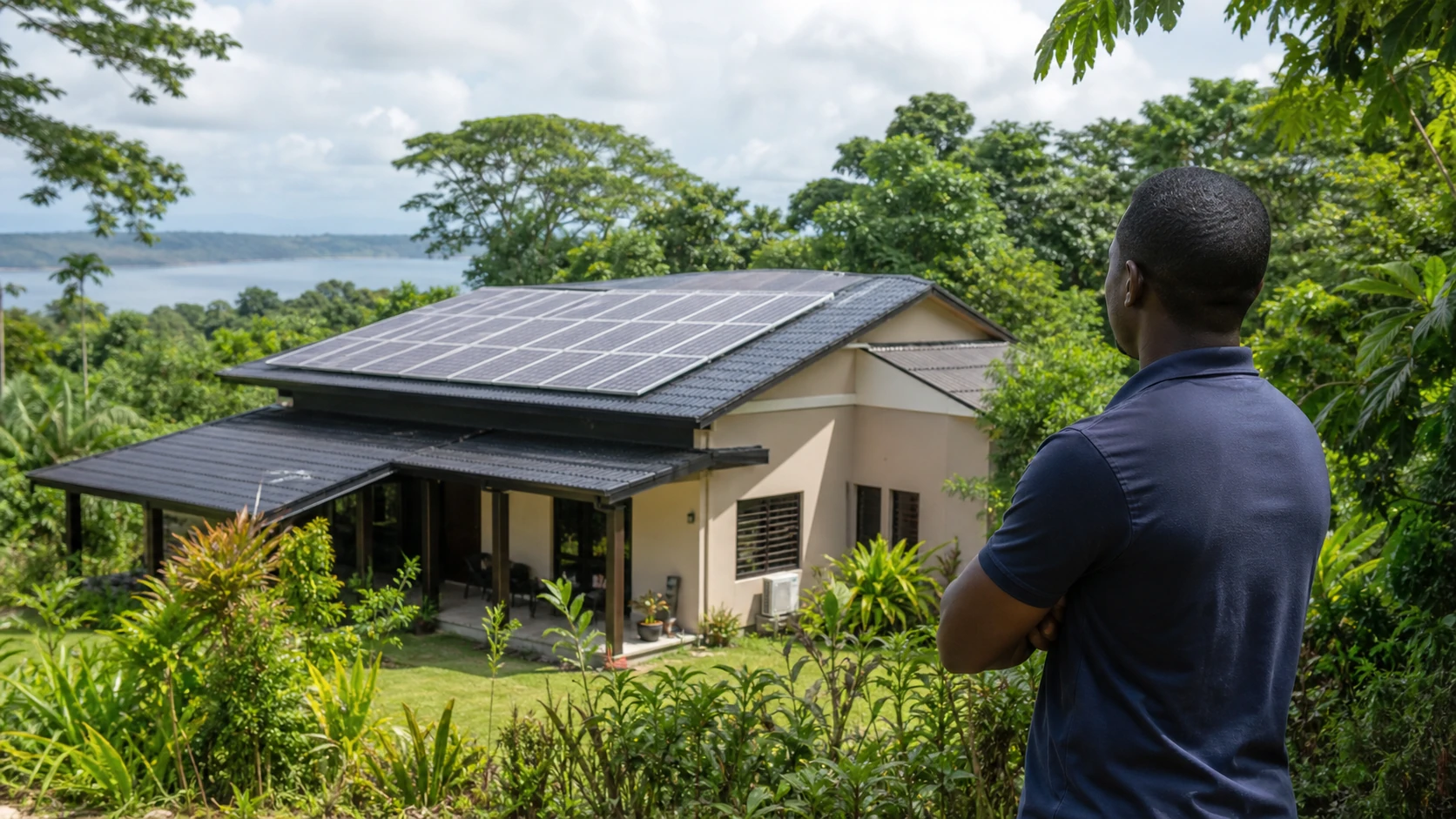
The amount of solar power needed for a home in Gabon depends primarily on the household’s actual energy consumption, the type of appliances used, and the desired level of independence from the grid. There is no one-size-fits-all answer: a home equipped only with basic lighting and a few common appliances will have different needs than a villa with air conditioning in multiple rooms.
To determine the appropriate capacity, several factors must be considered beforehand: a detailed inventory of electrical appliances and their daily usage times, an assessment of the available space for installing the panels, and a clear definition of the desired goal—reducing energy bills, protecting against power outages, or achieving complete energy self-sufficiency.
Gabon enjoys favorable sunlight conditions, but local factors (roof orientation, shading, humidity) directly affect a system’s actual output. Reliable sizing therefore requires a technical analysis specific to each home.
This article walks you through the key criteria for planning your project. To explore the available options, see Our Solutions.
Why the issue of solar power is approached differently in Gabon
Sizing a solar system for a home in Gabon requires taking into account several parameters specific to the local context. Before choosing a power rating, it is helpful to understand the factors that influence this decision.
A Climate and Energy Framework to Consider
Gabon enjoys relatively consistent equatorial sunshine throughout the year, but cloud cover associated with the two rainy seasons can reduce the daily output of the solar panels. This factor directly influences the peak power required to meet a given demand.
If your area experiences grid outages—whether scheduled load shedding or unexpected outages—the question of how much autonomy you want during these periods becomes a key factor in system sizing. In this case, the choice of solar capacity is based not only on average consumption but also on the associated storage capacity and the appliances you want to keep running.
Factors to Consider Before Making a Choice
Several factors determine the appropriate power output for your situation:
- The Actual Consumption Profile : number and type of appliances, hours of use, peak power consumption (air conditioning, refrigeration, etc.).
- The objective : lower bills, backup power during outages, or broader coverage of your needs.
- Site Constraints : usable roof area, orientation, potential shading.
This information forms the basis for a thorough technical study. The following sections detail the method for gathering this information and translating it into concrete decisions.
How to Estimate Your Solar Power Needs, Step by Step?
Determining the appropriate solar power capacity for a home in Gabon involves a structured approach based on your specific circumstances. No universal formula can replace an analysis tailored to each household, but the steps below will help you prepare for this assessment.
Take inventory of your electrical equipment
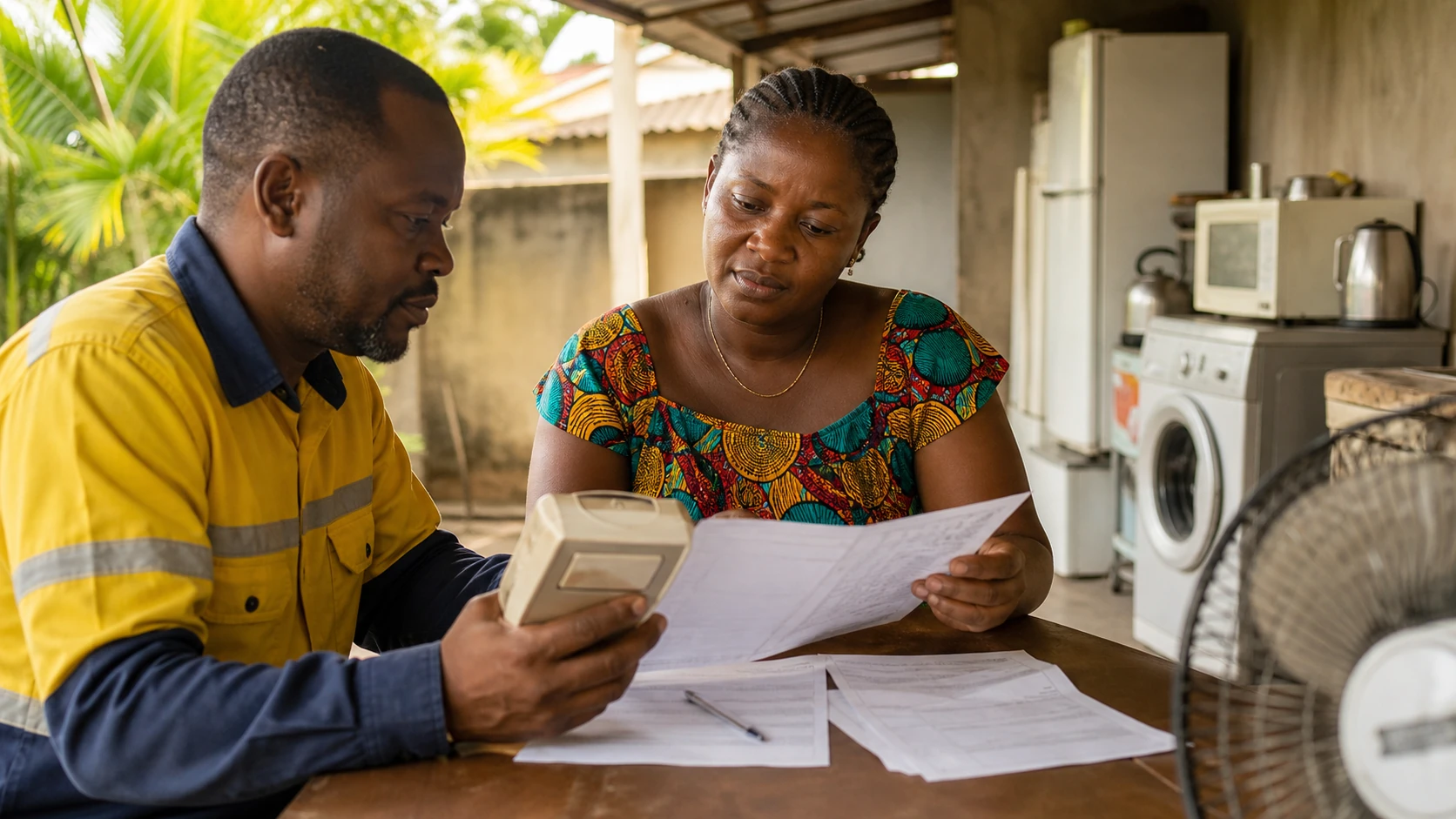
Start by making a list of every appliance you use on a daily basis: air conditioners, refrigerators, lighting, fans, kitchen appliances, and electronic devices. For each one, note its rated power (listed on the label or in the manual) and estimate how long you use it each day. The total you get represents your approximate daily energy consumption—an essential starting point.
Identify your specific usage constraints
Not all households have the same priorities. Ask yourself these questions:
- Would you like to power the entire house or just the essential circuits during power outages?
- Do you use high-power devices at the same time?
- Do you plan to add new equipment in the coming years?
These factors directly influence system sizing. A home with multiple air conditioners running continuously will have different needs than a home where natural ventilation is the primary means of ventilation. For more information on this topic, see Which residential solar energy solution that prevents power outages should you choose in Gabon?.
Take local conditions into account
Sunlight exposure, roof orientation, the presence of shadows, and ambient temperature are all factors that affect the actual power output of a photovoltaic system compared to its theoretical capacity. Actual output depends on these site-specific variables; only an on-site technical assessment can accurately quantify them.
Have the sizing checked by a professional
A personal assessment and analysis can help you estimate the scale of your needs, but the final choice of capacity must be verified through a technical study conducted by a qualified professional. This study takes into account all relevant parameters—energy consumption, site conditions, and the type of storage system being considered—to determine a system size that is appropriate for your project.
The technical factors that determine the required solar power
Determining the appropriate solar power capacity for a home in Gabon depends on several interrelated technical factors. No universal value can be established without a specific analysis of each individual home.
Solar potential: a starting point, not a conclusion
Gabon, located on the equator, enjoys relatively consistent sunshine throughout the year. Data from the Global Solar Atlas (World Bank Group / ESMAP) provide an initial estimate of global horizontal irradiance (GHI) and the specific photovoltaic potential of a location. However, these map data serve as a preliminary assessment tool and do not replace an on-site technical study, which takes into account the actual roof orientation, shading patterns, and local temperature and humidity conditions.
The variables that determine the required power
Three main factors influence the calculation of solar power capacity for a home in Gabon:
- Actual electricity consumption — It depends on the number and type of appliances used (air conditioning, refrigeration, lighting, electric cooking appliances). A detailed energy assessment, based on consumption readings or an item-by-item inventory, is essential.
- The desired level of autonomy — A system designed to supplement the SEEG grid during outages does not require the same capacity as a system intended to provide complete self-sufficiency. Battery storage capacity is a direct factor in this calculation.
- Site Constraints — The usable roof area, slope, module ventilation, and accessibility for maintenance all determine the practical installable capacity.
Why a Custom Calculation Is Necessary
Each combination of these parameters produces a different result. A qualified professional must analyze energy consumption data, sunlight exposure data, and the building’s physical constraints to propose a coherent design. Commissioning a preliminary technical study remains the most reliable approach before making any investment.
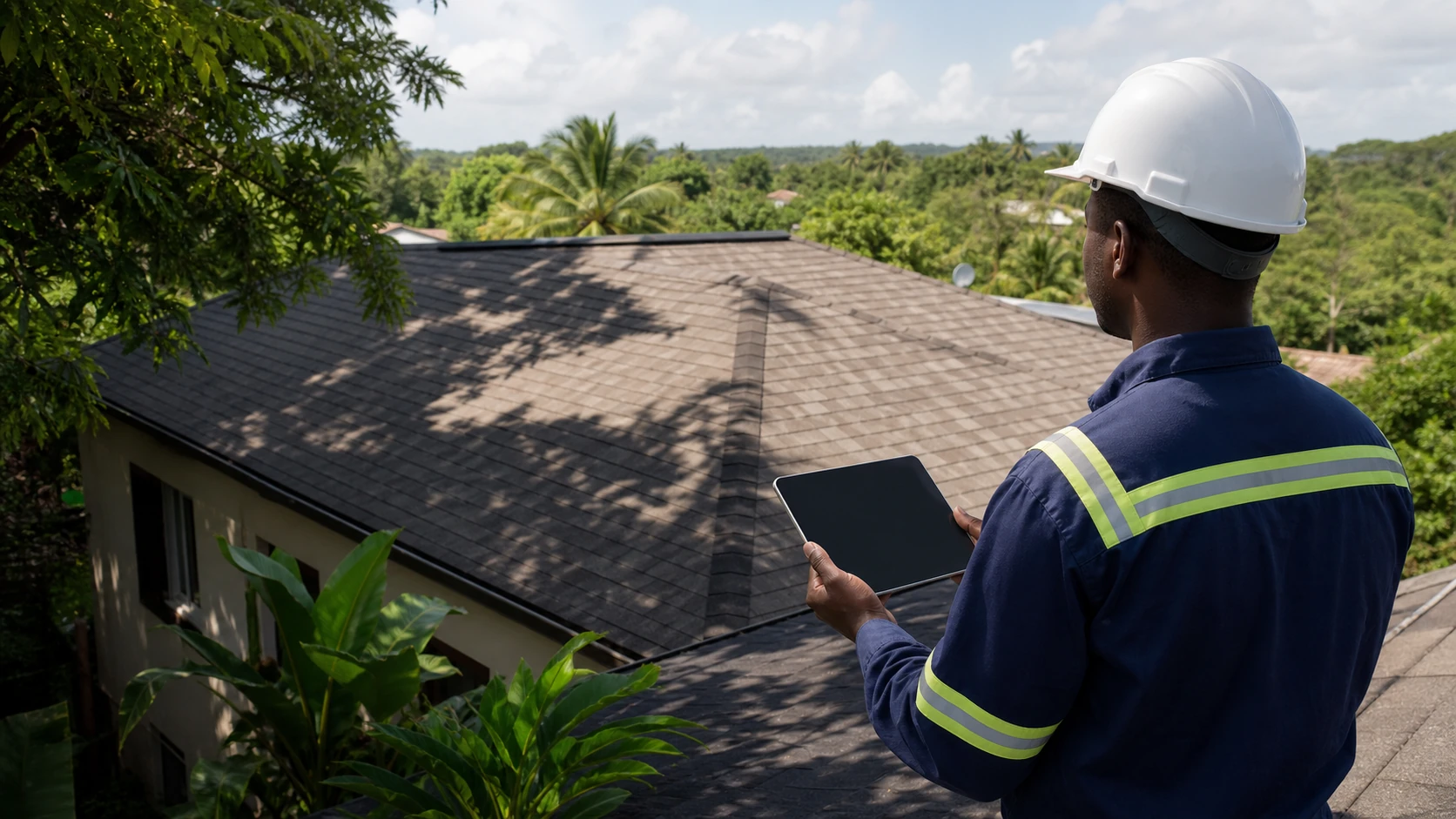
Comparison of Factors Affecting a Home’s Solar Power Output in Gabon
Every solar system design project for a home in Gabon depends on variables specific to that household. Rather than assigning a power range to a typical profile, the table below helps assess the key factors that will guide the design during an on-site technical assessment.
| Project Factor | What to Consider | Impact on sizing |
|---|---|---|
| Actual Daily Consumption | Detailed breakdown of devices, usage times, and startup spikes | Directly determines the required production capacity |
| Goal of Self-Reliance | Temporary relief from load shedding or near-total coverage of demand | The higher the target range, the greater the required capacity |
| Usable roof area | Orientation, slope, shading from vegetation or neighboring buildings | Physical limit on the number of panels that can be installed |
| Employment Profile | Present during the day, primarily used at night, works from home | Affects storage requirements and the production-to-consumption ratio |
| Energy-intensive equipment | Air conditioning, water heater, freezer, hydraulic pump | Each high-power device significantly alters the calculation |
| Planned Scalability | Future addition of appliances, home expansion | Must be verified through a technical study to estimate the profit margin |
Key Takeaways
This comparison helps you assess the factors to consider before consulting a professional. No generic guidelines can replace an on-site analysis that takes into account local sunlight exposure, the quality of the electrical grid, and the household’s actual energy usage. A reliable system sizing must be verified through a technical study tailored to each home.
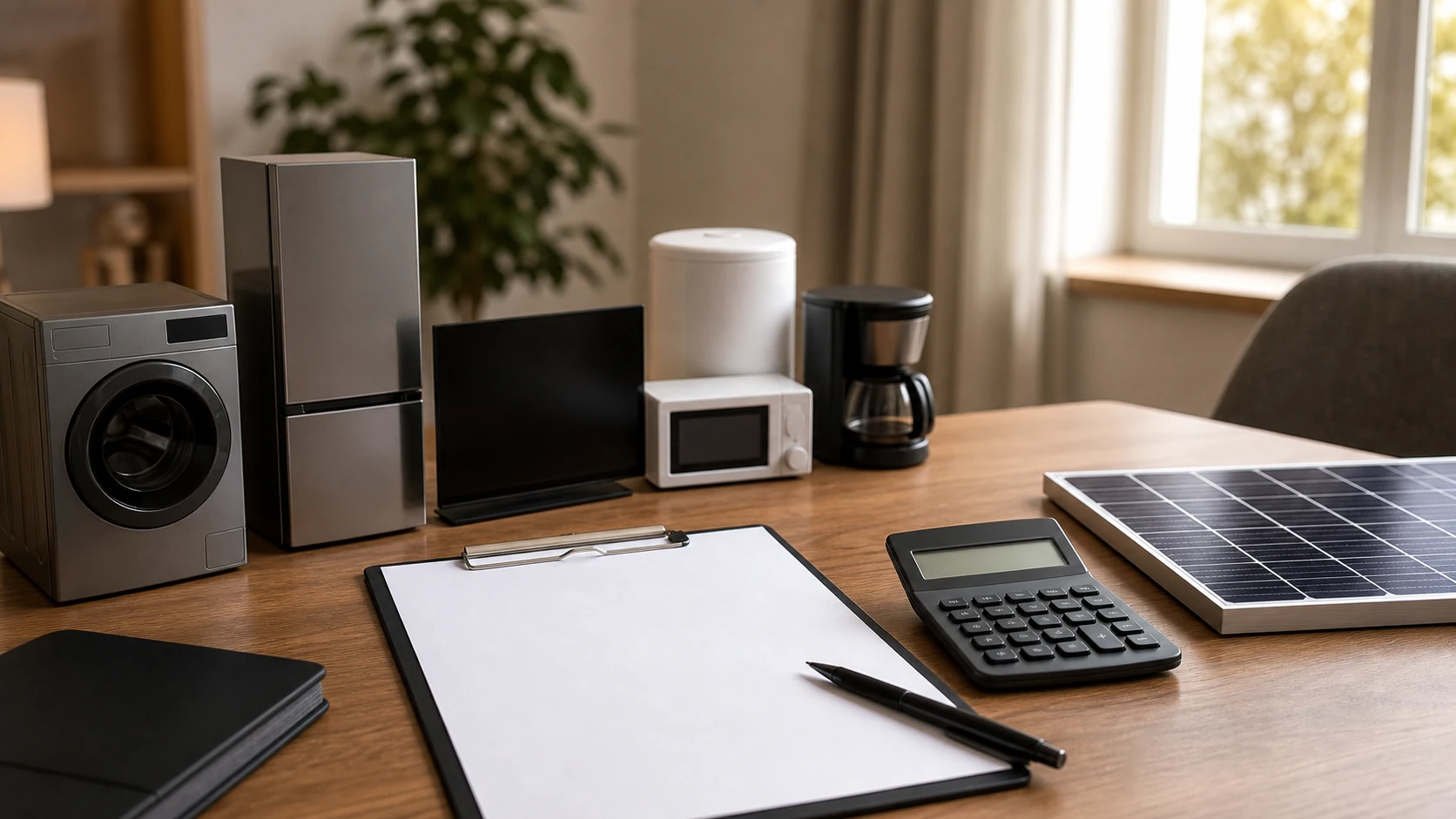
Local Considerations for Determining the Solar Power Capacity of a Home in Gabon
The selection of solar capacity for a home in Gabon depends on factors specific to the local context, which must be identified before any technical study is conducted.
Climate and Solar Resources. Gabon, located on the equator, experiences alternating dry and wet seasons. Cloud cover, ambient humidity, and actual hours of sunshine vary depending on the season and the geographic location of the property. These factors directly influence expected solar power generation and must be evaluated on a site-by-site basis.
Residential Consumption Profile. The electrical equipment used—air conditioning, refrigeration, lighting, and electronic devices—varies from one household to another. The key question remains: Which devices do we want to power, at what times, and with what level of continuity in the event of a power outage? These factors determine the sizing and, if necessary, the selection of a storage system.
Building Specifications. The roof’s orientation, available surface area, potential shading, and the type of structure all affect the installation. For guidance tailored to large living spaces, see Villa or Large House in Libreville: How Much Solar Capacity Should You Choose?.
Local power grid. The reliability of the power supply varies by neighborhood and time of year. Checking the typical frequency and duration of outages in your area will help you determine the level of emergency preparedness you need to plan for.
Each project deserves a case-by-case analysis that takes these local factors into account in order to ask the right questions before determining the technical specifications.
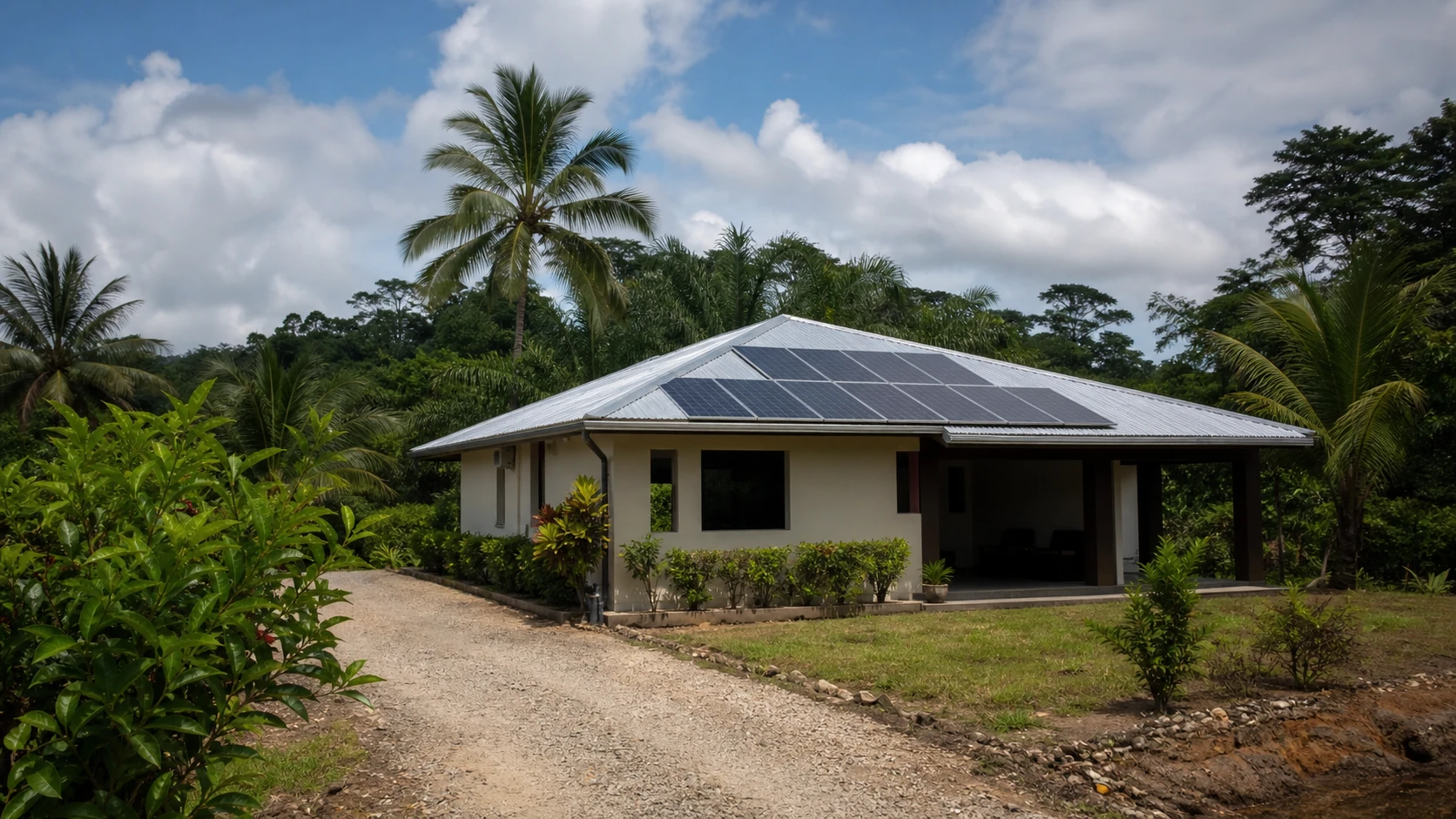
Next step: Prepare your solar project in Gabon
Determining the appropriate solar capacity for a home in Gabon depends on data specific to each residence: actual energy consumption, priority appliances, roof orientation, and the site’s sunlight conditions. No general article can replace this individualized analysis.
To make concrete progress:
- Gather your usage information — meter readings, recent bills, and a list of the appliances you want to power.
- Identify your site constraints — available roof area, potential shading, current connection type.
- Request an on-site technical assessment — It is at this stage that a reliable design can be proposed, taking into account all the actual parameters.
If you'd like to get started with this process, you can contact WOW2000 to discuss your situation and determine whether a feasibility study would meet your needs.
This article is published by WOW2000 for informational purposes only and is not a substitute for a site survey or the contractual terms applicable to a specific project.
Frequently Asked Questions About Solar Power for Homes in Gabon
Is the amount of solar power needed the same for an apartment as for a villa?
No. Energy needs vary depending on living area, the number of electrical appliances, the type of air conditioning, and energy consumption habits. A villa equipped with multiple split-system units, an electric water heater, and energy-intensive kitchen appliances has a very different energy consumption profile than that of a compact apartment. Only a detailed energy assessment, conducted on-site, can determine the appropriate capacity for each specific setup.
Does Gabon's climate influence the choice of power rating?
Yes. Sunlight exposure, seasonal cloud cover, ambient temperature, and roof orientation are all local factors that affect the actual power output of a photovoltaic system. These parameters must be assessed during an on-site technical study to ensure the system is properly sized.
Can you rely solely on your electricity bill to choose the power rating?
The bill is a useful starting point, but it is not enough. It does not provide information on consumption peaks, the hourly breakdown of usage, or losses associated with the existing system. A comprehensive audit helps assess the actual power required by taking all of these factors into account.
Do we need to plan for storage in addition to the panels?
It depends on the frequency of power outages and the intended use when the grid is unavailable. Storage requirements directly influence the overall system design and must be verified through a technical study specific to the site in question.
How can we ensure that the sizing is consistent?
Reliable sizing relies on a customized analysis that takes into account actual energy consumption, building constraints, and local climate conditions. This approach helps determine the most suitable configuration and avoid oversizing or undersizing the system. It is recommended to consult a qualified professional to conduct this analysis before making any investment.