wow2000.com


Hybrid Inverter: Questions to Ask Before Choosing Your Equipment
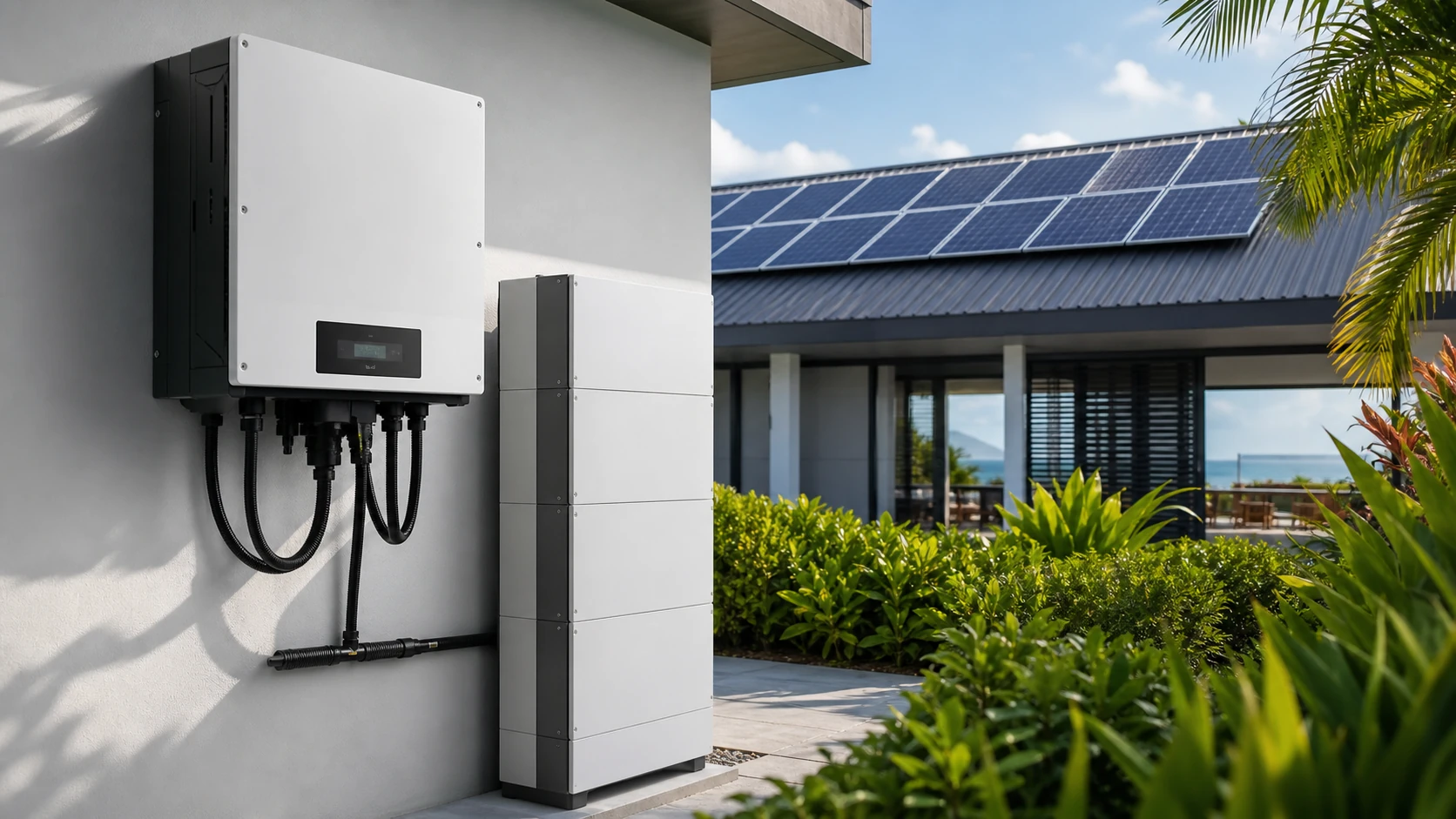
The choice of a hybrid inverter determines your solar system’s ability to generate, store, and redistribute energy independently. Before making a decision, it’s essential to accurately identify your energy needs, compatibility with your local grid, and the features that will make a difference in your daily life—especially in an area where power outages are frequent.
A hybrid inverter combines the functions of a conventional solar inverter and a battery charger. It can switch between the grid, storage, and solar power generation depending on current conditions. This versatility makes it a central component, but it also makes the selection process more complex: rated power, compatible battery types, load shedding capabilities, system scalability… Each parameter warrants a clear question for the professional who will design your system.
This article reviews the specific questions you should ask to help guide your decision. Whether you’re setting up a home or a business space, these guidelines will help you prepare for a productive technical discussion with an installer. To explore possible configurations, see Our Solutions.
Hybrid Inverter: Carefully Consider Your Options Before Making a Decision
Choosing a hybrid inverter is one of the key decisions in a residential or commercial solar project. Depending on the model selected, the electrical configuration, and the settings applied, this equipment can perform several functions: converting photovoltaic energy, managing a battery bank, and interacting with the grid. However, the presence or absence of each of these capabilities—as well as their actual performance during operation—depends heavily on the specific model chosen, the associated components, and the site survey conducted beforehand.
Before comparing technical specifications, it’s helpful to clarify several assumptions specific to your situation:
- Consumption Profile — Which pieces of equipment need to be operational, during what hours, and at what peak power?
- Local Network Requirements — Does your site experience frequent outages, and what battery life would you like to confirm with the manufacturer for the model you're considering?
- Predictable Development — Do you plan to add more panels, batteries, or additional loads in the coming years?
- Installation Requirements — Available space, ventilation, distance from the electrical panel, and compliance with applicable local codes.
Each answer directly influences the sizing, component compatibility, and selection criteria to be reviewed in the manufacturer's documentation. The following sections detail the method for structuring this analysis and the technical points to verify for each model.

Method: Steps to Guide the Selection of a Hybrid Inverter
Step 1 — List the site's uses and constraints
Start by compiling a clear inventory of your appliances and their power ratings. Separate critical loads (refrigerator, lighting, medical equipment) from secondary loads. This inventory forms the basis of any sizing study.
If your site experiences outages or has an intermittent backup power source, verify the intended role of the switchover and storage systems. The ability to switch between power sources depends on the UPS model selected, the wiring configuration, and the settings applied during commissioning.
Step 2 — Define the Target Energy Scenario
Ask yourself three questions:
- Self-consumption only or as a backup? Some models prioritize solar power generation; others include a battery-powered backup mode. The availability of each mode depends on the selected configuration.
- Immediate or deferred storage? Check with the manufacturer to see if the inverter you are considering can operate without a battery initially and then accommodate a compatible storage system later on. This option is not available for all models.
- What does the future hold? Ask whether the model supports parallel connection or the addition of panels. Technical requirements (maximum number of modules, compatible battery type, required firmware) vary by model.
To learn more about scenarios suitable for a residential setting, see Which residential solar energy solution that prevents power outages should you choose in Gabon?.
Step 3 — Compare the technical data sheets based on verifiable criteria
Gather the manufacturer's specifications for the preselected models. Compare them based on specific criteria:
- PV input voltage range,
- rated power and peak power,
- types of batteries listed as compatible,
- available communication and monitoring protocols,
- warranty terms as documented by the manufacturer.
Do not assume that a hybrid inverter automatically provides seamless switching or full off-grid operation. These results depend on the site survey, component sizing, and the installation itself.
Step 4 — Request a site survey before making any purchase
Reliable system sizing depends on data specific to your installation: measured sunlight levels, consumption profile, and the quality of the existing connection. No hybrid inverter selection can replace this preliminary analysis.
How a Hybrid Inverter Works: What Each Model Can—or Cannot—Offer
A hybrid inverter combines, in a single unit, the conversion of direct current from solar panels, battery bank management, and interaction with the power grid. This general description does not mean that all models behave the same way. Several technical parameters vary from one model to another and directly influence the system’s performance.
Network/Battery Switching. Some hybrid inverters allow you to switch between the grid and the batteries. The switchover time, the output power available in off-grid mode, and the ability to power critical loads depend on the model chosen, the wiring, the settings, and compatibility with the installed batteries. It is helpful to check the manufacturer’s technical specifications to see if «backup» mode is available, under what conditions, and with what switchover time.
Battery Compatibility. Communication protocols (CAN, RS485, proprietary) and supported voltage ranges vary by inverter. You should ask the manufacturer which models and battery chemistries have been validated, and whether the firmware technically supports initial operation without a battery.
Expansion and Parallel Operation. The ability to connect multiple inverters or add storage modules at a later date depends on the hardware and software architecture of each device. You should check the manufacturer’s documentation regarding this before making a purchase.
Supervision. Remote monitoring features—such as production tracking, load status, and alerts—are offered by many manufacturers, but their exact scope, connectivity, and local availability must be confirmed for the specific model and site in question.
As noted by IEA PVPS Task 13, The performance of a photovoltaic system depends on parameters specific to its design : The selection of a hybrid inverter is no exception to this rule and requires an assessment tailored to each project.
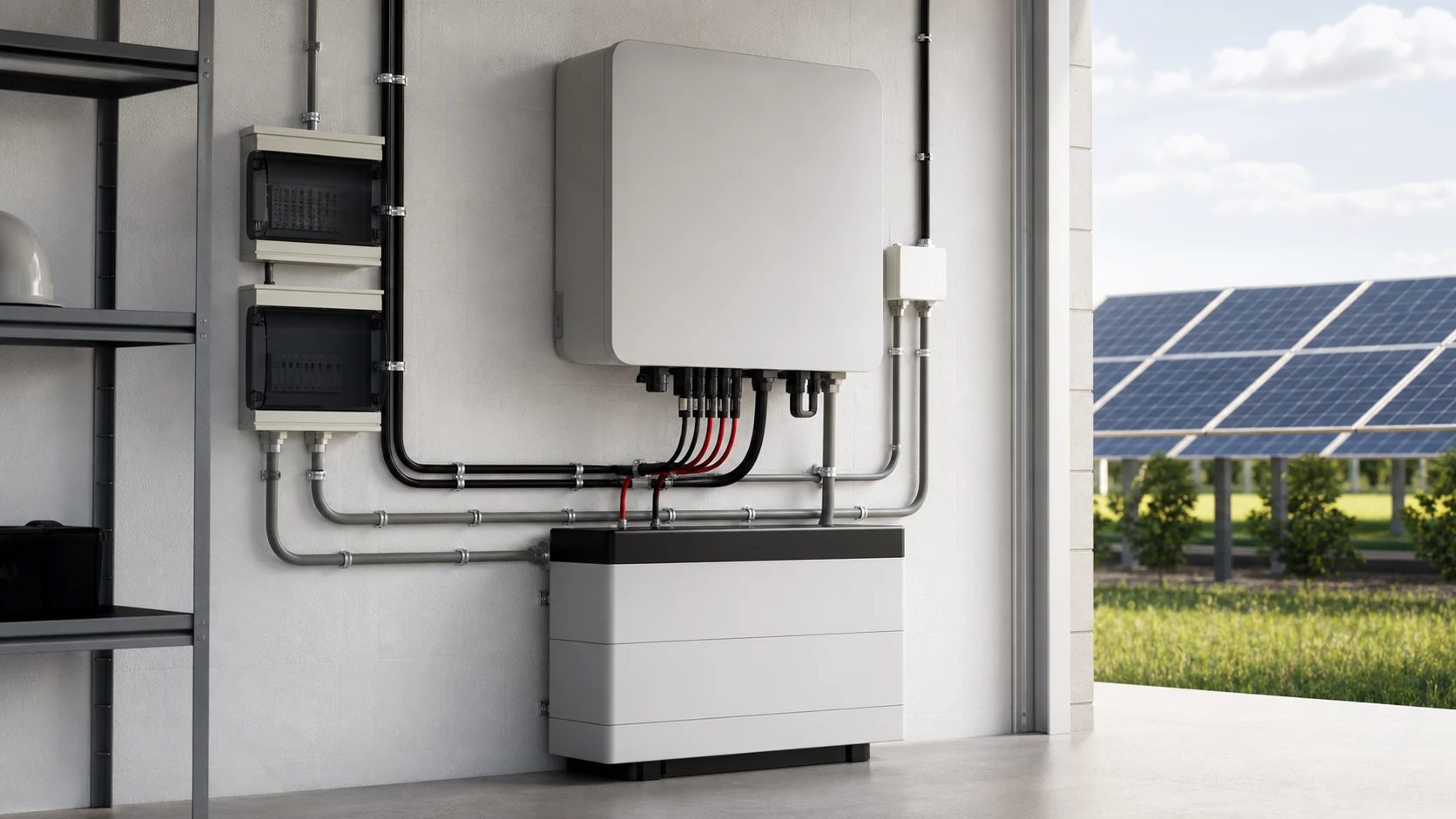
Comparison Checklist: Key Criteria for a Hybrid Inverter
Before deciding on a hybrid inverter, a structured comparison chart will help ensure you don’t overlook anything. Here are the criteria you should systematically review for each model you’re considering.
| Criterion | A question to ask yourself |
|---|---|
| Rated power | Does the output power cover all of my priority loads? |
| Battery Compatibility | Does the inverter support the desired storage technology (lithium, lead-acid gel, LFP)? |
| PV Input Voltage Range | Is the MPPT range suitable for my panel configuration? |
| Network Management | Does the device automatically switch between the grid, battery, and solar power? |
| Switching time | Is the time it takes to switch to backup mode short enough for my sensitive equipment? |
| Scalability | Can I add panels or batteries later without replacing the inverter? |
| Monitoring | Is remote monitoring (app, web portal) available? |
| Weather Conditions | Are the Ingress Protection (IP) rating and temperature range suitable for my environment? |
| Standards and Certifications | Does the device meet the regulatory requirements in effect in my country? |
How to Use This Chart
Fill out one column for each model being compared. Factual information—drawn from the manufacturer’s technical data sheets—will replace general impressions. Then share this table with the professional in charge of your technical study: they can verify that the selected hybrid inverter is consistent with the sizing of your system and your consumption patterns.
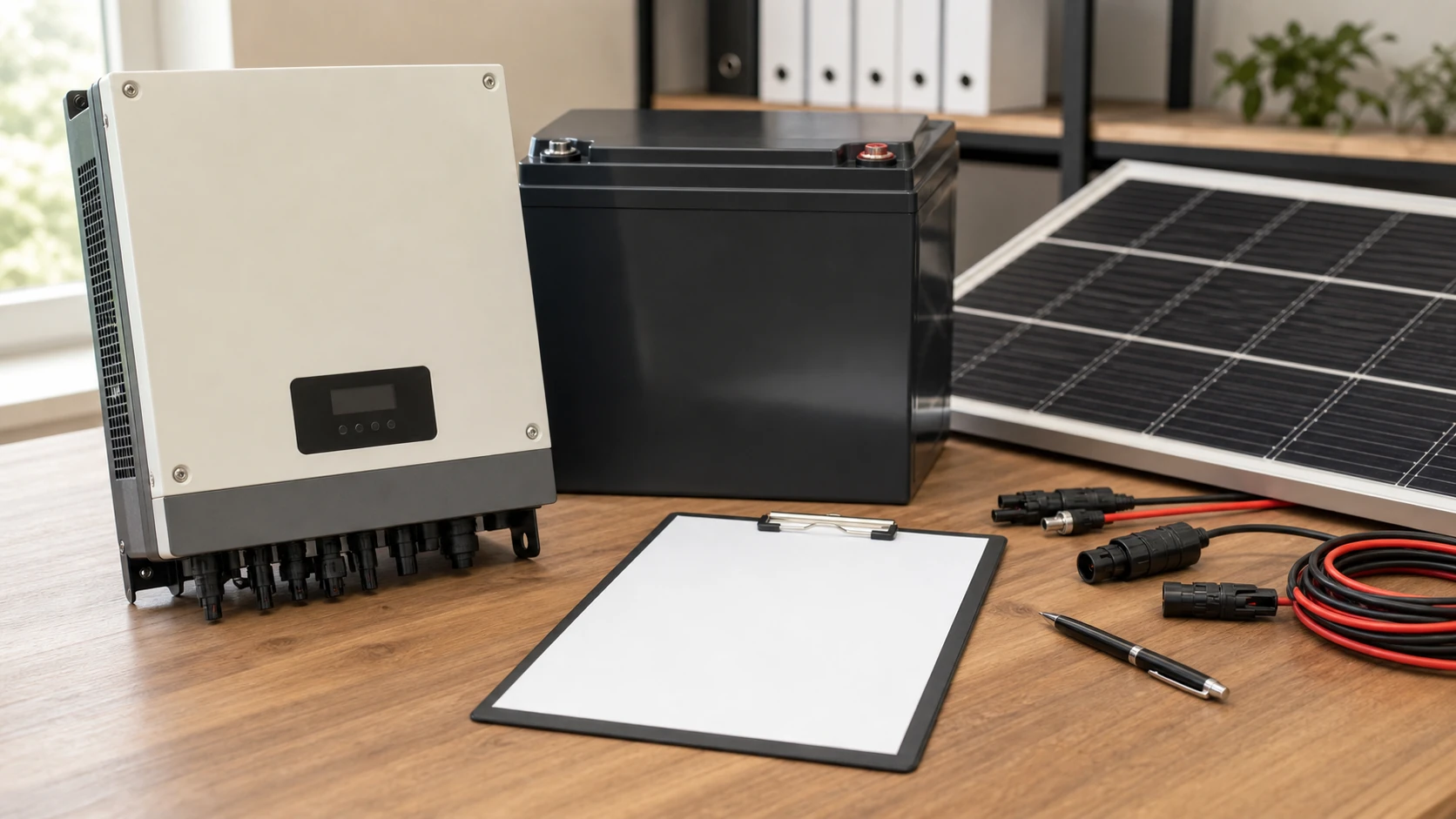
Choose a Hybrid Inverter That's Right for Your Local Situation
Choosing a hybrid inverter isn't just about the product's technical specifications; you also need to consider the realities of your operating environment.
Power Grid Quality
In areas where power outages or voltage fluctuations are common, the hybrid inverter’s switching capacity—that is, the time it takes to switch to battery power—becomes a key factor. Before making your choice, find out the input voltage range accepted by the unit and its tolerance for grid fluctuations.
Weather Conditions
Heat, ambient humidity, and exposure to dust directly affect the equipment’s durability. Verify that the hybrid inverter’s Ingress Protection (IP) rating and operating temperature range match the actual conditions at your installation site, whether indoors or outdoors.
Availability of After-Sales Service
A hybrid inverter installed without the option for on-site maintenance may pose problems in the medium term. Before making a purchase, identify the service providers capable of providing technical support in your geographic area.
To learn more about these issues in the Gabonese context, see our dedicated guide: Choosing the Right Solar Inverter for Your Home in Libreville.
In short, a hybrid inverter that looks good on paper is only truly suitable if it is adapted to the specific conditions of your installation.
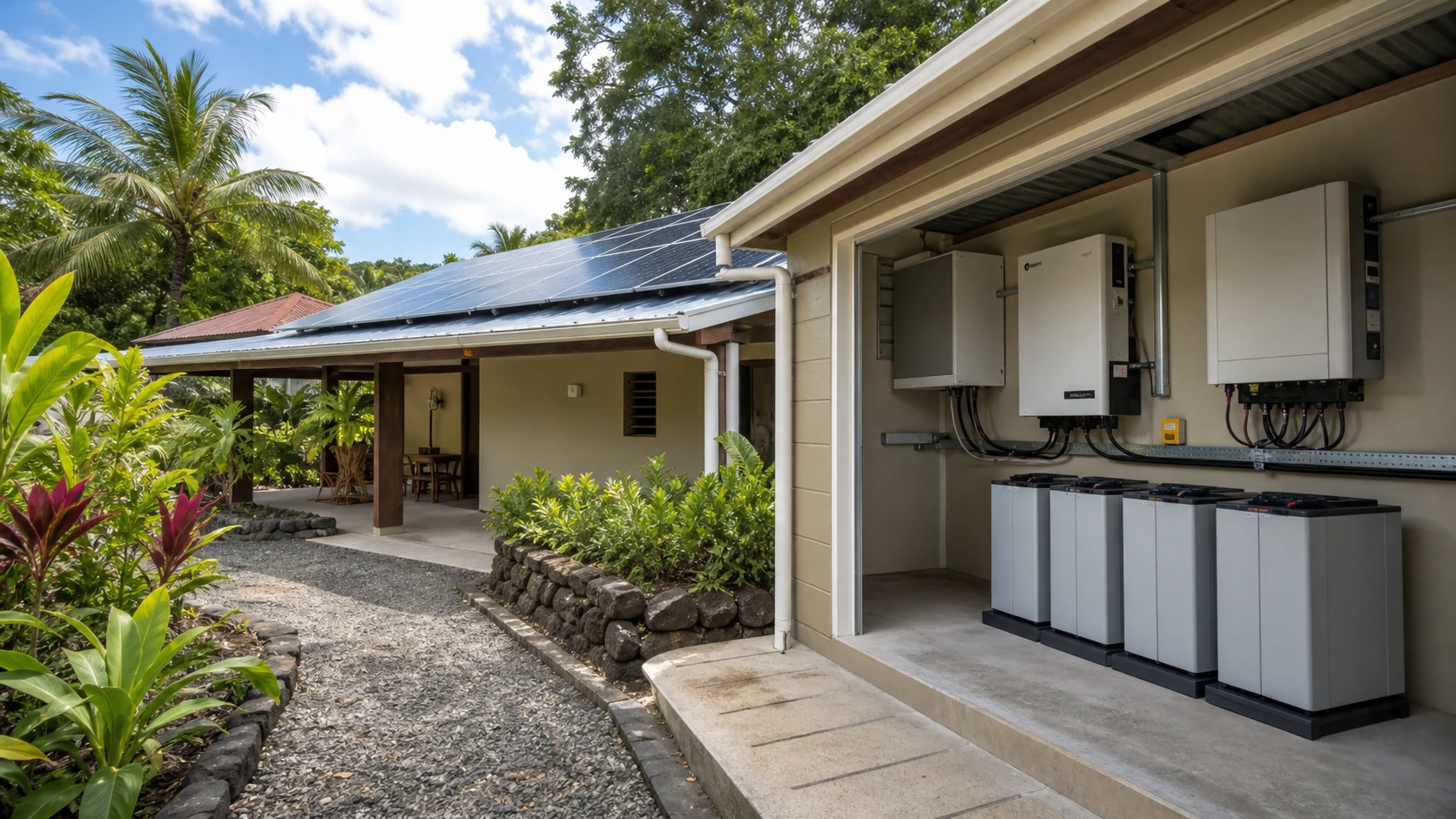
Next step: Plan your hybrid inverter project
Before contacting an installer, gather the key information identified in this article: energy usage records, a list of priority equipment, details about your existing connection, and any location constraints. This information will enable a professional to conduct a site assessment tailored to your specific situation.
Explicitly ask each of the questions discussed here—battery compatibility, scalability, warranty terms, and maintenance procedures—and request documented answers before making any commitment.
Editorial Transparency
This article is published by WOW2000 for informational and educational purposes. It is not a substitute for an on-site technical assessment or the terms of a contract applicable to your project. The publication and last-updated dates are automatically displayed by WordPress when the article is posted online.
Frequently Asked Questions About Choosing a Hybrid Inverter
Can a hybrid inverter operate without a battery at first?
Some models offer a mode in which the device is connected to the power grid without a battery installed. This feature depends on the firmware and the intended wiring configuration. Before making a purchase, check the manufacturer’s technical specifications to see if this mode is supported. Also, be sure to identify any functional limitations that apply in this configuration.
Does the system switch automatically between the grid and the battery?
The switching behavior varies depending on the model selected, its internal settings, and the system’s wiring diagram. Ask the manufacturer or installer for the following information: What is the specified switching time? Is this time configurable? Are specific components or wiring required to enable this function?
Can we add batteries or panels later on?
Scalability depends on the specific model of hybrid inverter. Refer to the technical data sheet to determine the maximum number of compatible battery modules, supported models, maximum photovoltaic input power, and the ability to operate in parallel with a second unit. These parameters must be factored into the sizing study from the outset.
Can a hybrid inverter power loads during a power outage?
The answer depends on the backup mode offered by the model, the capacity of the connected battery, the wiring configuration, and the load management settings. Check the technical documentation to see if the model has a dedicated backup output and what its power limits are. A site survey is still necessary to confirm that the system is properly sized for your actual needs.
How can you monitor production and consumption remotely?
Remote monitoring features vary by model and optional accessories. Check whether the inverter has built-in connectivity or requires an add-on module. Refer to the documentation to find out what data is available on the monitoring platform and the terms of access to this service.