wow2000.com


Choose a self-consumption solar kit from Owendo
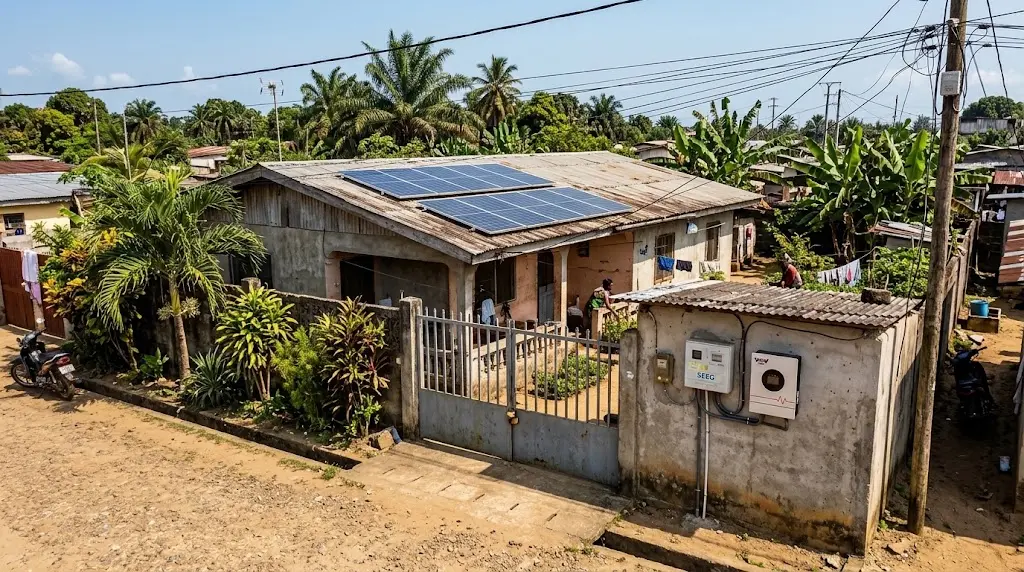
In Owendo, households are increasingly looking to reduce their dependence on the SEEG grid—whether to lower their monthly bills or to protect themselves against frequent power outages. Solar self-consumption is one of the available solutions—but it’s not just a matter of «installing panels.» Understanding what self-consumption really is, how it works, and how it differs from a power-outage protection system allows you to make an informed choice before requesting a quote.
To learn more about the categories of solutions offered by WOW2000, visit Our Solutions.
What Solar Self-Consumption Really Is—and What It Isn't
The concept of self-consumption is often misunderstood. Clarifying its exact definition helps prevent disappointment after installation.
The precise definition of self-consumption
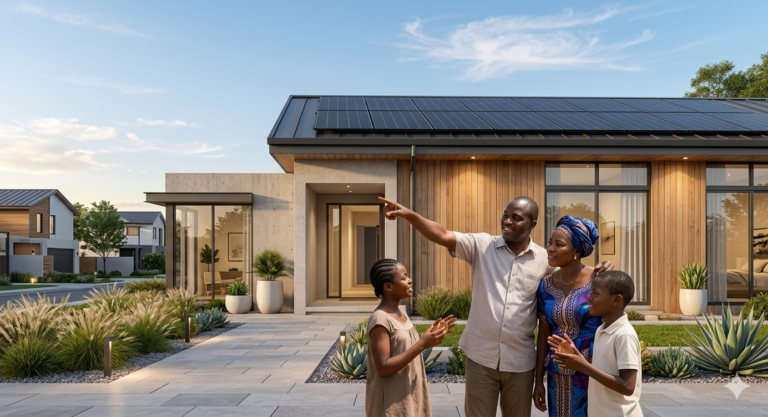
Solar self-consumption refers to the practice of directly using the electricity generated by your own solar panels—without feeding it into the SEEG grid. During daylight hours, your panels generate electricity. This electricity directly powers your appliances—refrigerator, air conditioner, lighting, and chargers. Whatever you use from your own generation, you don’t have to buy from SEEG. As a result, your meter runs slower—and your monthly bill goes down.
What self-consumption alone does not guarantee
Self-consumption alone—without a storage battery—does not protect against nighttime power outages. As soon as the sun sets, the solar panels stop generating power. Without storage, your home is once again entirely dependent on the SEEG grid overnight.
If your main goal is to protect your home from power outages at night—not just to lower your bill—you need a system with storage. To understand the difference between these two goals, check out our article on Which residential solar solution should you choose to avoid SEEG power outages in Libreville?.
Self-consumption with storage — the complete package
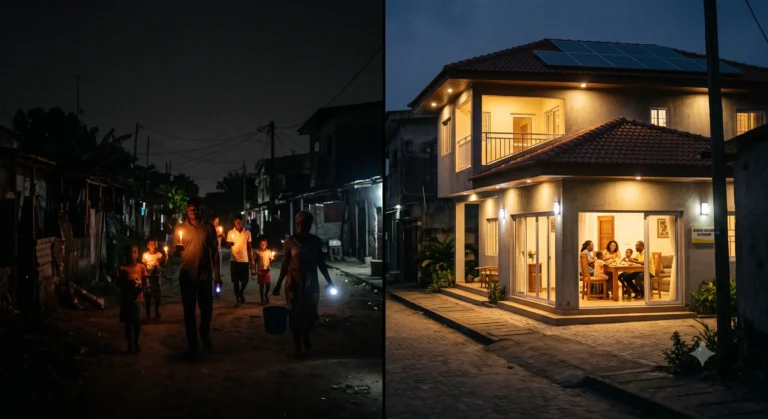
A self-consumption kit with a battery combines both functions. During the day, your solar panels power your appliances directly and charge the battery with any excess energy. At night—or during a power outage—the battery takes over. This way, you benefit from lower electricity bills during the day and protection against power outages at night.
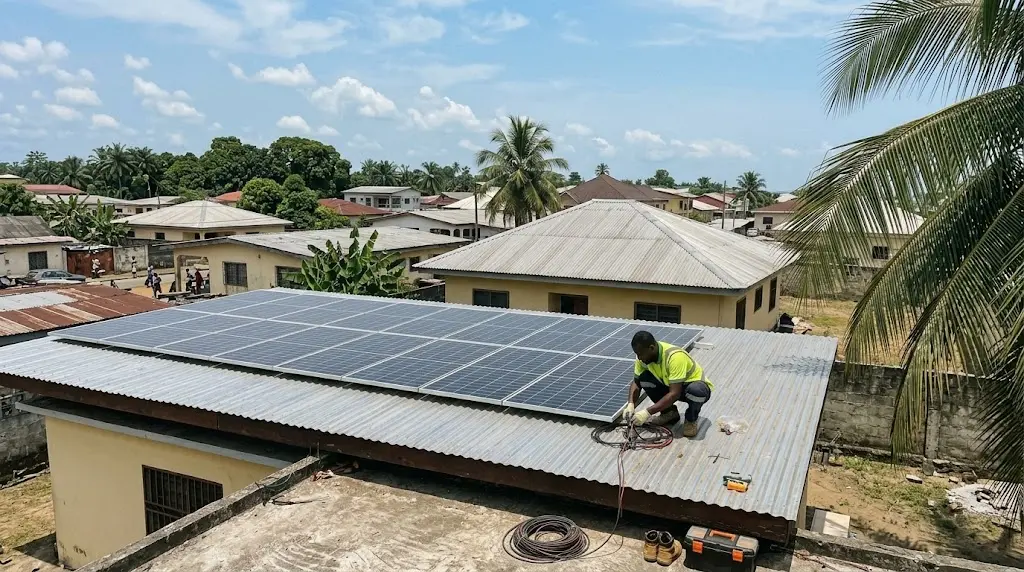
How an Owendo Self-Consumption Kit Works — Step by Step
Production — Panels at Work
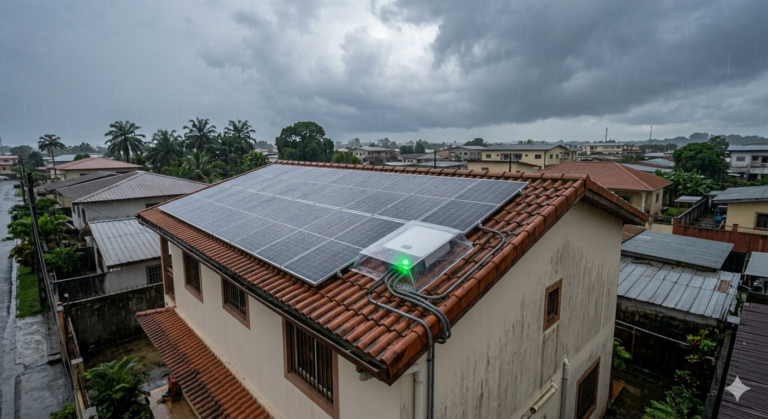
The solar panels convert solar radiation into direct current. In Owendo, the amount of sunlight is among the highest in the world thanks to Gabon’s equatorial location. Even on partly cloudy days, the panels continue to generate power—albeit at a reduced rate. The rainy season reduces production but does not stop it completely.
The total capacity of the installed panels—measured in kilowatts-peak (kWp)—determines the amount of energy generated each day. This capacity must be calculated based on your actual energy consumption and the available roof space at your home in Owendo.
Management — The Hybrid Inverter at the Center
The’hybrid inverter is the component that intelligently manages all of the system’s energy flows. It converts the direct current produced by the panels into alternating current that can be used by your appliances. It decides in real time how to allocate the available energy—powering appliances first, charging the battery with the surplus, and supplementing with power from the SEEG grid if production is insufficient.
It is this system that ensures a seamless transition between energy sources—one that is imperceptible to the home's occupants.
Storage — the battery for nighttime and power outages
The battery stores excess energy generated during daylight hours to provide power at night or during a power outage. Its capacity—measured in kilowatt-hours (kWh)—determines the system’s runtime outside of generation hours.
The battery technology selected directly affects the system’s durability in Owendo’s climate. LiFePO4 lithium batteries offer better thermal stability and a longer cycle life in tropical conditions. To learn more about this topic, see our article on the’Residential solar power with a lithium battery in Gabon.
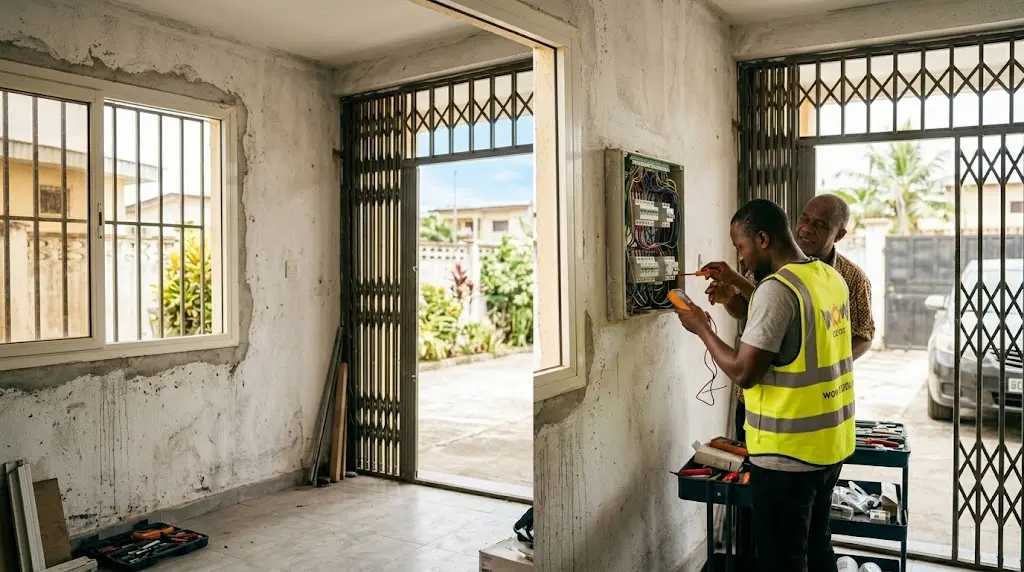
Key Features of Owendo to Keep in Mind
Owendo has local characteristics that directly influence the sizing and performance of a self-consumption kit.
Sunshine and the rainy season
Owendo enjoys intense tropical sunshine—a major advantage for solar power generation. However, the rainy season—which occurs twice a year in Gabon—reduces solar irradiance for several weeks. A properly sized kit for Owendo takes this factor into account—by providing sufficient battery capacity to last through days with little sunlight.
Voltage fluctuations in the SEEG power grid in Owendo
Port and industrial activities in Owendo can cause more frequent voltage fluctuations on the SEEG grid than in other neighborhoods of Libreville. A high-quality hybrid inverter includes protections against these fluctuations—thereby safeguarding the sensitive electronic devices in your home or workshop.
Installation in a humid environment
The humidity resulting from the proximity of the port and the estuary in Owendo is a factor that must be taken into account during installation. The equipment must be certified to withstand these conditions. The equipment room housing the inverter and battery must be ventilated and protected from excessive humidity.
According to the’IRENA, photovoltaic systems that are properly sized to account for local climatic conditions perform significantly better than those calculated using generic data—a factor that is particularly relevant in the context of Owendo.
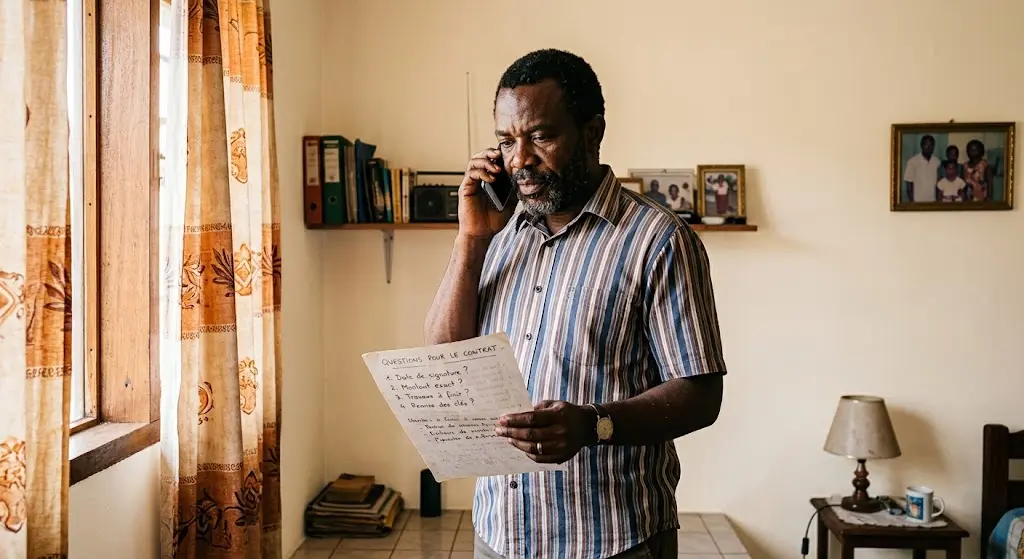
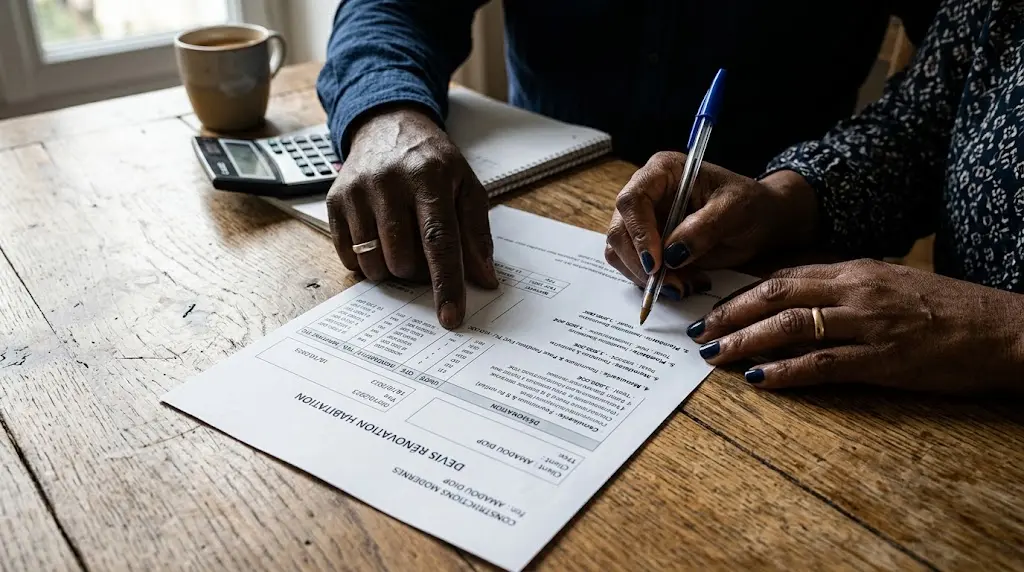
What You Need to Prepare Before Requesting a Quote for Your Self-Consumption Kit
Your situation in Owendo is unique. This information allows us to provide a system sized to your actual consumption rather than a standard model.
Information to Gather Before the First Contact
Every household or workshop in Owendo has a different energy consumption profile. The more accurate your data is, the better the kit we recommend will be tailored to your actual situation.
| Information to Be Provided | Its impact on the kit's sizing |
|---|---|
| Recent SEEG bill showing electricity usage in kWh | Starting point for calculating the required panel power. |
| Hours of Use for Major Appliances | Defines the daytime consumption profile—your consumption patterns determine how much of your energy needs the panels can cover. |
| Devices to keep on at night or during power outages | Determines the required battery capacity. |
| Air Conditioning — Number and Capacity | Air conditioning often accounts for 40 to 60% of energy consumption and has a significant impact on system sizing. |
| Available roof space | Limits the maximum power of the panels that can be installed. |
| Roof Orientation | Affects actual output—a south-facing roof produces more than a north-facing roof in Owendo. |
| Status of the Electrical Panel | An outdated panel may need to be upgraded before installation. |
The key question—lowering your bill or preventing service disconnection?
Before requesting a quote, clearly define your main goal. If your primary goal is to reduce your daytime SEEG bill, a self-consumption kit without a battery may be sufficient. If you also want to protect yourself against nighttime power outages—a battery is essential. If you want both—a complete kit with solar panels, a hybrid inverter, and a battery is the right setup.
This preliminary decision directly influences the kit's specifications and budget.
Next step: Get started on your self-consumption project with Owendo
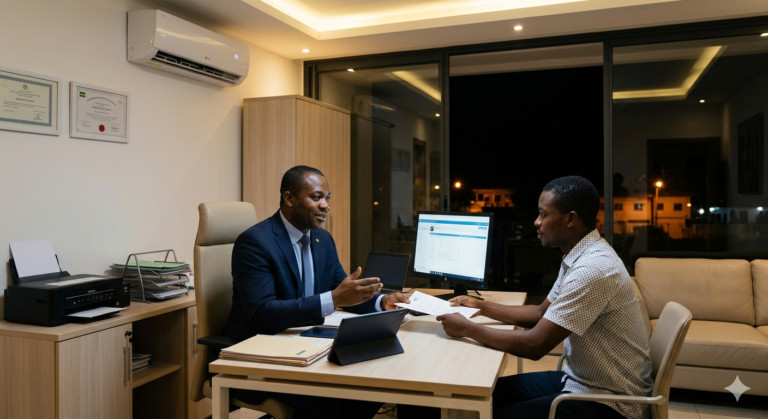
To get an accurate size estimate tailored to your home or workshop in Owendo, gather the information from the table above and contact WOW2000. WOW2000 is based in Owendo at the port, at the Foyer des Marins intersection—a local presence that facilitates preliminary technical visits and post-installation follow-up.
To prepare your application, see our article on How to Get a Free Quote for Solar Power for Your Home in Gabon.
You can contact the team via WhatsApp or via the page Contact Us.
Publisher Disclosure: This article is published by WOW2000 for general informational purposes. The actual performance of a self-consumption kit depends on factors specific to each location—actual consumption, roof orientation, local sunlight conditions, and curtailment profile. No promise of a reduction in your electricity bill can be guaranteed without a prior analysis of your specific situation by Owendo.
Frequently Asked Questions — Self-Consumption Solar Kit at Owendo
What is the difference between a self-consumption kit and a power-outage protection kit?
The primary purpose of a self-consumption kit is to reduce your SEEG bill by generating your own electricity during daylight hours. A power outage protection kit is designed to keep appliances running during grid outages. A complete kit with a battery can fulfill both functions simultaneously—reducing your bill during the day and protecting against outages at night.
Does a self-consumption kit work during the rainy season in Owendo?
Yes. The panels continue to generate power on overcast days, though at reduced rates depending on the cloud cover. A properly sized system takes this into account by providing a sufficient margin to maintain useful power output during Owendo’s less sunny periods.
Can we start with a battery-free self-consumption kit and add storage later?
Yes, under certain conditions. In order to add a battery without replacing the inverter, the inverter must be sized and configured from the outset to accommodate battery storage. This point should be discussed with the installer before finalizing the initial configuration.
How many solar panels are needed to meet the energy needs of a household in Owendo?
The number of panels depends on your monthly electricity consumption in kWh—as shown on your SEEG bill—and the available roof space. This calculation is performed during the on-site design assessment. It cannot be accurately estimated without knowing these two factors.
Could voltage fluctuations in the SEEG grid in Owendo damage my solar kit?
A high-quality hybrid inverter includes protections against voltage fluctuations and power surges. Be sure to check the inverter’s technical specifications for these protections before making a purchase. They protect both your solar kit and your home’s electronic devices from voltage surges when the grid is restored.