wow2000.com


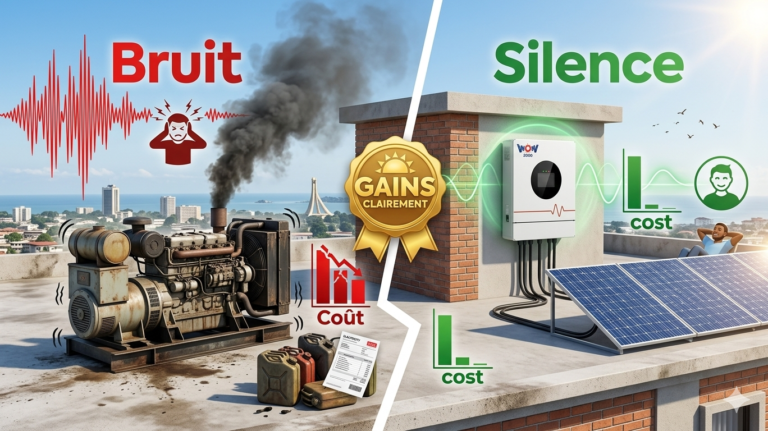
Which residential solar energy solution that prevents power outages should you choose in Gabon?
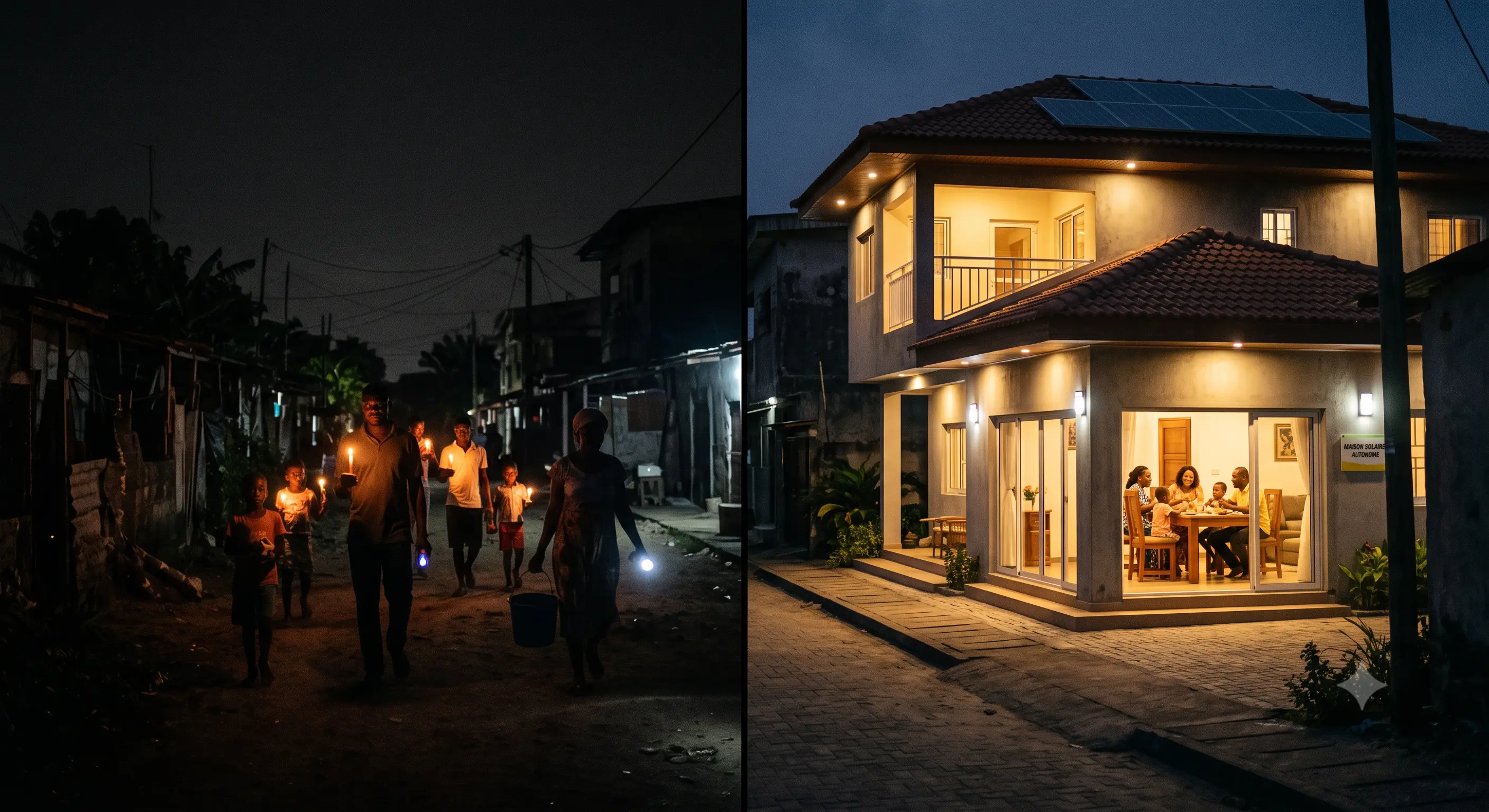
In Gabon, frequent power outages on the SEEG grid disrupt daily life for many households. Wi-Fi cutting out in the middle of work, the refrigerator shutting down, air conditioning stopping in the middle of the night—the consequences for comfort and food preservation are immediate. Given this reality, several residential solar energy solutions designed to prevent power outages are available. This article provides a framework for understanding how they work, identifying their differences, and gathering the necessary information before requesting a technical assessment.
To learn more about the categories of solutions offered by WOW2000, visit Our Solutions.
Understanding Power Cuts and Their Impact on a Gabonese Household
Before choosing an anti-load-shedding solution, it is helpful to have a clear understanding of the phenomenon it is intended to address.
What Power Cuts in Gabon Really Are
Load shedding refers to scheduled or unscheduled power outages. In Gabon, these outages can occur at any time, last from a few minutes to several hours, and happen multiple times in a single day, depending on the neighborhood and the season.
Unlike a one-time power outage, load shedding is often structural—it reflects a mismatch between available electricity generation capacity and grid demand. Its frequency and duration vary depending on the geographic area, the season, and the condition of local infrastructure.
The Practical Impact on a Household
Power outages have multiple impacts on the daily lives of Gabonese households.
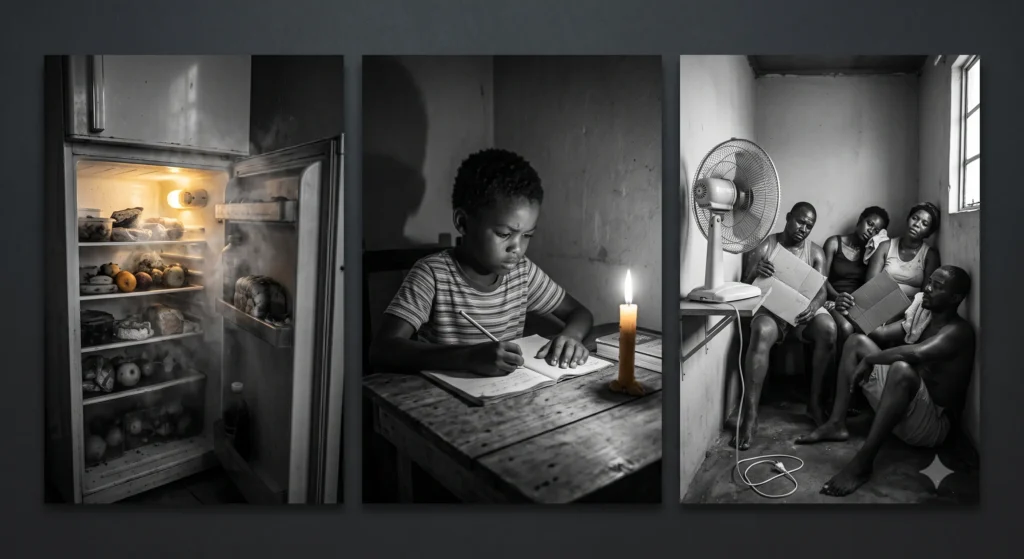
Food Preservation is one of the first visible consequences. A refrigerator or freezer that stops working for several hours in tropical heat can result in the loss of some food supplies—representing a direct financial loss.
Thermal comfort is also affected. Turning off the air conditioning or fans in the middle of a tropical night disrupts the sleep of the whole family, especially young children.
Continuity in Work and Studies is compromised. Wi-Fi outages, computers shutting down, phones that won’t charge—these disruptions affect the productivity of adults working from home and children’s education.
Electronic equipment are also on display. Voltage spikes that occur when power is restored can damage unprotected sensitive devices.
The Various Solar Solutions Available to Prevent Load Shedding
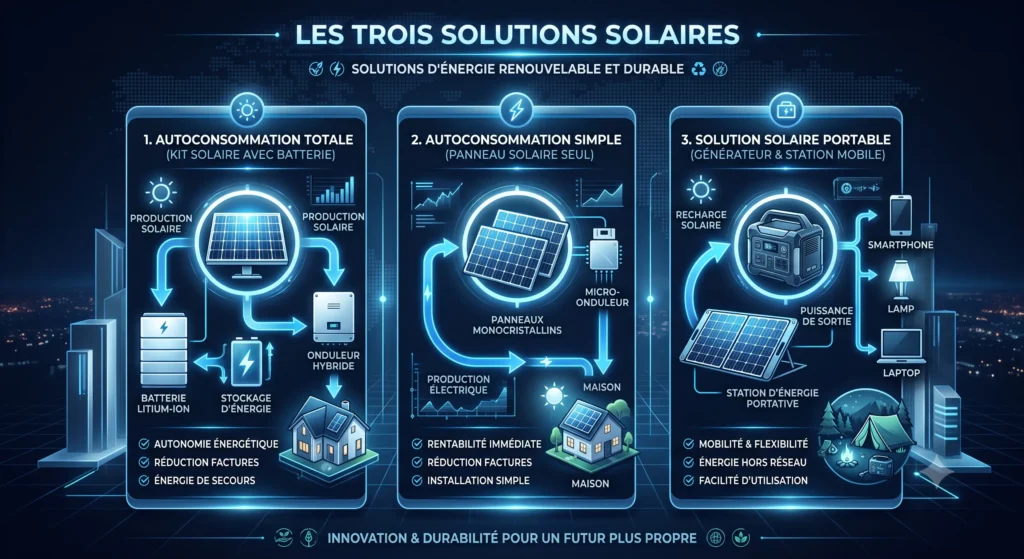
There are several types of solar power systems designed to cope with power outages. Each has different technical specifications and levels of protection.
The hybrid solar system with an inverter and battery
This is the best solution for ensuring uninterrupted power during outages. It combines three components—solar panels, a hybrid inverter, and a storage battery—to generate, manage, and store energy intelligently.
The Role of the Hybrid Inverter plays a central role in this setup. This device continuously monitors the status of the SEEG grid. In the event of an outage, the switchover time depends on the inverter model and its configuration. Some compatible systems complete this transition in a few milliseconds, while others take longer; be sure to check this information in the technical specifications before purchasing. For more information on this topic, see our guide on the’hybrid inverter.
How to Respond During a Power Outage However, this depends on the selected inverter model, the wiring configuration, and the parameters set during installation. These factors should be verified in the technical documentation for the equipment under consideration before making a purchase.
The Battery-Free Solar System
A battery-free solar system generates electricity during daylight hours but cannot power appliances during a nighttime power outage. This setup can reduce the SEEG bill during the day but is not a load-shedding solution in the strict sense.
For a household that wants protection against nighttime power outages—which are often the most disruptive—a battery is essential.
The Portable Solar Power Station
This is a compact, portable system that integrates a battery, an inverter, and sometimes a small solar panel into a single unit. This solution provides power to a few essential devices—such as lights, chargers, and a small fan—during a power outage, without requiring a permanent installation. It is particularly well-suited for renters or households looking for an entry-level solution before investing in a full-scale system.
Criteria for Choosing an Anti-Load Shedding Solution
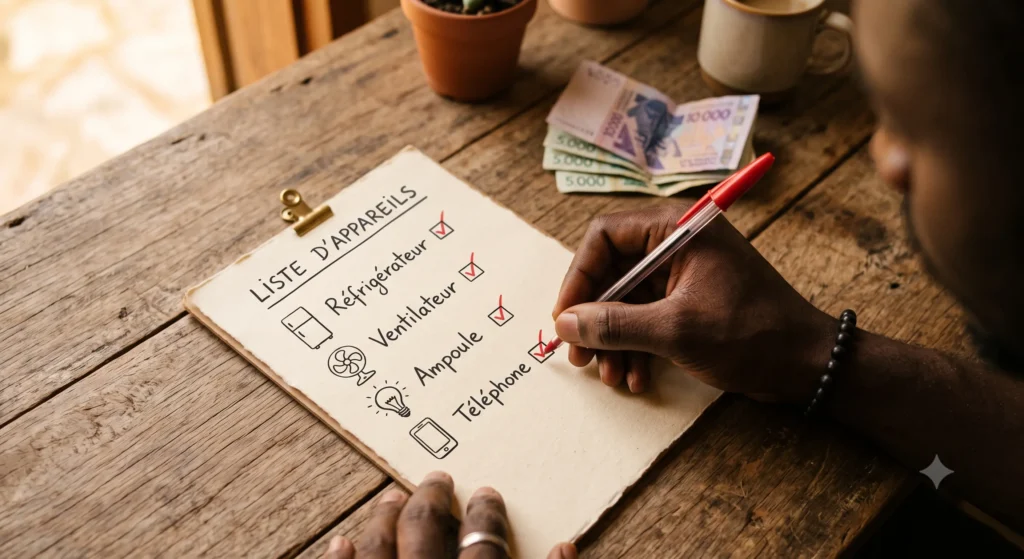
Identify the devices that need to be protected first
The first factor to consider is the list of equipment you want to keep running during a power outage. This list directly determines the required power output of the UPS and the necessary battery capacity.
Some appliances are essential—refrigerators, emergency lighting, phone chargers. Others are important for comfort—air conditioning, fans, televisions. Still others can wait until the power comes back on without any immediate consequences.
It is essential to prioritize these items before requesting a quote. If you would like to include air conditioning in your load shedding protection, see our article on How to Power an Air Conditioner with Solar Energy in Gabon.
Estimate the required battery life
The length of time you want to remain self-sufficient during a power outage directly determines the battery capacity. A four-hour runtime and a twelve-hour runtime require batteries with very different capacities—and therefore very different investments.
If power outages in your neighborhood typically last two to three hours, a battery with moderate capacity may be sufficient. If outages can last longer than eight hours, you’ll need a larger storage capacity. Therefore, documenting the typical duration of outages in your area is an important first step.
Choosing the Right Battery Technology
The choice of battery technology affects the system's long-term durability and performance. To learn more about this topic, see our article on the’Residential solar power with a lithium battery in Gabon, which details the criteria for comparing the available technologies.
Checklist: Gather the Necessary Information Before Choosing a Solution
Before contacting an installer, gathering the following information will help ensure you receive a quote tailored to your household’s specific situation.
| Item to be documented | What You Need to Know |
|---|---|
| Devices to Protect | List each appliance along with its rated power in watts. Distinguish between essential appliances and those that are simply for convenience. |
| Duration of outages | Record the typical duration of power outages in your neighborhood. This information determines the required battery capacity. |
| Time slots | Do power outages occur more often during the day or at night? This information affects the sizing of the panels and the battery. |
| Air Conditioning | Would you like to keep the air conditioning running during power outages? If so, please specify the capacity and the number of air conditioners involved. |
| Electrical Panel Configuration | Does your electrical panel allow you to easily separate priority circuits from secondary circuits? |
| Available space | How much roof space or outdoor space is available for solar panels? |
| Goal of Self-Reliance | Would you like partial protection only during power outages, or full autonomy day and night? |
How to Use This Table
Fill in each line with the information available for your household. This information allows a qualified technician to recommend the configuration best suited to your situation—neither oversized nor undersized. The more accurate your information is, the more relevant and reliable the quote you receive will be.
According to the’IRENA — International Renewable Energy Agency, the cost of solar photovoltaics has fallen by more than 90% worldwide over the past ten years. This decline is making solutions to prevent power outages accessible to a growing number of African households that wish to invest in their energy independence.
Similarly, Our World in Data confirms that the continued decline in solar costs is changing the economic equation for households considering installing solar panels—resulting in an increasingly rapid return on investment.
Next step: Prepare your application for an anti-load shedding study
To make concrete progress on your project, gather the information listed in the table above and send it to WOW2000 to initiate a no-obligation technical consultation. The goal is to determine which configuration can best meet your household’s specific needs, taking into account the characteristics of your property and your energy usage patterns.
To learn more about the available systems, see our article on How to Choose an Off-Grid Residential Solar Kit in Gabon.
You can contact the team via WhatsApp or via the form on the page Contact Us.

Publisher Disclosure: This article is published by WOW2000 for general informational purposes. It is not a substitute for an on-site technical study or the contractual terms applicable to a specific project. The actual performance of a solar system designed to prevent load shedding depends on parameters specific to each installation and each household.
Frequently Asked Questions — Residential Solar Solution to Prevent Power Outages
Does an anti-load-shedding solar system also work at night?
Yes, provided that a storage battery is integrated into the system. During the day, the panels generate electricity and charge the battery. At night, the battery powers the appliances. Without a battery, a solar system cannot provide electricity outside of daylight hours.
How long does it take to switch to battery power during a power outage?
The switchover time depends on the selected inverter model. Some hybrid inverters switch over in a few milliseconds—a delay that is imperceptible to electronic devices. Others may take a few seconds. This specification should be checked in the inverter’s technical data sheet before making a purchase.
Can an anti-discharge solution be added to an existing solar system?
Yes, in certain configurations. It is possible to add a battery and a hybrid inverter to an existing system, provided they are compatible with the existing equipment. A qualified technician must verify this compatibility before any additions are made.
Does a surge protection system protect devices from power surges?
It depends on the system configuration. Depending on the model you choose and the protective measures included in the installation, devices to protect against power surges and voltage fluctuations may be built into or added to the electrical panel. Check the technical specifications to confirm their presence and features before purchasing.
Is a special permit required to install a solar anti-load-shedding system in Gabon?
Regulatory requirements vary depending on the system configuration and whether it is connected to the SEEG grid. We recommend consulting a qualified installer to learn about the administrative procedures that apply to your specific situation.