wow2000.com


Gabon: Solar Solutions for Dialysis Centers and Specialized Clinics
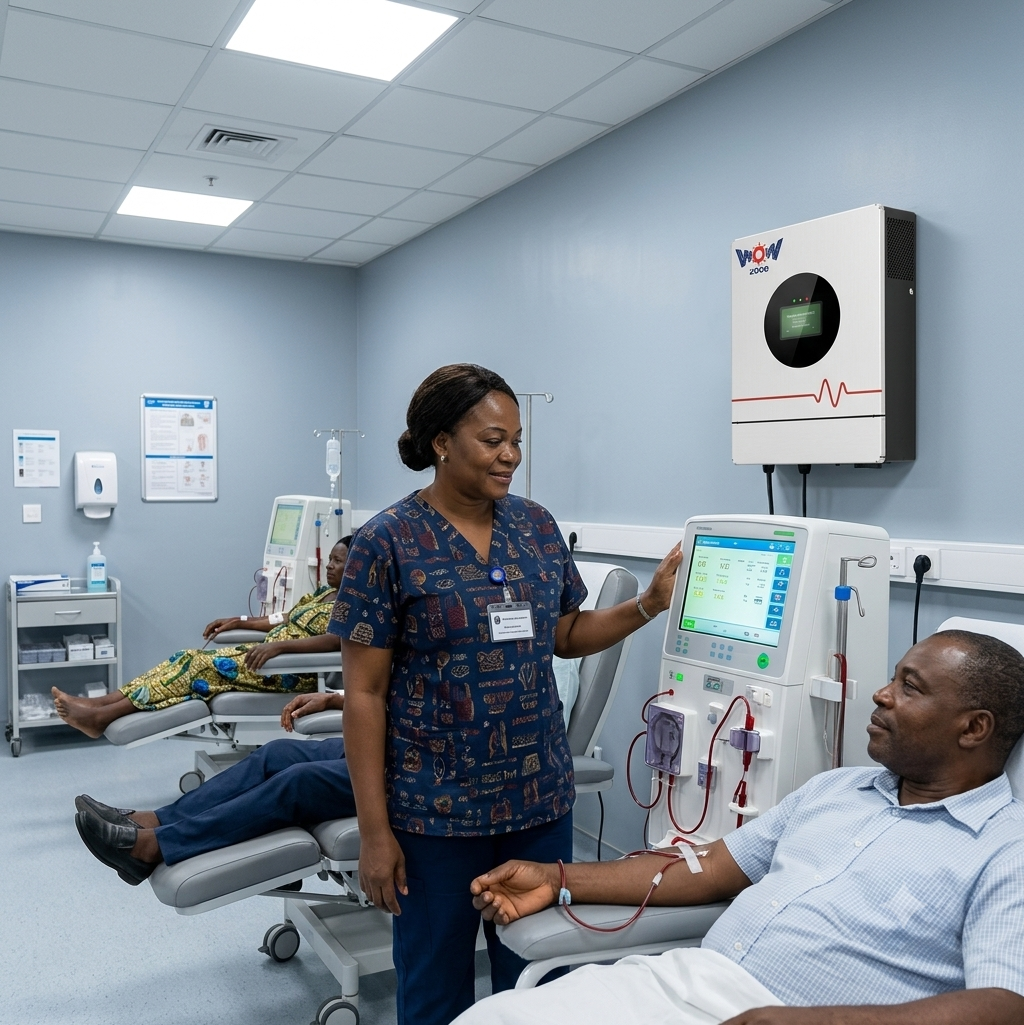
Dialysis is a critical medical procedure. This page should not be used as the sole basis for selecting an electrical solution: any power supply for dialysis equipment must be specified, validated, and tested by the facility, its clinical staff, and qualified professionals.
Stricter requirements for critical circuits
For a dialysis center, the systems required for a treatment session must never be based solely on a marketing claim. The facility must define its business continuity plan, redundancy levels, alarms, testing procedures, and procedures in the event of a failure. A solar power study can supplement this system for precisely defined loads, but it must be integrated into a validated backup architecture.
Assess the power supply before starting any project
In a healthcare facility, pharmacy, or medical office, electricity powers a wide variety of functions: lighting, IT systems, refrigeration, air conditioning, communications, and sometimes clinical equipment. These uses cannot be grouped under a single continuity of service commitment. They must be identified, prioritized, and validated by the facility.
A solar power solution can help reduce reliance on the grid for certain circuits and improve the site’s resilience. However, its exact role depends on the power demand, startup peaks, the required runtime, the available space, local regulations, and existing backup solutions.
Start with a documented load analysis
- List each piece of equipment, its rated power, and its actual use.
- Distinguish between essential expenses and non-essential or deferrable expenses.
- Monitor consumption peaks, particularly when starting engines and compressors.
- Set a realistic target range for each priority route.
- Have the clinical and safety requirements approved by the appropriate site managers.
This approach helps avoid two common mistakes: undersizing the system or investing in batteries and panels that do not match the consumption profile. A reliable quote should specify the load assumptions, the proposed operating scheme, the system’s limitations, and the applicable warranty terms.
Do not confuse a solar solution with a medical safety device
Equipment whose shutdown could affect patient safety, medications, or operations must be handled in accordance with the facility’s protocols and applicable regulatory requirements. Depending on the situation, this may require a dedicated backup power supply, a certified UPS, a generator, electrical protection, monitoring, and regular testing. A photovoltaic system and a battery alone do not replace the risk assessment or the devices required by the facility.
What a technical proposal must specify
Before placing an order, request information on power rating, usable storage capacity, the circuits being powered, expected behavior during a power outage, protective measures, maintenance requirements, and exclusions. Performance will depend on system sizing, sunlight exposure, battery condition, and system operation; therefore, it should not be presented as a guarantee of uninterrupted power supply.
WOW2000 can gather project information and prepare a technical proposal tailored to the identified needs. Feasibility, project conditions, timelines, selected equipment, and warranties must be confirmed in a written proposal before any decision is made.