wow2000.com


Solar Photovoltaics in Gabon: A Simple Guide to Understanding the Technology
Have you heard about solar photovoltaics But you're not exactly sure what it is? This guide explains everything in simple terms.
The Definition of Photovoltaics
The word «photovoltaic» comes from Greek: «photo» means light, and «voltaic» refers to electricity. In short, it is the conversion of sunlight into electricity.
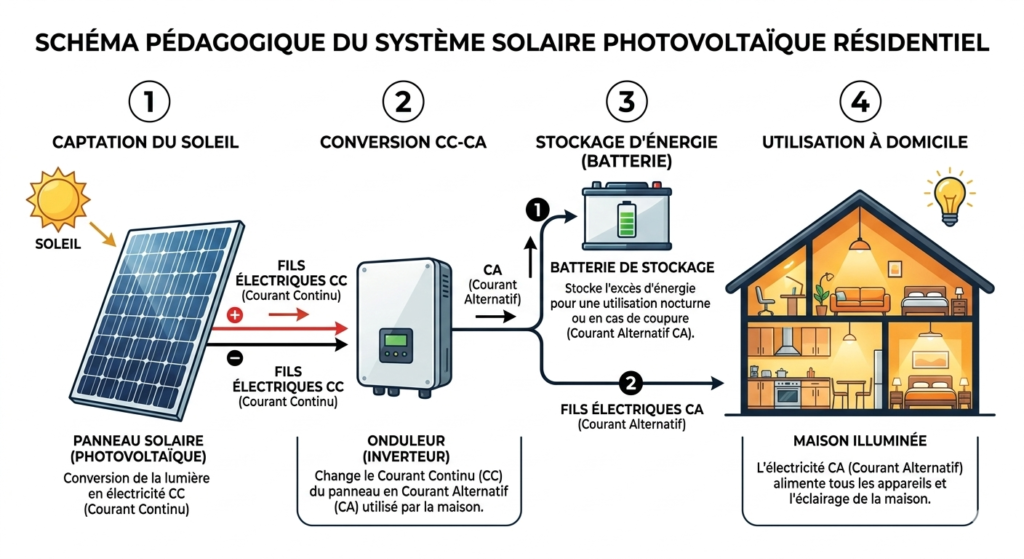
The solar panels contain photovoltaic cells. These cells capture sunlight and convert it into direct current.
How does a solar power system work?
A complete photovoltaic system consists of several components:
- Solar panels: They capture light and generate electricity
- The inverter: it converts direct current to alternating current
- The battery: It stores energy for use at night
- Wiring: It connects all the components together
During the day, the panels generate electricity. This energy can be used immediately or stored in a battery for use at night.
Why is this relevant to Gabon?
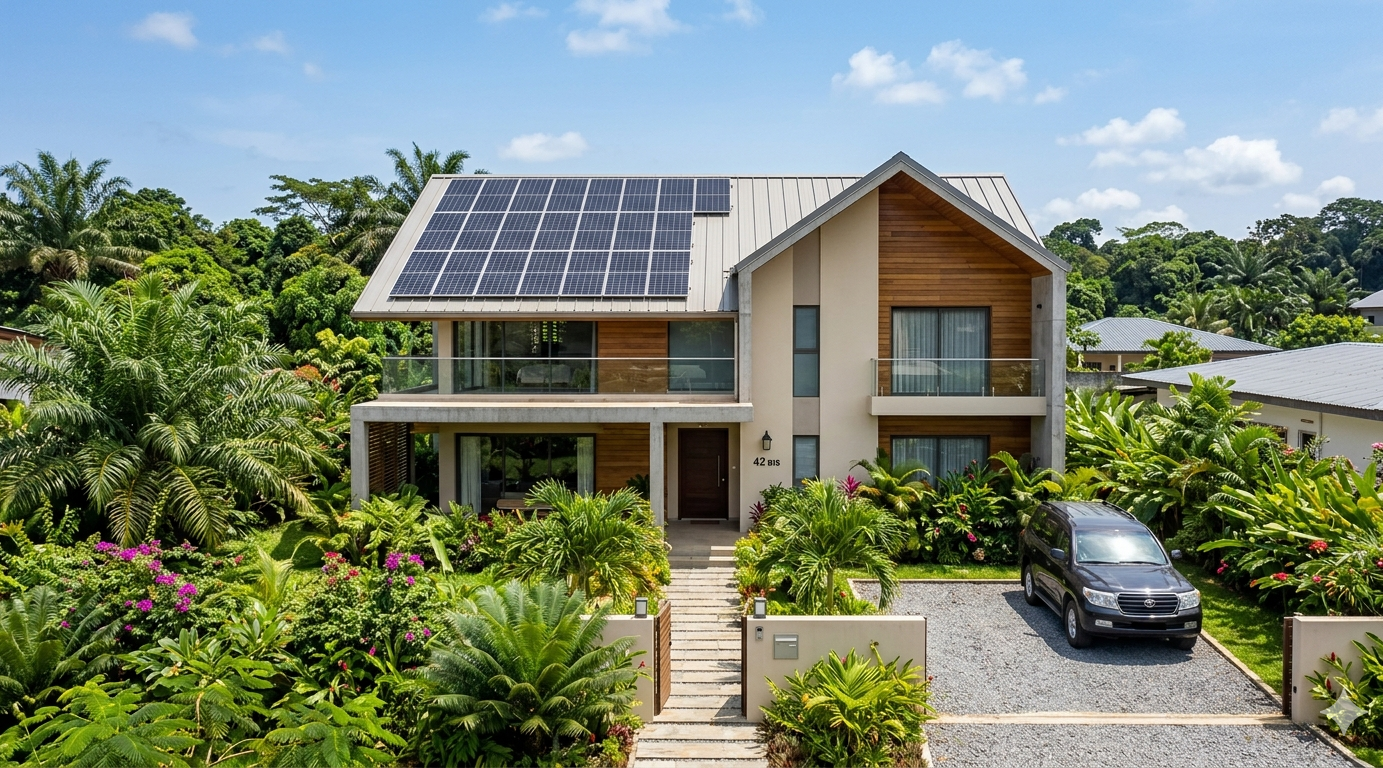
Gabon enjoys exceptional sunshine all year round. This natural resource makes it possible to generate clean, renewable electricity.
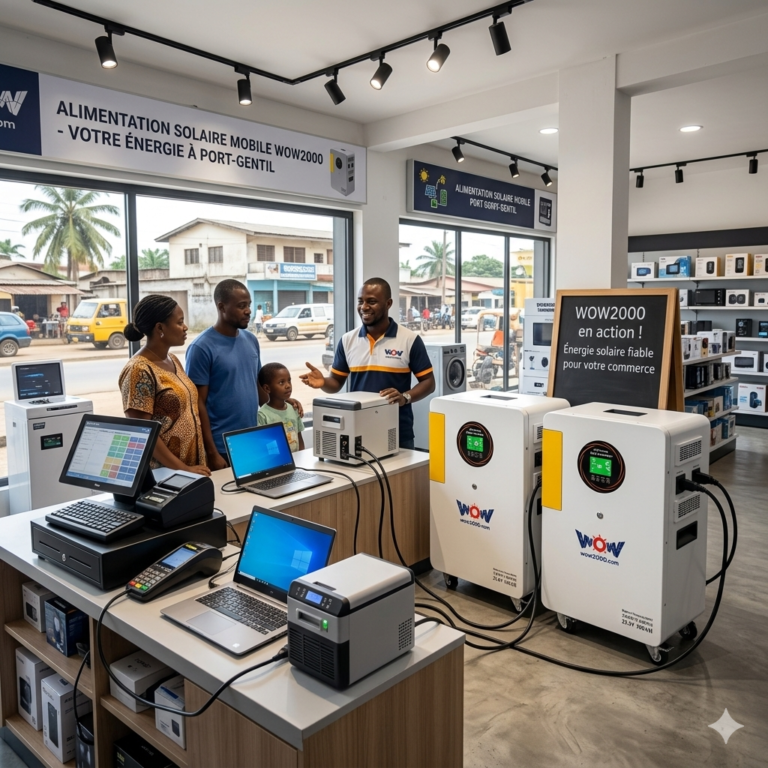
WOW2000 offers photovoltaic systems tailored to Gabon’s climate. The company has been operating in Gabon for 26 years and is familiar with local conditions.
The Main Benefits
- Free and inexhaustible electricity
- Lower Electricity Bills
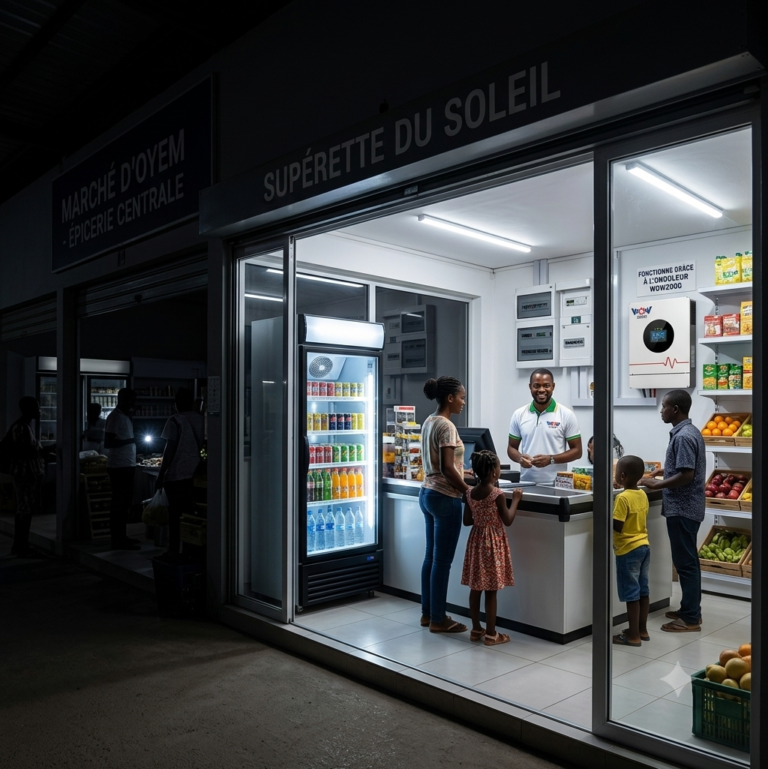
- Resilience in the Face of Power Outages
- Contribution to Environmental Protection
Contact Us
Would you like to learn more about solar photovoltaics? Contact us for a detailed explanation.
How to Use This Information in a Real-World Project
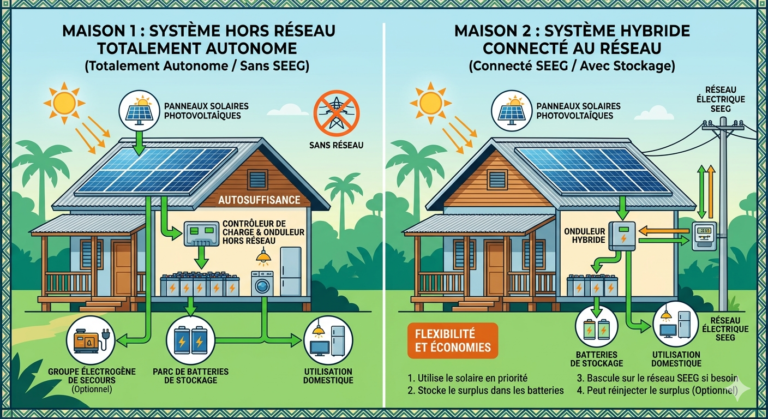
To gain an initial understanding of photovoltaics in Gabon, the following data should be gathered: solar generation, inverter, protective devices, grid, storage, and consumption profile. These form the basis for a meaningful comparison. Without this information, two systems with similar power ratings may serve very different purposes.
Moving from Information to Decision-Making
The correct approach is to select the architecture after distinguishing between self-consumption, backup power, and off-grid systems. Ask for clarification on the assumptions used in the calculations: loads considered, operating hours, peak power, estimated generation, usable storage capacity, protective devices, and the circuits involved. Prices and timelines can only be compared when the scope is identical.
Pre-Hire Screenings
Check the equipment specifications, technical documents, installation requirements, maintenance instructions, and written warranties. For news or market data, also keep a record of the original source and its date. Energy production varies depending on the site, shading, weather, system design, and operation. A site-specific study is still required before placing any order.