wow2000.com


How Can We Ensure a Reliable Residential Solar System in Gabon?
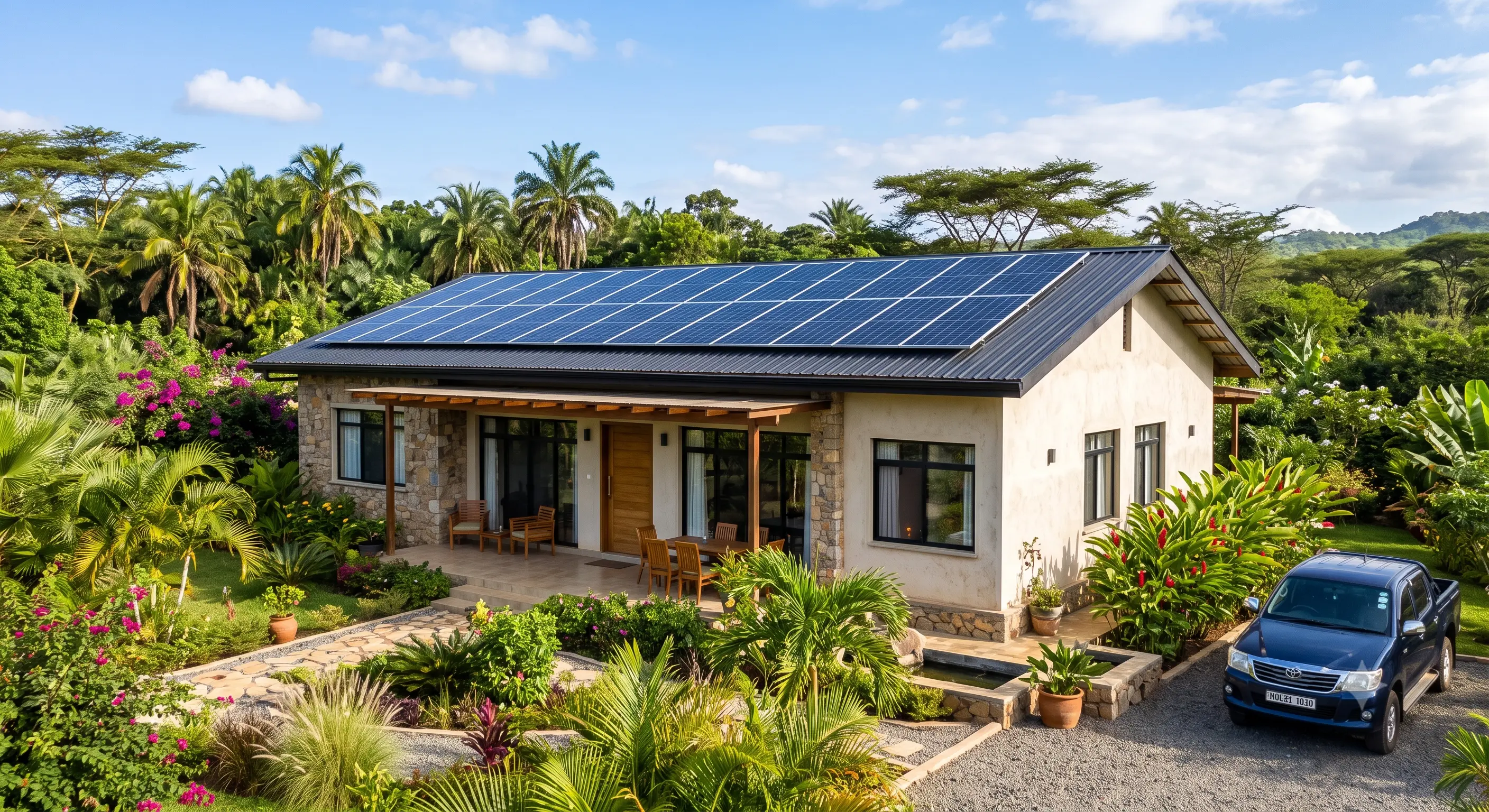
Investing in a residential solar system is a major decision for a homeowner in Gabon. Frequent power outages, tropical heat, and the variety of devices that need to be powered make choosing a reliable system particularly complex. Before considering a solar project for your home, the first step is to understand exactly what criteria determine a system’s reliability—and what information to gather before requesting a technical assessment.
This article provides a framework for evaluating the components of a residential solar system, identifying key considerations, and gathering the necessary information before requesting a quote. To learn more about the types of solutions offered by WOW2000, visit Our Solutions.
Establishing the Right Decision-Making Framework Before Any Residential Solar Project
Before sizing a solar system for a home in Gabon, the first step is to assess the actual energy situation at your site. Several questions need to be answered precisely before any decisions are made.
Step 1 — Define Your Main Goal
Reducing your electricity bill, ensuring power during outages, or achieving total self-sufficiency—these three goals require different system designs. A system designed to reduce your bill can operate without a battery. A system designed to ensure continuity during outages absolutely requires storage. A system designed for total self-sufficiency requires careful sizing of the panels, battery, and inverter.
Step 2 — Identify Priority Equipment During an Outage
Refrigerator, air conditioning, lighting, phone chargers, television—every household has its own priorities. The answer to this question directly determines the system’s power and the required storage capacity.
Step 3 — Document the typical duration of outages in your neighborhood
A two-hour outage and a twelve-hour outage do not require the same battery capacity. If your site experiences regular outages, document their frequency, average duration, and typical time frames. This data is essential input for any sizing study.
The design of a high-performance photovoltaic system relies on site-specific input data—load profile, local solar radiation, roof constraints, and uptime objectives. As noted in the’IEA PVPS Task 13, no standard sizing can replace an analysis specific to the installation.
The Technical Cornerstones of a Reliable Residential Solar Power System
To design a robust system suited to Gabon’s climate, each component of the installation must meet specific criteria. Here are the key points to consider for each one.
Solar Panels: Selection Criteria and Key Considerations
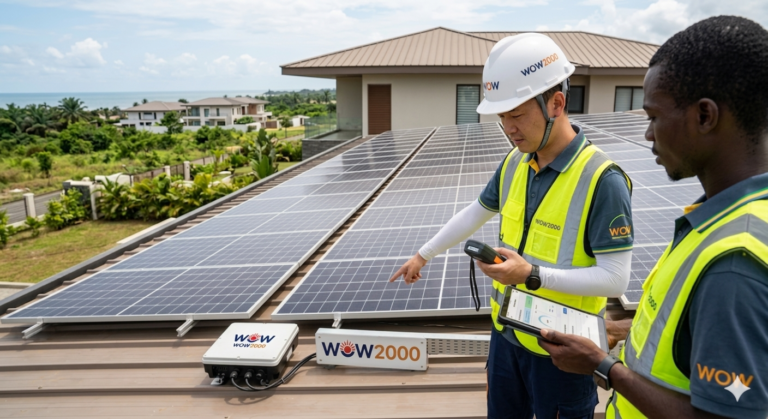
The reliability of a residential solar system starts with the choice of panels. There are several technical criteria to consider before making a purchase.
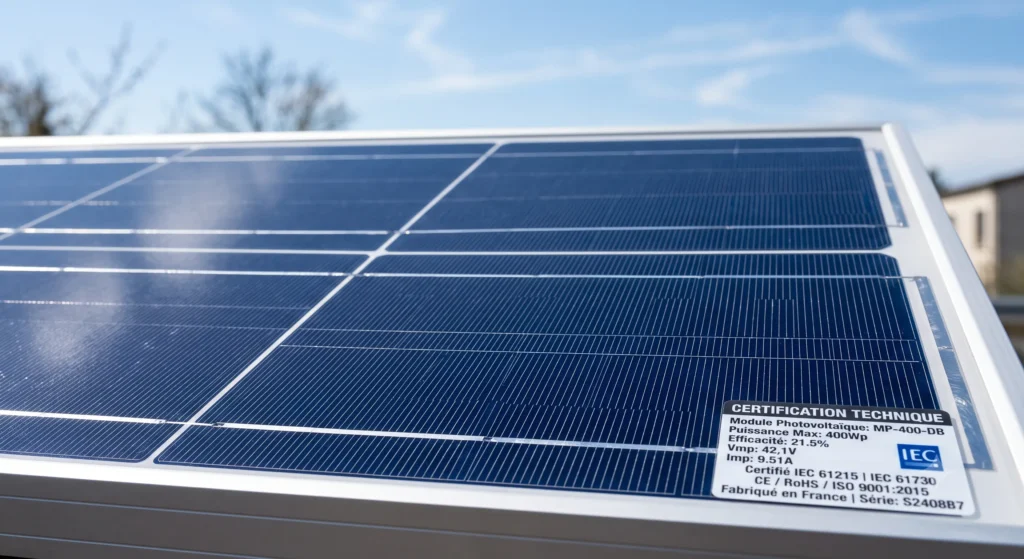
Rated Power and Efficiency : A panel’s rated power is measured under standardized laboratory conditions—1,000 W/m² of sunlight and a temperature of 25°C. Under actual conditions in the Gabonese Estuary, the ambient temperature is often higher than 25°C, which reduces the panel’s efficiency. This phenomenon is characterized by the temperature coefficient—expressed as the percentage loss per degree Celsius above 25°C. It is recommended to check this coefficient in the technical data sheet for the module you are considering before making a purchase.
International Certifications : A panel without international certification has not undergone the same tests as certified equipment. The IEC 61215 and IEC 61730 certifications confirm that the module has passed tests for durability, weather resistance, and electrical safety. These certifications should be verified in the manufacturer’s technical data sheet before making a purchase decision.
Performance Warranty and Product Warranty : It is important to distinguish between these two types of warranties. The performance warranty guarantees that a certain percentage of the initial power output will be maintained over a given period—for example, 80% of the power output after 25 years. The product warranty covers manufacturing defects. The terms and durations vary by manufacturer; they must be read carefully in the contractual documents.
Risks Associated with Non-Certified Panels : The Gabonese market sometimes offers modules whose actual characteristics do not match the advertised specifications. This can result in premature deterioration, insufficient resistance to tropical humidity, or electrical hazards. It is recommended that you request the manufacturer’s original technical data sheets before making any purchase.
The Inverter: Function, Types, and Checkpoints
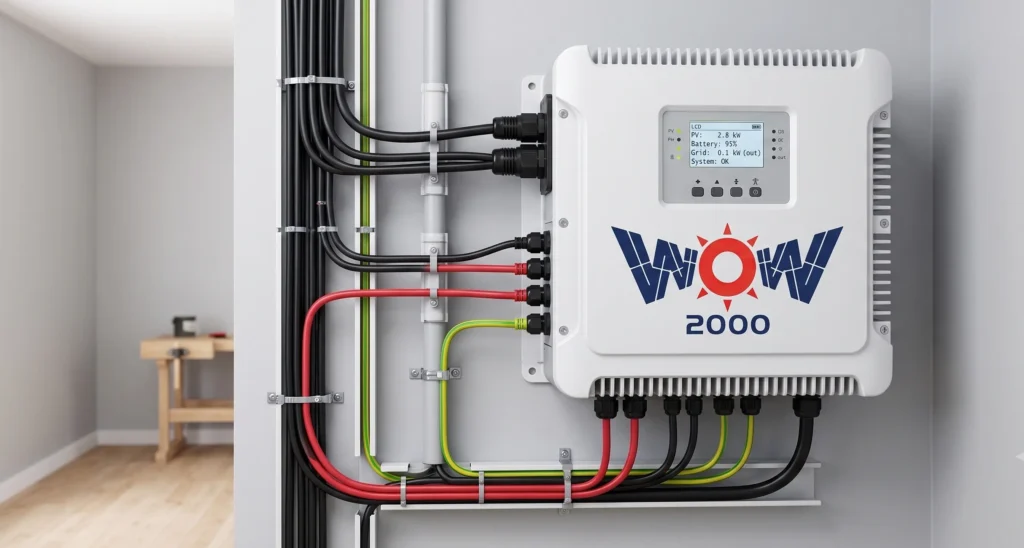
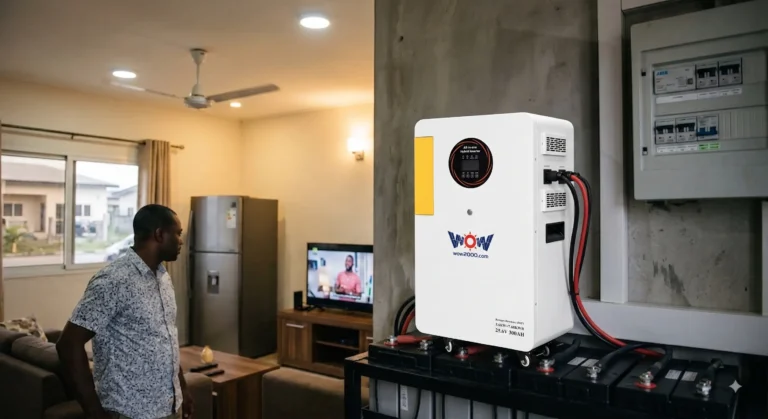
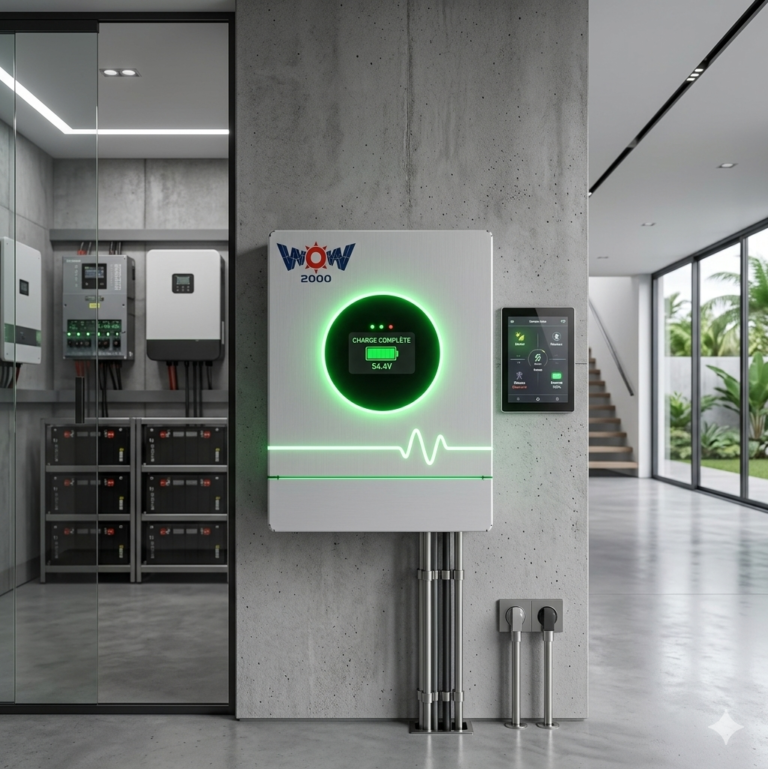
The inverter is the central component of a residential solar system. It converts the direct current generated by the panels into alternating current that can be used by household appliances. The choice of inverter directly affects how the system behaves during a grid outage.
Types of Inverters Available for Residential Use : There are several types of inverters for residential installations. A standard grid-tied inverter feeds solar power into the home’s electrical system during daylight hours but shuts down automatically in the event of a power outage—this type cannot power appliances during an outage. The hybrid inverter simultaneously manages the solar panels, the storage battery, and the utility grid—it can switch to battery power in the event of an outage, depending on its configuration. The off-grid inverter operates completely independently, without a connection to the utility grid.
The behavior in the event of a power outage depends on the model and configuration : The switchover mode, the speed of the transition, and battery discharge management vary depending on the selected inverter model, the wiring configuration, and the parameters configured during installation. These points must be verified in the technical documentation for the equipment under consideration and confirmed with the installer before commissioning.
Surge Protection : In Gabon, power surges following a power outage can cause overvoltages on the grid. The necessary protective measures—ground-fault circuit interrupters, surge protectors, and fuses—must be incorporated into the system’s design. Check the technical data sheet to see what is built into the inverter and what needs to be added to the electrical panel.
The inverter's power rating must be appropriate for your loads : The inverter’s rated power must be sufficient to simultaneously power all the equipment you wish to operate. Some appliances, such as air conditioners or refrigerators, have a startup current draw that exceeds their rated power—this startup peak must be taken into account when sizing the system.
Battery Storage: Selection Criteria and Key Considerations
For a Gabonese household that wants to have electricity during nighttime outages, a battery is an essential component. Several technical factors should be considered before making a decision.
Storage capacity : It is measured in kilowatt-hours (kWh). The required capacity depends on the power consumption of the devices you want to power and the desired runtime. A simple calculation: add up the power in watts of each priority device, multiply by the desired number of hours of runtime, and divide by 1,000 to get the capacity in kWh. This calculation serves as a starting point—the installer will refine this sizing during the on-site assessment.
Discharge Depth : The recommended maximum discharge depth varies depending on the battery technology. Regularly exceeding this limit reduces the battery's service life. This setting is specified in the technical data sheet and must be configured correctly during installation.
Service life in cycles : A battery is designed for a specific number of charge and discharge cycles. The higher this number, the longer the battery will last. This specification should be compared across the various products available on the market.
Storage and Operating Conditions : Batteries are sensitive to ambient temperature. Under Gabonese climate conditions, installing them in a well-ventilated area away from direct heat helps preserve their service life. These installation requirements must be specified by the installer.
To learn more about storage, check out our article on’Residential solar power with a lithium battery in Gabon.
Gathering Useful Information Before a Residential Solar Study
Before contacting an installer, gather this information to allow for an accurate assessment of your project. The more complete this information is, the better the proposed plan will be tailored to your actual situation.

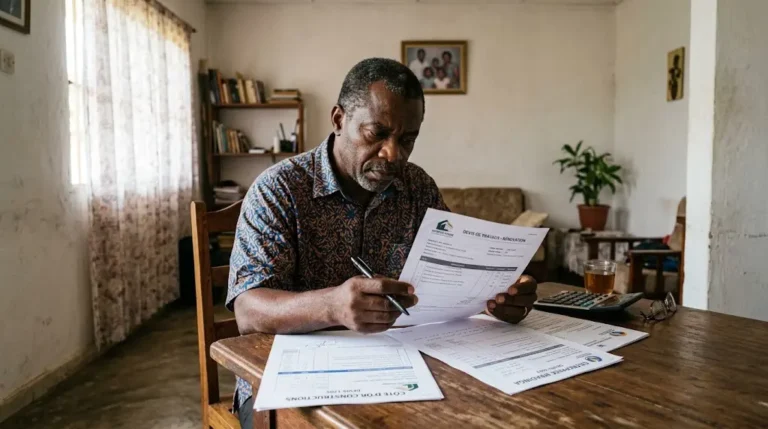
Pre-Study Preparation Checklist
| Item to be documented | Questions to Review |
|---|---|
| Priority Devices | Which equipment should be given priority during a power outage? |
| Rated power | What is the power rating in watts listed on each appliance? |
| Duration of outages | What is the average duration of the outages you've experienced? |
| Air Conditioning | How many air conditioners are affected, and what is their capacity? |
| Available space | Do you have a roof, a terrace, or some open space for the panels? |
| Electrical Panel | Can your spreadsheet be edited if necessary? |
This information allows a qualified technician to design a system tailored to your specific situation—without over- or under-sizing it.
How do I use this chart?
Fill in each line with the available data. For the rated power of each appliance, refer to the label or technical data sheet attached to the equipment. Distinguish between essential appliances—those whose shutdown would have an immediate impact on your comfort or food supplies—and convenience appliances that can wait until power is restored. This distinction directly influences the system’s sizing and the selected storage capacity.
Considerations Related to Your Site and Environment
Every home has its own unique energy profile and local constraints. Before designing a reliable residential solar system in Gabon, several factors specific to your site should be considered.
If your neighborhood experiences frequent and prolonged power outages, the storage capacity must be sized accordingly. A battery capable of providing four hours of runtime and one capable of providing twelve hours represent very different investments. Document any outages you’ve experienced before meeting with an installer.
If your home has multiple air conditioners, their combined power consumption often accounts for the majority of a household’s electricity usage. Including all air conditioners within the solar system’s scope requires a larger system capacity. It may be helpful to assess which units are truly a priority during a nighttime power outage—the master bedroom only, for example—and which can wait until power is restored.
If your roof has shading issues, the actual amount of sunlight reaching the panels will be less than the theoretical values. Nearby trees, adjacent buildings, or rooftop equipment may cast shadows on some of the modules at certain times of the day. This factor must be assessed during the on-site technical inspection.
If your indoor electrical system is old, it may be necessary to upgrade the electrical panel before installing a solar system. This must be verified by a qualified electrician during the preliminary assessment.
To learn more about the sizing approach best suited to your needs, see How to Choose an Off-Grid Residential Solar Kit in Gabon?, which details the criteria to be considered before conducting any on-site technical study.
Next step: Prepare your request for a residential solar study
The reliability of a residential solar system depends on careful sizing and equipment that is suited to the actual conditions at your site. To take concrete steps forward, gather the items from the checklist above and send them to WOW2000 to initiate a no-obligation technical discussion.
To make concrete progress, prepare the following items:
- A Detailed Inventory for each piece of equipment to be kept operational, including its rated power and estimated operating time during an outage.
- A list of the cuts observed in your neighborhood — frequency, average duration, and typical time frames.
- Site Constraints — available roof or installation area, approximate orientation, presence of shade, condition of the electrical panel.
- A recent electricity bill showing your monthly usage.
This information allows a qualified professional to assess feasibility and propose a design tailored to your specific situation.
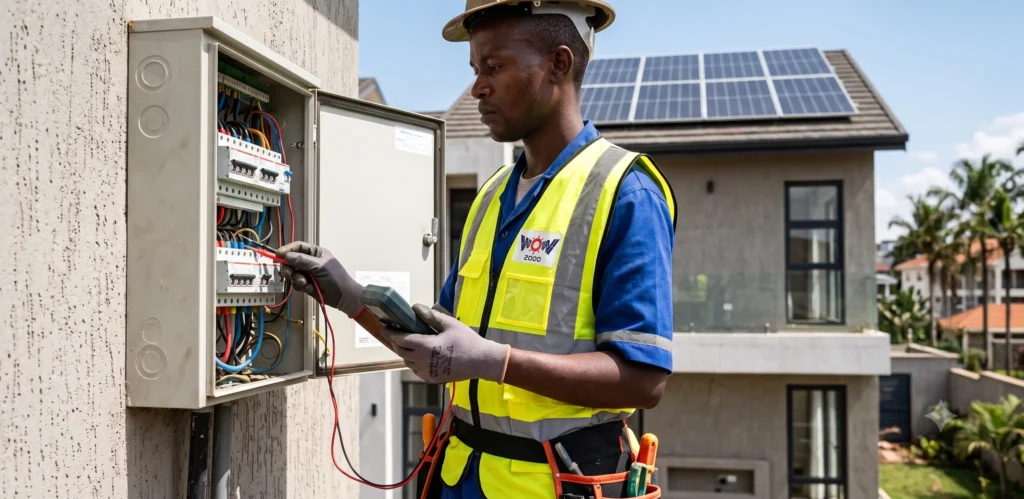
You can submit this information to WOW2000 to initiate a no-obligation technical consultation. The goal is to determine whether a solar power system with storage can meet the specific needs of your home, given the conditions at your site. Contact the team via WhatsApp or via the form on the page Contact Us.
Publisher Disclosure: This article is published by WOW2000 for general informational purposes only. It is not a substitute for an on-site technical study or the contractual terms applicable to a specific project. The actual performance of a solar system depends on parameters specific to each installation.
Frequently Asked Questions — Reliable Residential Solar System
Are all solar panels equally reliable?
No. Performance varies depending on the manufacturer and the certifications obtained. The IEC 61215 and IEC 61730 certifications confirm that a module has passed standardized durability tests. Be sure to request the original technical data sheets before making a purchase.
Does a residential solar system work during the rainy season?
Yes, to some extent. Production decreases on overcast days but does not stop completely. Storage capacity must account for days with low sunlight. This parameter depends on the load profile and the chosen configuration.
Should you choose a hybrid or standard inverter for a home?
It depends on your goal. A standard UPS reduces your electricity bill but does not provide uninterrupted power during outages. A hybrid UPS powers your equipment during outages using a battery. The best choice is determined through an on-site assessment.
Does a lithium battery require regular maintenance?
They require little maintenance compared to lead-acid batteries. Their lifespan depends on operating conditions and ambient temperature. The settings are configured by the technician during installation.
Is it possible to undersize or oversize a residential solar system?
Both scenarios are possible. To minimize this risk, keep track of your utility usage, identify your priority appliances, and note the typical duration of power outages in your neighborhood.
How can you check the reliability of a solar installer?
Check to see if there is a physical address, whether the company can provide technical specifications, whether the warranty terms are clear, and whether after-sales service is available.