wow2000.com


Why Choose a Residential Solar Power System to Avoid Power Outages in Gabon?
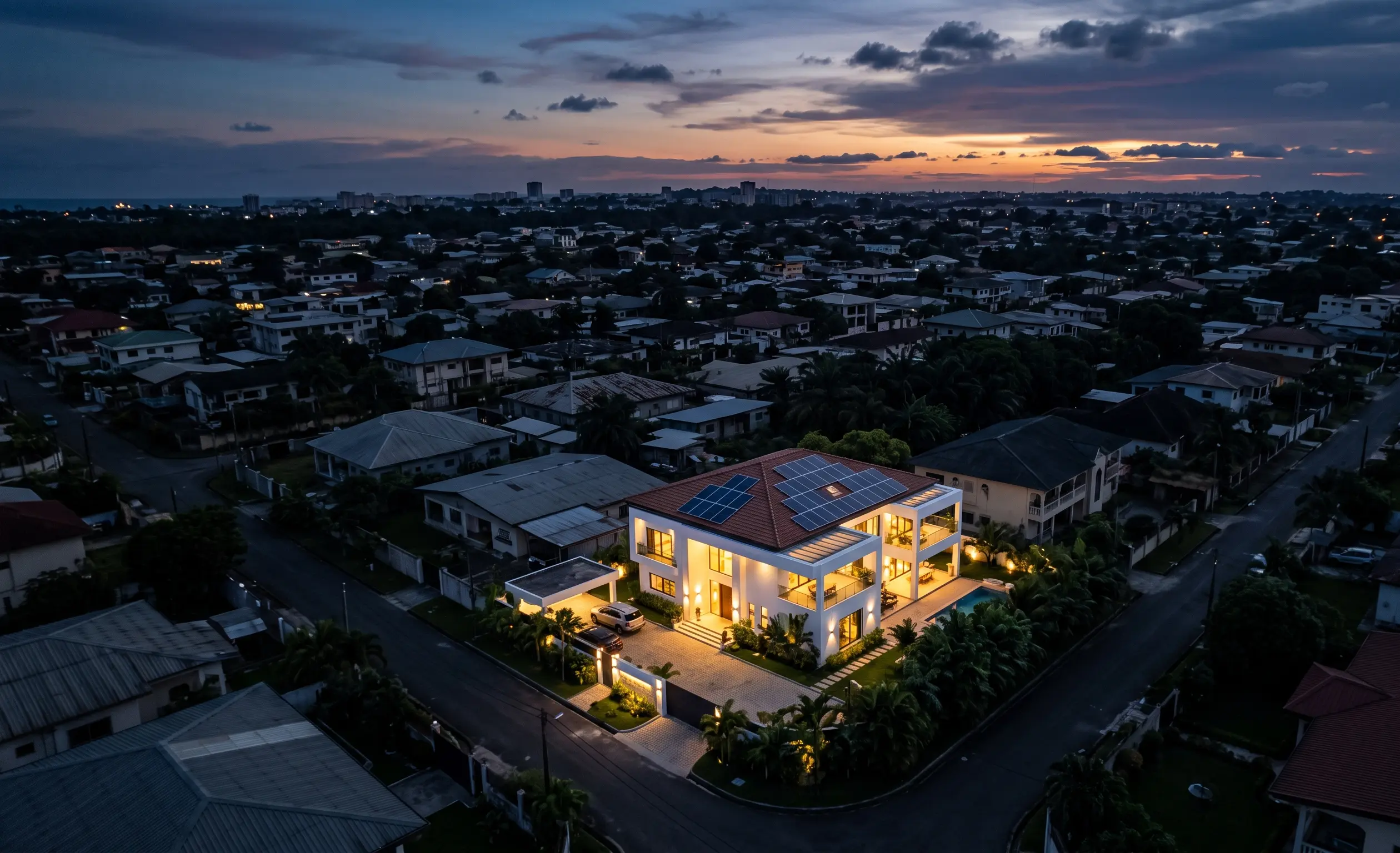
In light of frequent power outages on the SEEG grid in Gabon, several solutions are available to households. Generators, grid-only systems, battery-less solar systems, and hybrid solar systems with storage—each option addresses power outages in a different way. This article provides a fact-based comparison of these options to explain why a photovoltaic system with storage offers a structural solution to the problem of residential power outages.
To learn more about the categories of solutions offered by WOW2000, visit Our Solutions.
What Power Cuts Really Cost a Gabonese Household
Before comparing solutions, it is helpful to quantify what load shedding actually costs—not just in terms of discomfort, but in terms of concrete, measurable losses.
Direct and Invisible Losses
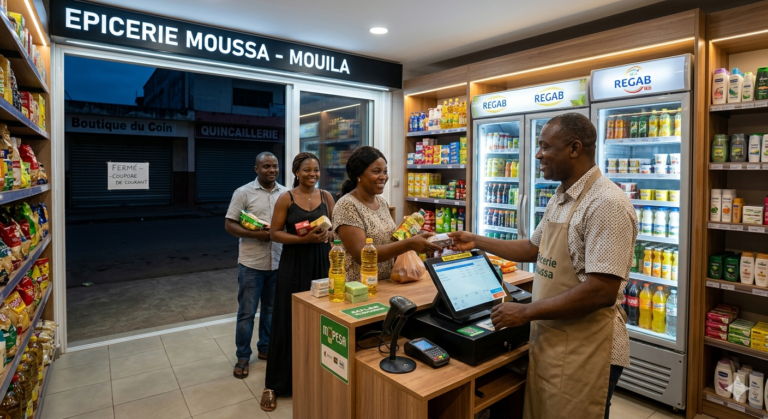
Food loss is often the most immediate. A refrigerator or freezer that stops working for several hours a day in Gabon’s tropical heat leads to the gradual spoilage of food. Over the course of a year, these losses amount to a significant sum for an average household.
The deterioration of electronic equipment is more insidious. Power surges when the power comes back on—a common occurrence on the SEEG grid—gradually damage televisions, computers, chargers, and household appliances. The premature replacement of this equipment represents a real cost that is often underestimated.
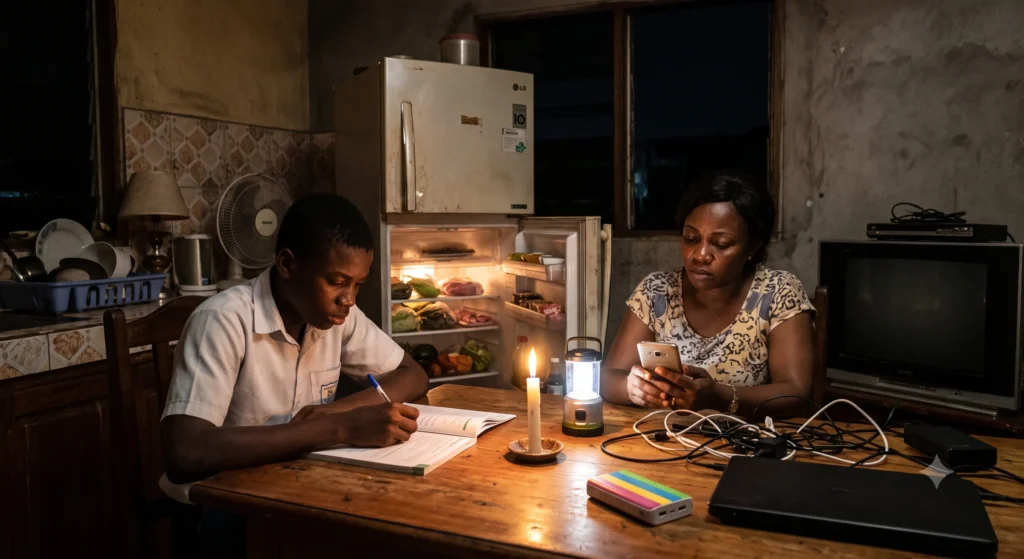
Loss of productivity This affects households where adults are working remotely or children are studying for exams in the evening. A power outage at 8 p.m. while a student is studying or during a work meeting has a direct impact on performance.
Spending on workarounds — candles, flashlights, portable chargers, and subscriptions to neighborhood power generators — represent a recurring monthly expense that many households do not consider to be related to load shedding.
Why This Reality Deserves a Structural Response
If power outages were a rare and unpredictable occurrence, a temporary workaround would suffice. But in many neighborhoods of Libreville, Owendo, Akanda, and Franceville, outages are frequent, predictable, and prolonged. Given this structural reality, a structural solution is needed.
The Four Options Available in Response to Load Shedding
A Gabonese household facing power outages has four main options. Each addresses the issue of outages differently—with very different cost, comfort, and reliability profiles.
Option 1 — Continue without a specific solution
It’s the choice to keep things as they are. We endure the outages using the usual workarounds—candles, flashlights, and waiting for the power to come back on. This option has a low immediate cost but a high cumulative cost over time—food spoilage, equipment damage, and lost productivity.
Option 2 — The Generator Set
The generator produces electricity from fuel as soon as it is turned on. Its main advantages are its immediate availability and its relatively affordable initial purchase price.
However, it has numerous drawbacks in the Gabonese context. The cost of fuel is a recurring monthly charge that increases with the frequency of outages. Noise When in operation, it disturbs the neighborhood and disrupts the peace and quiet of the home—especially at night. Gas Emissions pose a health problem in confined spaces. Regular Maintenance — oil, filters, spark plugs — represents an additional cost and a burden. The Risks Associated with Fuel Storage in a residential setting is an issue that deserves to be taken seriously.
Option 3 — The Battery-Free Solar System
A grid-connected solar system without a battery generates electricity during daylight hours and reduces the SEEG bill. It is a viable solution for reducing energy costs.
However, this type of system does not protect against power outages. As a safety measure, a standard grid-tied inverter shuts down automatically during a power outage—even if the panels are generating electricity. Without a storage battery, the system is useless during a nighttime outage or on overcast days.
Option 4 — The Hybrid Solar System with Storage
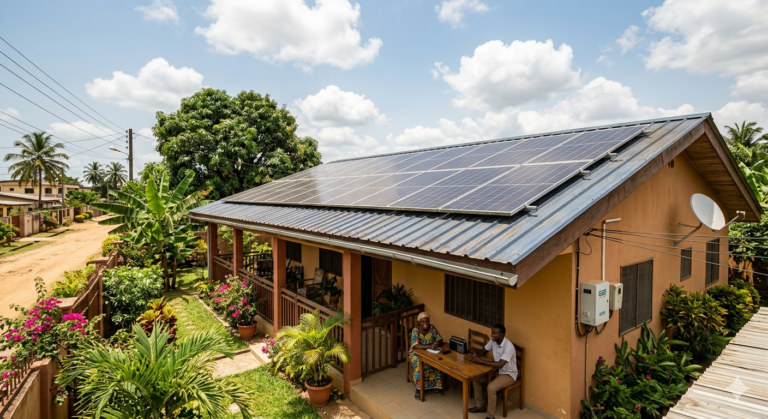
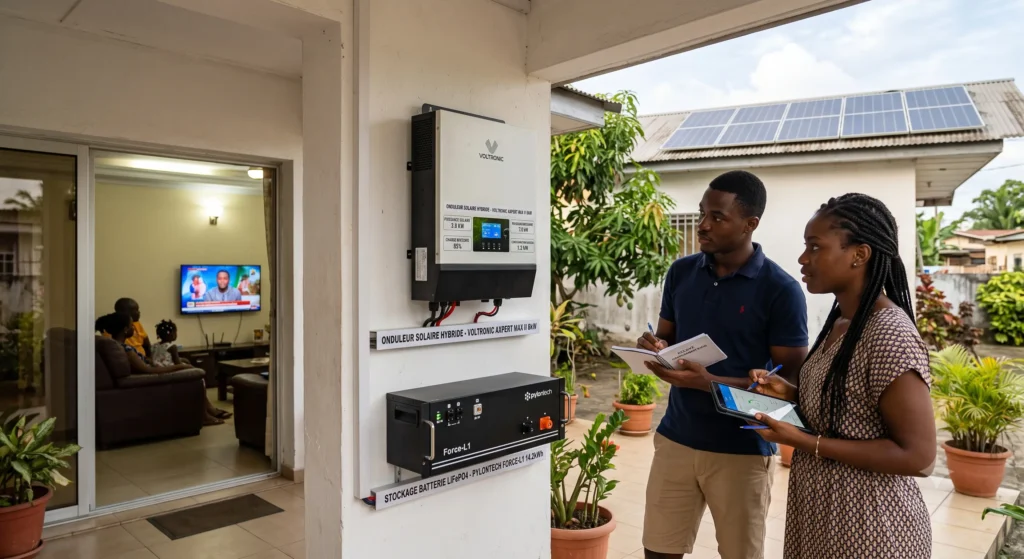
This is the only option that provides a comprehensive, structural solution to the problem of load shedding. A system consisting of solar panels, a hybrid inverter, and a storage battery generates, stores, and distributes its own electricity—independently of the SEEG grid.
During a power outage, the system automatically switches to battery power. Your home continues to function normally—refrigerator, lighting, Wi-Fi, chargers—without any noticeable interruption. To learn more about choosing the right system for your home, check out our article on The Best Emergency Solar System for a Home in Libreville.
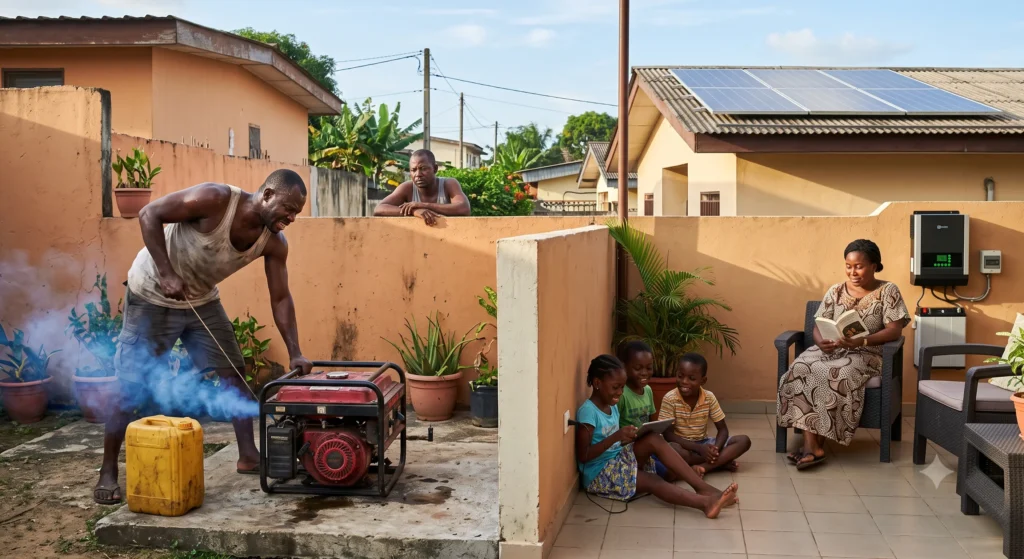
Direct Comparison: Hybrid Solar System vs. Generator
The comparison between these two solutions to prevent power outages is often a key factor in the decisions made by Gabonese households. Here are the objective factors to consider.
Total cost over the life of the project — the deciding factor
A generator has a lower initial purchase cost. However, its total cost over time depends directly on the frequency of power outages. The more frequent the outages, the higher the fuel consumption—and the higher the monthly operating cost.
A hybrid solar system requires a higher initial investment. Once installed, however, its operating costs are very low—the panels do not consume fuel. Over its entire lifespan, the total cost of a solar system is often lower than that of a generator used daily.
Ease of use—an often-overlooked factor
A generator must be started manually, refueled regularly, and maintained. At night, the noise it makes disturbs the sleep of the household and the neighborhood.
A hybrid solar system operates fully automatically—it switches to battery power during an outage without any human intervention, silently, at any time of day. The home continues to function normally without anyone having to get up to turn anything on.
Long-Term Reliability
A generator is a piece of mechanical equipment with parts subject to wear and tear—such as the engine, alternator, and filters. Its service life depends directly on the regularity of maintenance and the quality of the fuel used.
Photovoltaic panels are devices with no moving parts. Their long-term durability is generally greater than that of a generator, provided the equipment is certified and installed correctly.
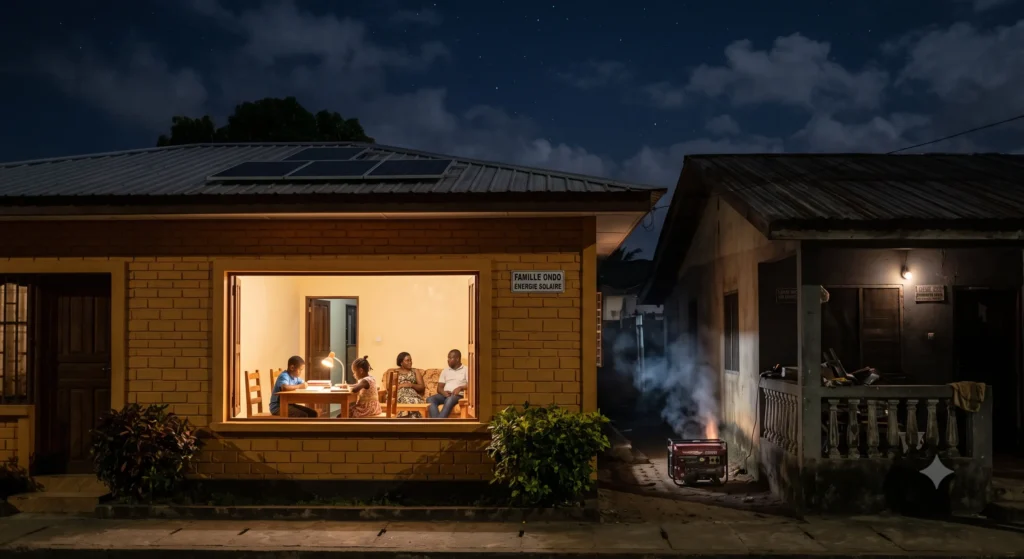
Situations in which a hybrid solar system is particularly well-suited
Not every situation requires the same solution. Here are the types of households for which a hybrid solar system is the most suitable solution for load shedding.
If your neighborhood experiences frequent nighttime power outages
Nighttime power outages are the most disruptive—they affect sleep, thermal comfort, and home safety. A generator running at night creates noise and disturbs the neighborhood. A hybrid solar system with a battery silently covers these nighttime outages using energy stored during the day.
If you have sensitive equipment that needs to be protected
Computers, televisions, medical equipment, security systems—these devices are particularly vulnerable to power surges when power is restored. A hybrid UPS continuously regulates the voltage and protects this equipment during grid-to-battery transitions.
If the outages are long and unpredictable
A power outage lasting 8 to 12 hours consumes a lot of fuel for a generator. A hybrid solar system designed for these long outages recharges its battery as soon as sunlight returns—without any additional fuel costs.
If you'd also like to lower your SEEG bill
Unlike a generator, which only kicks in during power outages, a hybrid solar system generates energy continuously during daylight hours. This energy production directly reduces your consumption from the SEEG grid—and thus your monthly bill.
According to data from BloombergNEF on Energy Storage, the cost of battery storage systems has continued to fall in recent years—making hybrid solutions accessible to a growing number of African households.
Next step: Find the right solution for your household
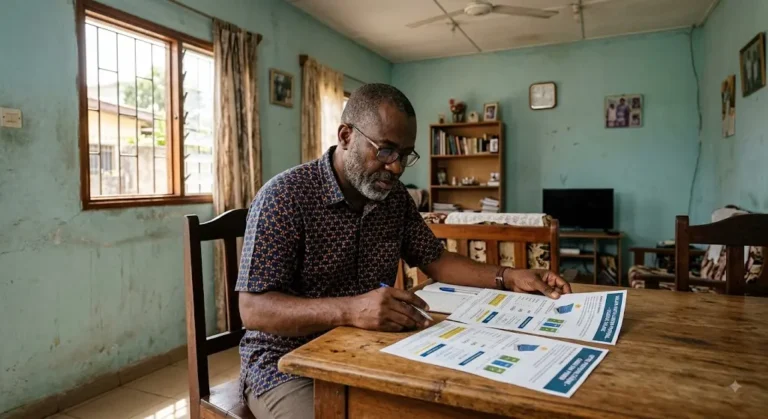
Understanding why a hybrid solar system is better suited for load shedding than a generator is the first step. The next step is to identify the specific configuration that’s right for your home—based on your priority appliances, the typical duration of power outages in your neighborhood, and your budget.
For this step, see our article on How to Choose the Best Emergency Solar System for a Home in Libreville and our guide on How to Get a Free Quote for Solar Power for Your Home in Gabon.
You can contact the team via WhatsApp or via the form on the page Contact Us.
Publisher Disclosure: This article is published by WOW2000 for general informational purposes only. It is not a substitute for an on-site technical study or the contractual terms applicable to a specific project. The actual performance of a load-shedding photovoltaic system depends on parameters specific to each household and each site.
Frequently Asked Questions — Residential Photovoltaic System with Anti-Discharge Protection
Can a battery-free solar system protect against power outages?
No. Without a battery, a grid-tied inverter automatically shuts down during a power outage as a safety measure. Even if the solar panels are generating electricity, the system cannot power appliances during a grid outage. A battery is essential for effective protection against load shedding.
Is a generator cheaper than solar power in the long run?
It depends on how often power outages occur. A generator that is used infrequently can be cost-effective. But with daily power cuts—which are common in many neighborhoods of Libreville—the cumulative cost of fuel and maintenance may exceed that of a hybrid solar system over the system’s total lifespan.
Is the switch to battery power really imperceptible?
It depends on the inverter model. Some models switch over in less than 20 milliseconds—a delay that is imperceptible to all devices, even the most sensitive ones. Other models take a few seconds. This specification should be checked in the technical data sheet before purchasing.
Does a hybrid solar system work during the rainy season in Gabon?
Yes. The panels continue to generate power on cloudy days, albeit at a reduced rate. The battery, charged on previous days, ensures uninterrupted power during days with little sunlight. This factor is taken into account when sizing the system.
Can we start with a basic system and then expand it?
Yes, if the system is designed from the outset to be scalable. The choice of inverter is crucial—some models allow you to add panels and batteries later on. This point should be discussed with the installer before the initial setup.