wow2000.com


What is the best backup solar system for a home in Libreville?
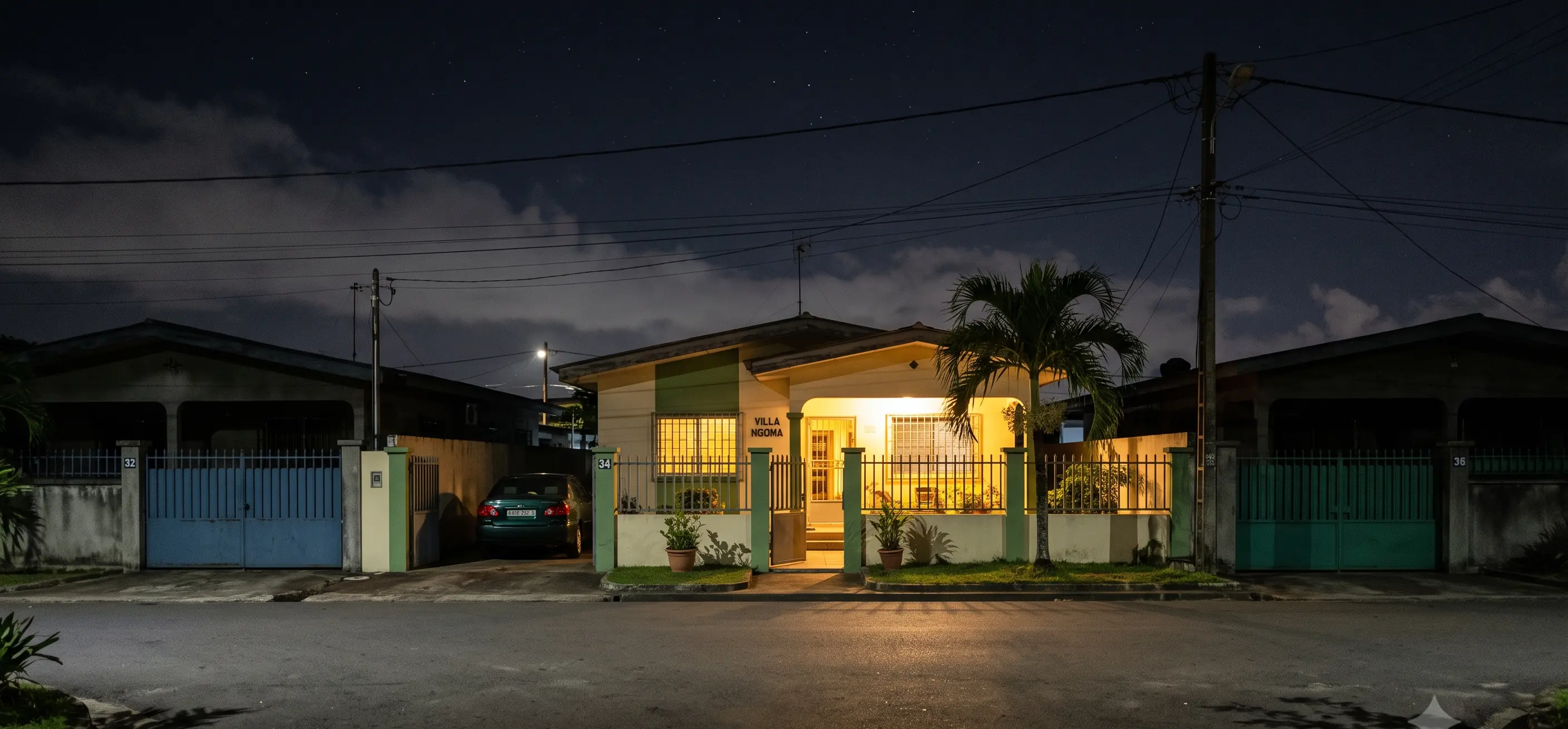
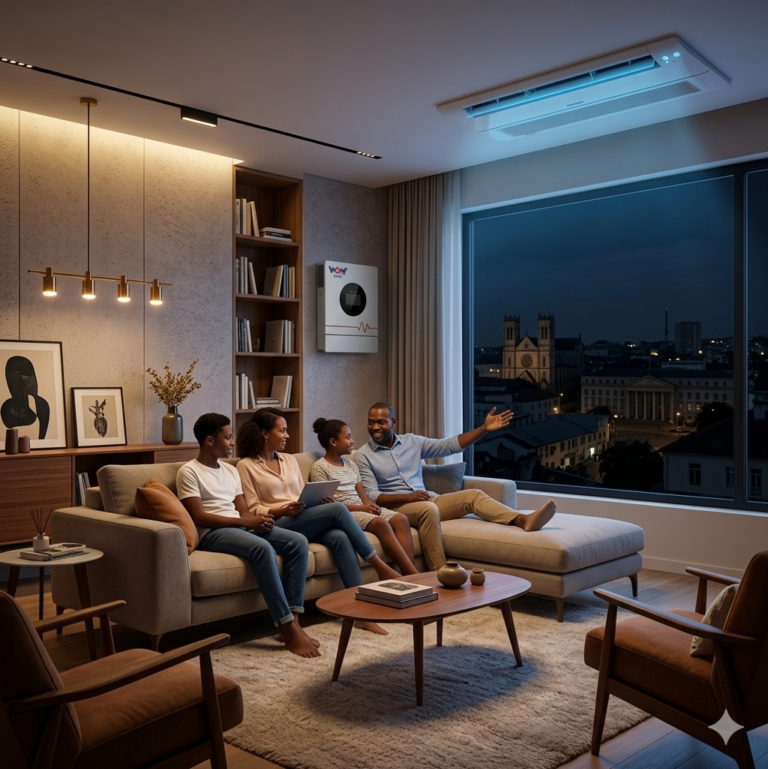
Choosing a backup solar system for a home in Libreville isn’t just a matter of selecting the highest power rating available. The best system is the one that precisely matches your priority loads, the typical duration of power outages in your neighborhood, and the physical constraints of your site. This article offers a structured decision-making process to help you identify the system size best suited to your specific situation.
To learn more about the categories of solutions offered by WOW2000, visit Our Solutions.
Start by defining what you really want to protect
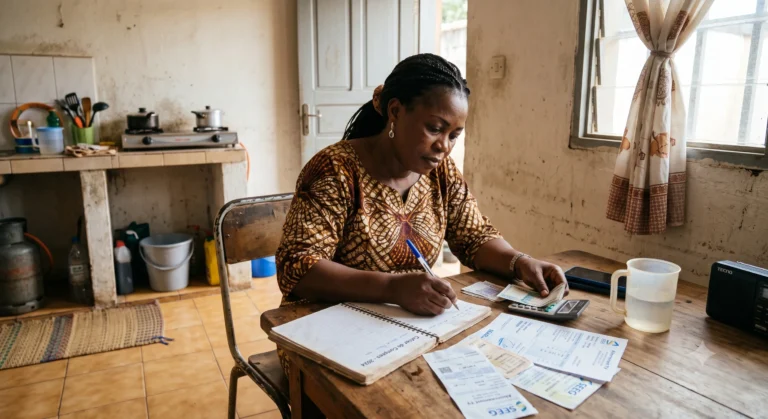
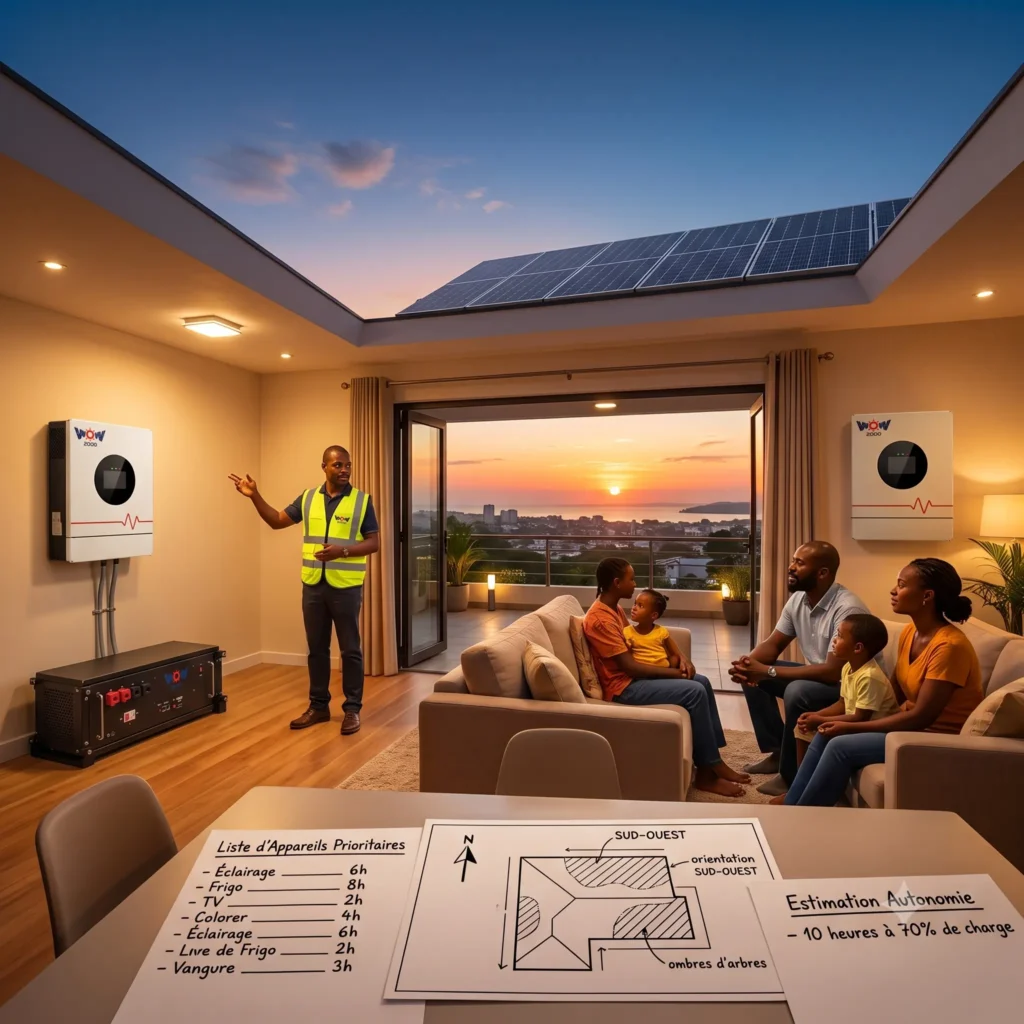
Before we talk about power or capacity, the first question to address is simple: What really bothers you when the power goes out in Libreville?
Identify Your Actual Priority Expenses
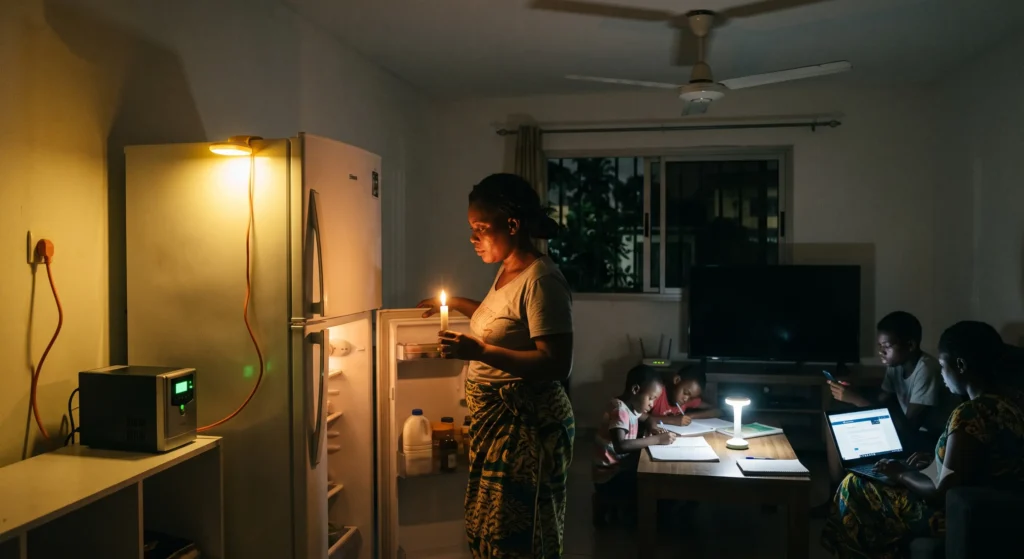
Every household has a different answer to this question. For some, it’s the refrigerator and the food inside it. For others, it’s the Wi-Fi and the computers the kids use to do their homework. For still others, it’s the air conditioning in the master bedroom that helps them sleep at night.
This list of priorities is not insignificant—it directly determines the minimum power output required from the inverter. A refrigerator and LED lighting represent a very different load than two air conditioners and an electric water heater.
Distinguishing between critical loads and comfort loads
To organize your thoughts, it's helpful to divide your devices into three categories.
Critical Loads — A power outage has immediate and measurable consequences: the refrigerator, freezer, water pump, medical devices, and security system. These are the devices that must be included in the emergency plan.
Significant Expenses — Their failure is inconvenient but not catastrophic: main lighting, Wi-Fi, phone chargers, and television. These devices significantly improve comfort during a power outage.
Comfort Expenses — auxiliary air conditioning, secondary fans, washing machines, electric ovens. Including them in the emergency power scope significantly increases the system’s required power—and thus its cost.
The 5-Step Method for Choosing a Backup System
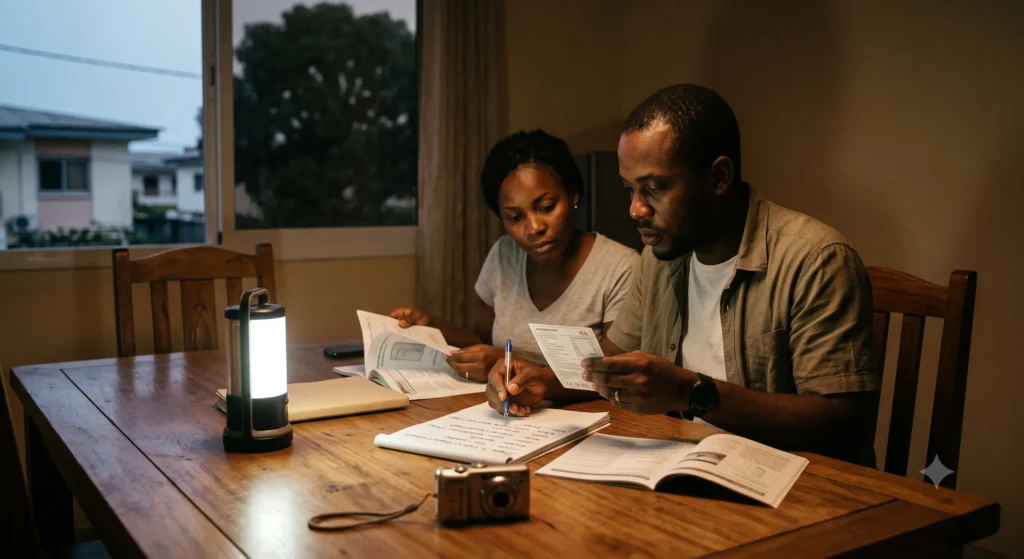
Step 1 — List your critical loads along with their power ratings
Walk through your home and make a note of every appliance you want to keep running during a power outage. For each appliance, note its rated power in watts—which is listed on the label attached to the appliance or in its manual. Also note its starting power, if available—some appliances, such as air conditioners or refrigerators, have a starting peak that is 2 to 3 times higher than their rated power.
Step 2 — Record the maximum starting power
The maximum simultaneous startup power is the parameter used to size the inverter. If you start your refrigerator and air conditioner at the same time, the inverter must be able to handle the sum of their respective starting currents—without tripping. This is an often-overlooked parameter that explains why some systems fail as soon as a piece of equipment starts up.
Step 3 — Determine the typical duration of outages
How long do power outages typically last in your neighborhood in Libreville? Two hours, six hours, or an entire night? This factor directly determines the required battery capacity. A battery that lasts two hours and one that lasts twelve hours do not require the same battery—and therefore do not require the same budget.
If you don't know the exact duration, keep a log for a few weeks—including the date, start time, and duration of each interruption. This data will be invaluable during the sizing study.
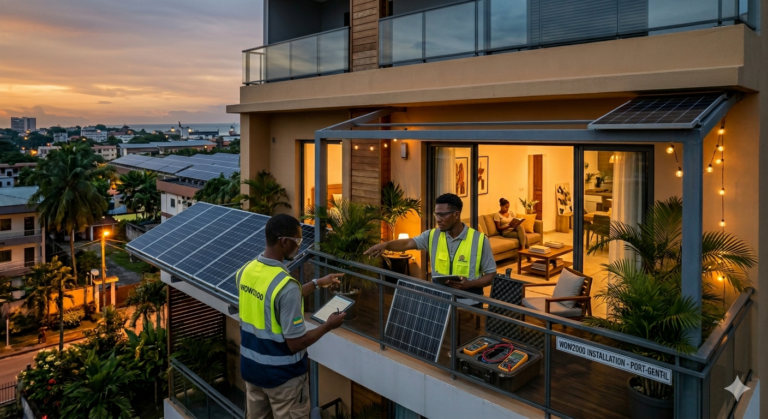
Step 4 — Assess the structural limitations of your roof
The available space on your roof determines the maximum number of panels that can be installed. A small roof or one that is heavily shaded can limit power output and, consequently, the battery’s charging capacity. The roof’s orientation—north, south, east, or west—also affects the actual performance of the panels in Libreville.
These constraints are not deal-breakers, but they do influence the design. They are assessed during the on-site technical inspection.
Step 5 — Determine whether air conditioning is included in the scope
This is often the most important decision—and the one that has the greatest impact on your budget. A standard 1.5 CV air conditioner consumes between 1,000 and 1,500 watts during operation, with a startup peak of up to 3,000 to 4,500 watts. Including even a single air conditioner in the backup scope radically changes the system configuration.
The question isn't whether air conditioning is comfortable—it is—but whether the cost of including it in the backup system is justified given your actual usage during nighttime power outages.
The Three Levels of Emergency Systems for a Home in Libreville
In practice, backup system configurations fall into three categories—each corresponding to a different set of requirements and budget.
Level 1 — Essential Protection
This level covers only essential appliances—refrigerator, LED lighting, Wi-Fi, and phone chargers. It is suitable for households that want to protect their food supplies and maintain minimal connectivity during short- to medium-length power outages.
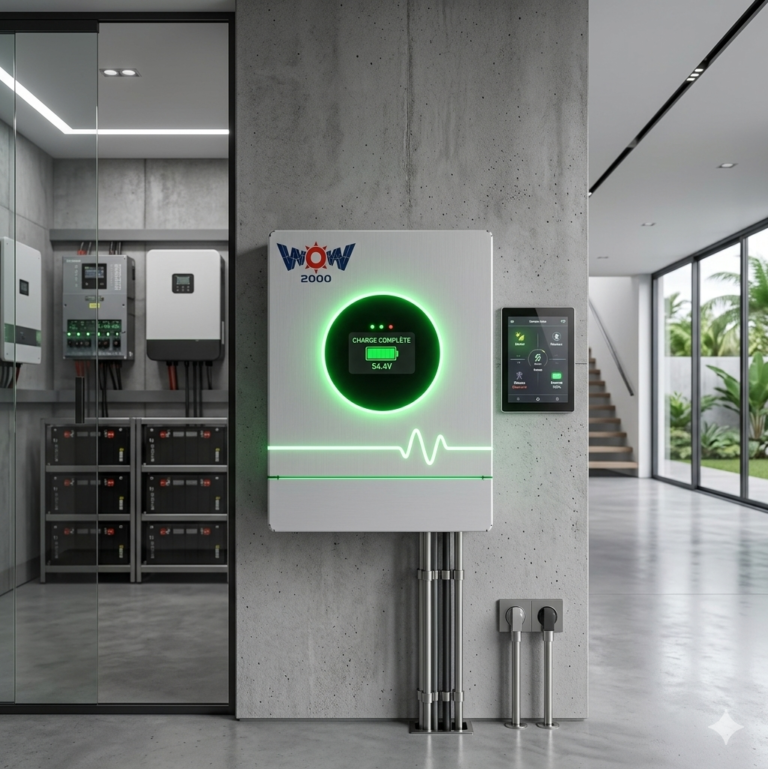
The inverter's power output and the battery's capacity are moderate. This level is often chosen as a starting point by households that want immediate protection and plan to expand the system later.
Level 2 — Sustained Comfort
This level adds high-power loads—fans, televisions, computers—to the critical loads of Level 1. It is suitable for households that wish to maintain an acceptable level of comfort during power outages and ensure several hours of backup power.
The inverter's power output and the battery's capacity are higher. This level is the most common for medium-sized homes in Libreville that experience regular power outages lasting 4 to 8 hours.
Level 3 — Autonomous Driving with Air Conditioning
This tier includes air conditioning—at least in the master bedroom—in addition to the costs covered by tiers 1 and 2. It is suitable for households that experience frequent, prolonged power outages at night and wish to maintain a comfortable sleeping environment.
The inverter's power output and the battery's capacity are significantly higher. This level represents the largest investment but also offers the most comprehensive protection against nighttime power cuts in Libreville.
To understand the technical criteria that distinguish these components—inverter, battery, and solar panels—check out our article on How to Ensure a Reliable Residential Solar System in Gabon.
What Your Decision File Reveals
Once you have completed the 5 steps, you will have a decision document that allows a qualified technician to propose a specific configuration. These key points summarize the main points of that document.
Key Information to Provide to an Installer
Here is the information you need to gather before requesting a study. The more accurate this information is, the better the proposed design will be suited to your actual situation in Libreville.
| Information to be reported | Its impact on sizing |
|---|---|
| List of Priority Devices by Power (W) | Determines the minimum rated power of the inverter. |
| Maximum Simultaneous Starting Power (W) | Determines the inverter's peak power—a parameter that is often underestimated. |
| Desired battery life (hours) | Directly affects battery capacity—double the runtime, and you'll roughly double the battery capacity. |
| Air conditioning included or not | A binary decision that radically changes the system's configuration and budget. |
| Available roof area (m²) | Limits the maximum number of panels and, therefore, the maximum power output. |
| Roof Orientation | Affects the actual output of the panels—an east- or west-facing roof produces less energy than a south-facing roof. |
| Presence of shadows | A nearby tree or building can significantly reduce production at certain times of the day. |
| Frequency of Outages | Affects battery wear — very frequent power cuts put more strain on the system. |
Why not base your decision solely on the number of panels?
A solar backup system isn’t sized based on the number of panels. It’s sized first based on the loads to be covered and the desired runtime—which determines the battery and inverter. The panels come next to ensure the battery is recharged during a typical day. Buying panels without first sizing the battery and inverter to your actual needs is like buying an engine without knowing what kind of car you want to build.
According to the’IRENA, properly sized residential solar systems perform significantly better than those installed without a prior analysis of the household’s actual needs. A growing number of Gabonese households.
Key Considerations Regarding Libreville
Libreville has certain local characteristics that influence the design of an emergency power system—and that any reputable installer must take into account.
The Rainy Season and Its Impact on Production
Libreville has two rainy seasons each year. During these periods, cloud cover increases, reducing the amount of solar irradiance received by the panels. A system sized based solely on dry-season data may prove insufficient during several consecutive weeks of overcast weather.
An installer familiar with the conditions in Libreville takes this factor into account when calculating battery capacity—allowing for a sufficient margin to cover days with little sunlight.
Shade from Roofs in Urban Areas
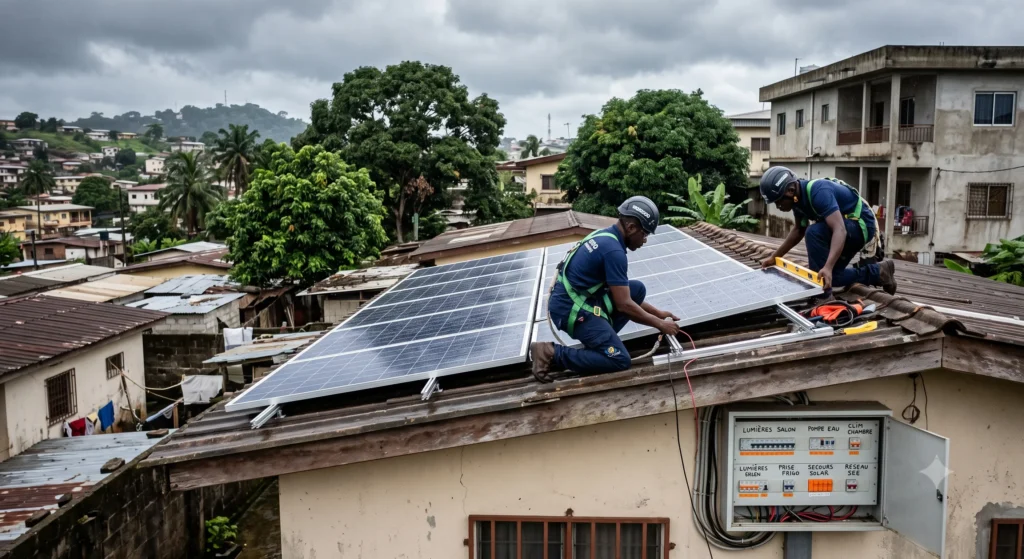
In the densely populated neighborhoods of Libreville—Akanda, Louis, and Nombakélé—neighboring buildings and mature trees can cast shadows on the panels at certain times of the day. This partial shading can significantly reduce power generation—sometimes by 20 to 30%, depending on the orientation and the season.
An on-site technical inspection allows us to accurately assess this impact and orient the panels to maximize actual energy production.
Circuit Isolation in the Electrical Panel
To power only the priority circuits during an outage, the electrical panel must allow for separation between the circuits covered by the backup system and the secondary circuits. An outdated or poorly organized electrical panel may need to be upgraded before the solar system is installed.
Next step: Submit your decision package
Once you have completed the 5 steps and gathered the data from the table, send this information to WOW2000 to receive an accurate sizing study tailored to your home in Libreville.
To prepare your request for a quote, check out our article on How to Get a Free Quote for Solar Power for Your Home in Gabon.
You can contact the team via WhatsApp or via the form on the page Contact Us.
Publisher Disclosure: This article is published by WOW2000 for general informational purposes only. It is not a substitute for an on-site technical assessment or the contractual terms applicable to a specific project. The actual performance of a solar backup system depends on factors specific to each installation and each household in Libreville.
Frequently Asked Questions — Emergency Solar System for Homes in Libreville
How can I determine which system level is right for my household?
The answer depends on three main factors: the appliances you want to keep running during a power outage, the typical duration of outages in your neighborhood, and your decision regarding air conditioning. These three factors will help you determine whether to choose Level 1, 2, or 3, as described in this article.
Can we start with Level 1 and then move on to Level 2 or 3?
Yes, under certain conditions. For an expansion to be possible without having to start the installation from scratch, the initial system must be designed from the outset to be scalable—particularly when it comes to the choice of inverter. This point must be confirmed with the installer before finalizing the initial configuration.
Does air conditioning have to be included in the backup system?
No. Air conditioning is a choice—not a necessity. Many households choose to exclude air conditioning from their emergency plans to reduce the cost and complexity of the system. A ceiling fan or desk fan uses much less energy and may be enough to sleep comfortably during a power outage.
Is there an emergency response system in place during the rainy season in Libreville?
Yes, with a margin built in for days with little sunshine. An installer familiar with the conditions in Libreville takes this factor into account when sizing the battery—ensuring it has enough capacity to last through extended periods of cloud cover.
How can I check to see if my roof can accommodate enough panels?
An on-site technical inspection is essential to assess the available surface area, orientation, shading constraints, and roof accessibility. These factors cannot be accurately assessed remotely.