wow2000.com


Solar Power for a Convenience Store: Determine Requirements Before Sizing the System
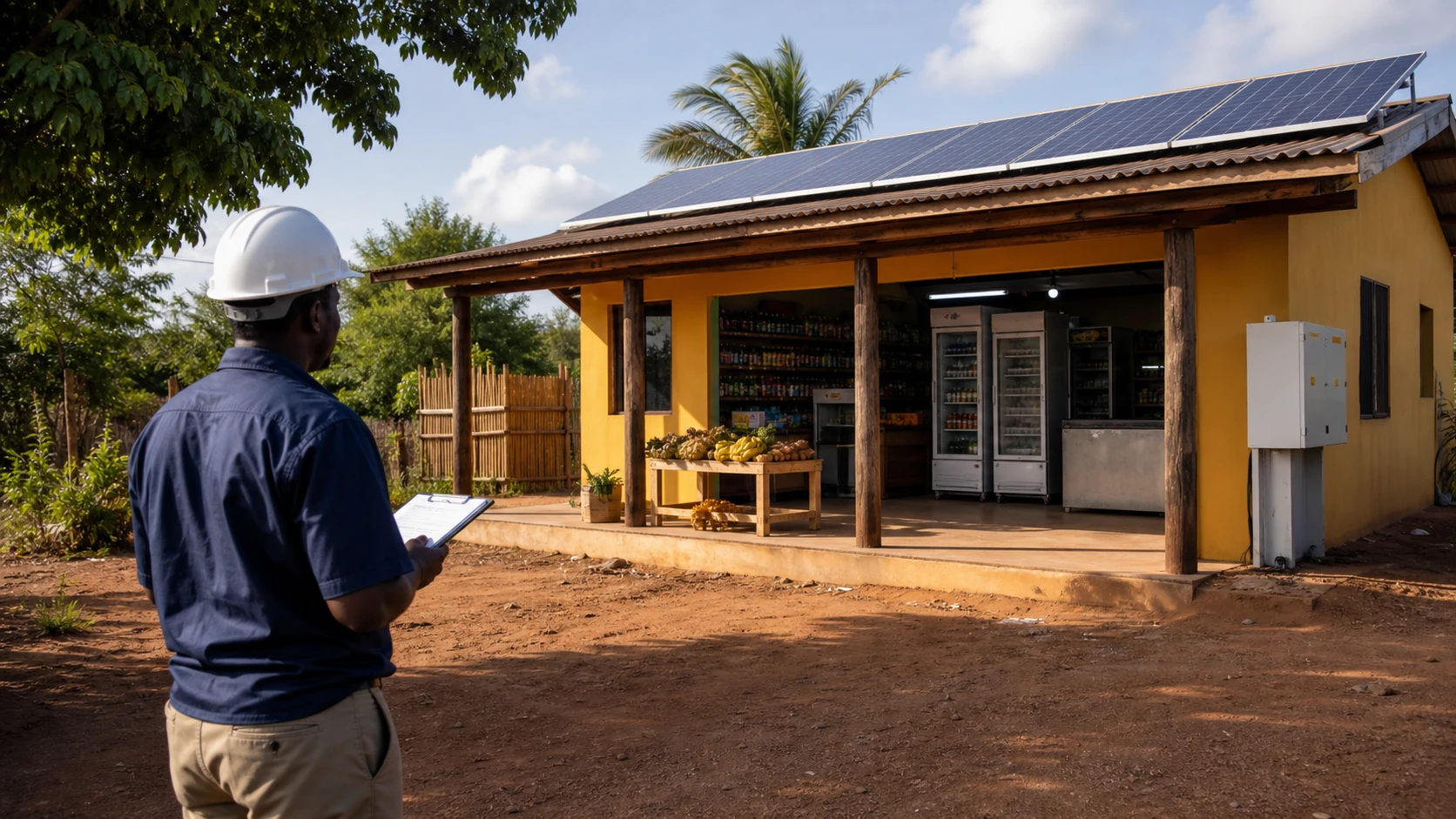
Before requesting a solar study for a convenience store, the crucial step is to gather the information that will enable a qualified engineering firm to properly evaluate the project. Without this data, no sizing calculations can be considered reliable.
A convenience store has specific energy-related characteristics: refrigerated display cases, extended lighting hours, air conditioning in the sales area, a cash register, and sometimes a cold storage room. Each piece of equipment has its own power consumption, operating time, and hourly usage profile. It is the combination of these parameters—not a general estimate—that forms the basis of a thorough analysis.
In practical terms, the manager must prepare several items before taking any action:
- Detailed Inventory of Equipment at their rated power.
- Hours of Operation actual loads, including those that operate continuously (cooling, alarm).
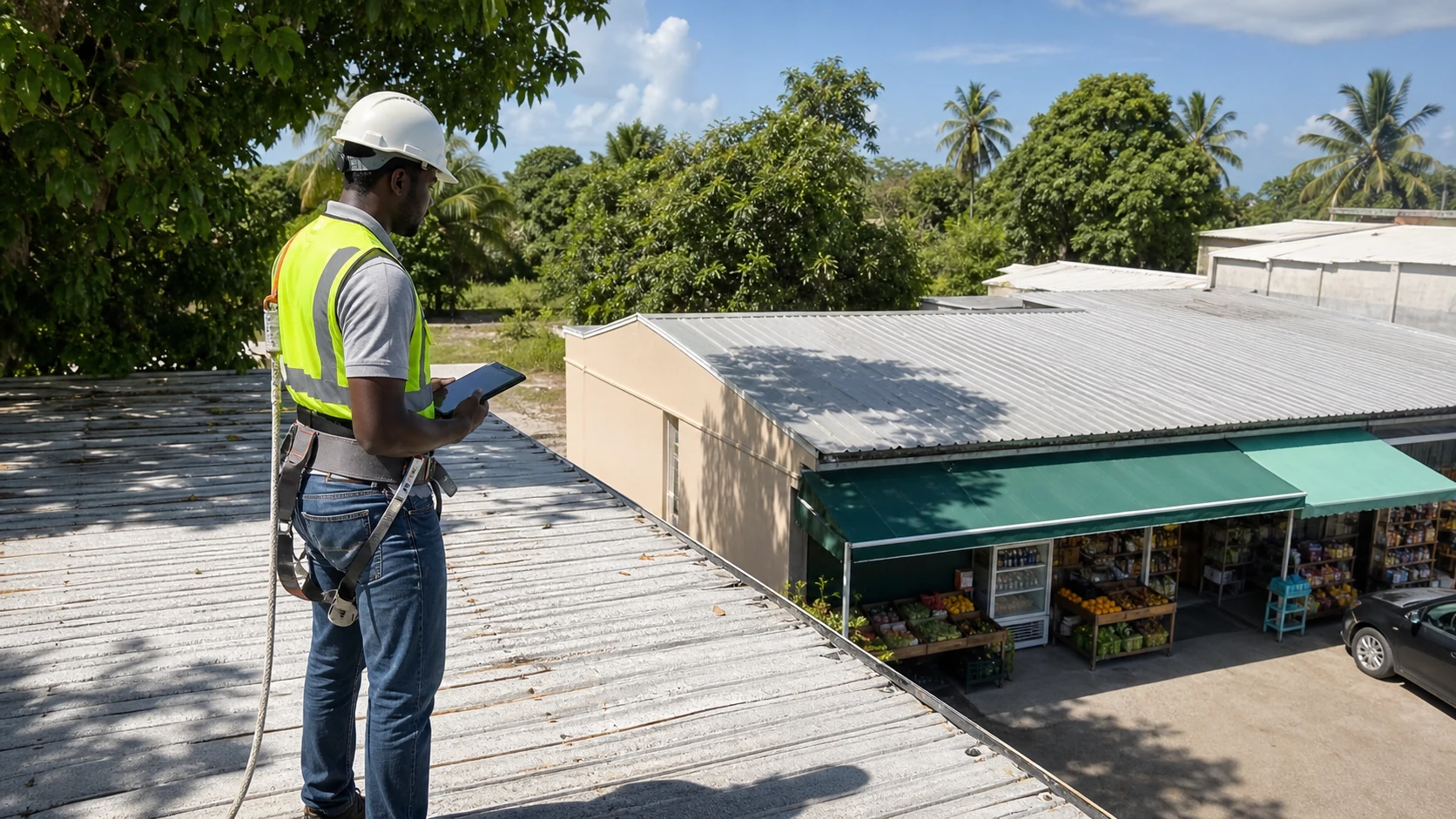
- Site Constraints : available roof area, orientation, potential shading, condition of the structure.
- Nutrition Priorities : What equipment does the operator consider critical?
This information serves as the input that a professional then evaluates to recommend a suitable configuration. To better understand the steps involved in this process, see Our Solutions.
Solar Power for a Convenience Store: Ask the Right Questions Before Sizing the System
Before considering a solar installation for a convenience store, the priority is to accurately assess the store’s energy needs and the actual conditions at the site. Without this step, any sizing calculations are likely to be inaccurate.
Track Your Actual Usage
Start by asking yourself specific questions about your farm:
- Which pieces of equipment operate according to your hours of operation, and which ones run continuously? Identify each power-consuming component—display cases, lighting, cash registers, air conditioning—and note its actual operating hours.
- Do you have any recent usage records (bills, meter readings)? This data is essential for quantifying actual needs rather than relying on general estimates.
- What equipment is critical to your business in the event of a power outage? Document any disruptions observed at your site and their impact on your inventory and revenue.
Examine the site constraints
Several local factors influence the feasibility and choice of configuration:
- How much roof or floor space is actually available and unobstructed? Check the orientation, shading, and condition of the supporting structure.
- Are there any zoning or condominium rules at your site that govern the installation of signs? Check with the relevant authorities before taking any technical steps.
- How often do you clean or inspect your current outdoor equipment? Future maintenance of the panels will depend on the environmental conditions specific to your location.
These answers form the basis for a solar system sizing request tailored to your convenience store.
Method: Determine the needs of a convenience store before sizing the solar system
A successful solar project for a convenience store depends on thorough preparatory work. Before requesting a design, gather the data that will enable any service provider to propose a solution tailored to your business needs.
Step 1 — Compile a complete inventory of electrical equipment
List every piece of equipment in the convenience store: refrigerated display cases, freezers, interior and exterior lighting, cash register, payment terminal, ventilation or air conditioning, and illuminated sign. For each piece of equipment, note the rated power (in watts) listed on the nameplate and estimate the daily operating time. This data forms the basis for all energy consumption calculations.
Step 2 — Identify Critical Time Slots
A convenience store does not have a linear consumption pattern. The cold chain operates 24 hours a day, while lighting and air conditioning operate during business hours. Clearly distinguish between continuous loads and intermittent loads: this distinction directly influences the choice between a system with or without battery storage.
Step 3 — Identify Site Constraints
Take photos of the roof or the space available for the panels, note its orientation, and identify any shadows cast by neighboring buildings, trees, or utility poles. Also check the quality of the connection to the existing power grid: frequency of outages, observed voltages, and the presence of a backup generator. This information will guide the system design.
Step 4 — Gather the necessary documents
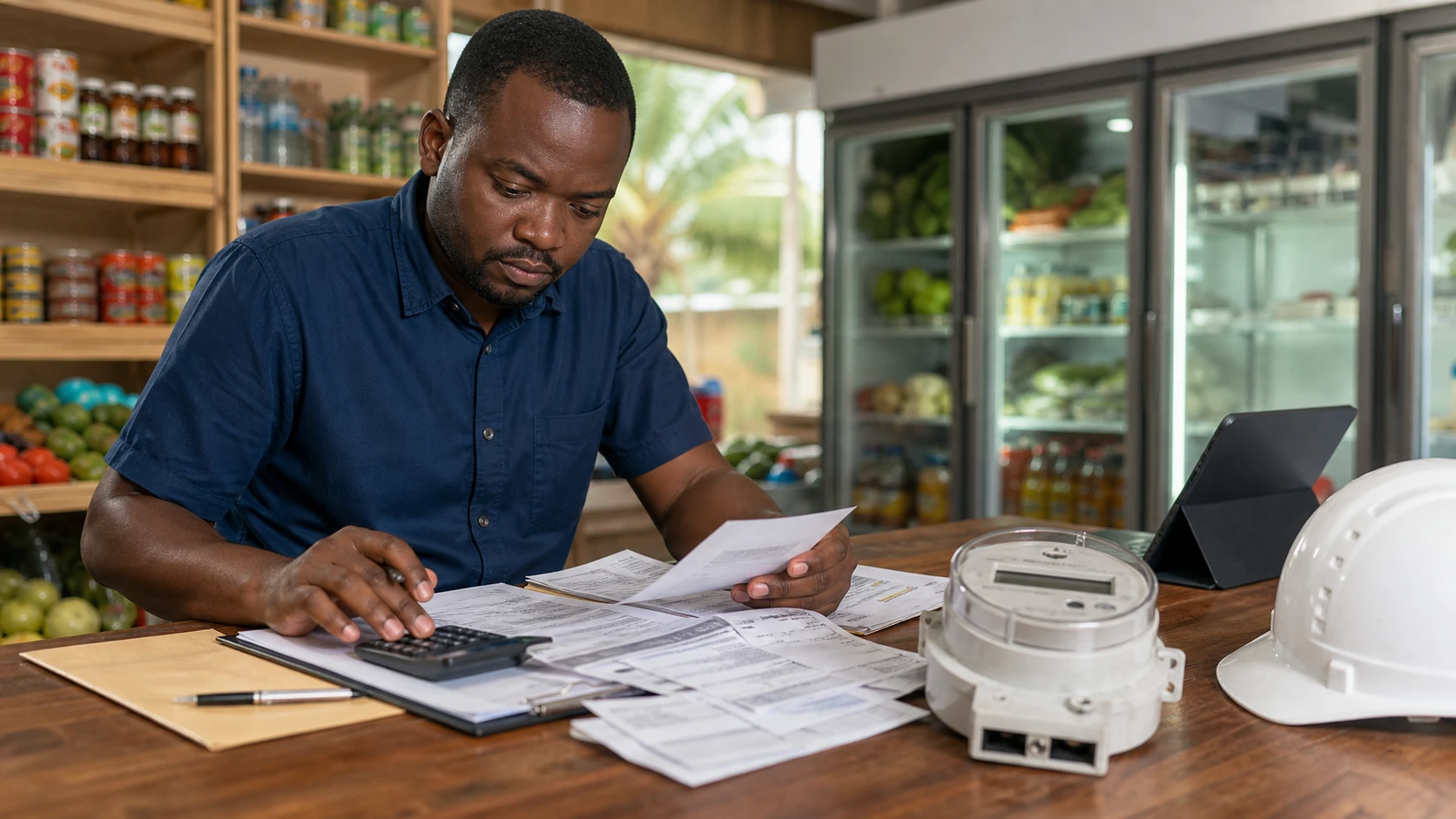
Gather your electricity bills from the past six to twelve months, as well as any usage reports for the generator (liters of fuel). To find out exactly which documents to prepare, see our dedicated guide: Solar System Assessment: What Information Should You Gather Before Requesting a Quote?.
Step 5 — Set Your Priorities
Are your primary goals to maintain the cold chain during power outages, reduce your reliance on a generator, or cover your entire power consumption? Prioritizing your objectives will help you choose the solution that best fits your business needs.
Technical data to gather before conducting a solar energy study for a convenience store
A successful solar project for a convenience store relies on site-specific data. Before requesting a sizing study, it is helpful to gather the information that the technical study will use.
Equipment Inventory
List every commercially available electrical appliance:
- Display cases and walk-in coolers (rated capacity, daily operating time).
- Interior lighting and exterior signage.
- Air conditioning or ventilation.
- Cash register, payment terminal, video surveillance system.
For each piece of equipment, note the power rating listed on the nameplate and the actual hours of use. These readings can be used to estimate a daily energy consumption profile.
Operating Hours and Load Profile
A convenience store may operate from 7 a.m. to 10 p.m., or even around the clock for certain refrigerators. Specify the operating hours, which appliances remain active at night, and any seasonal variations. This operating profile is a key input for any photovoltaic design, since solar production follows a diurnal cycle that does not necessarily coincide with the entire demand curve.
Site Constraints
Document the available roof area or floor space, the building’s orientation, the presence of shadows (from trees or neighboring buildings), and the condition of the supporting structure. A site’s solar potential can be reassessed using map data, but this data serves as a preliminary assessment and does not replace an on-site technical inspection (Global Solar Atlas — User Guide).
Priorities to be clarified
Indicate whether your priority is to ensure uninterrupted power supply to specific locations, reduce dependence on the grid, or achieve another objective. These priorities guide the decisions that a qualified study must address: the proportion of storage, whether to use a hybrid or standalone connection, and the implementation sequence.
All of this data—inventory, hourly profile, physical constraints, and priorities—forms the basis that an engineering firm evaluates in order to propose a suitable configuration.
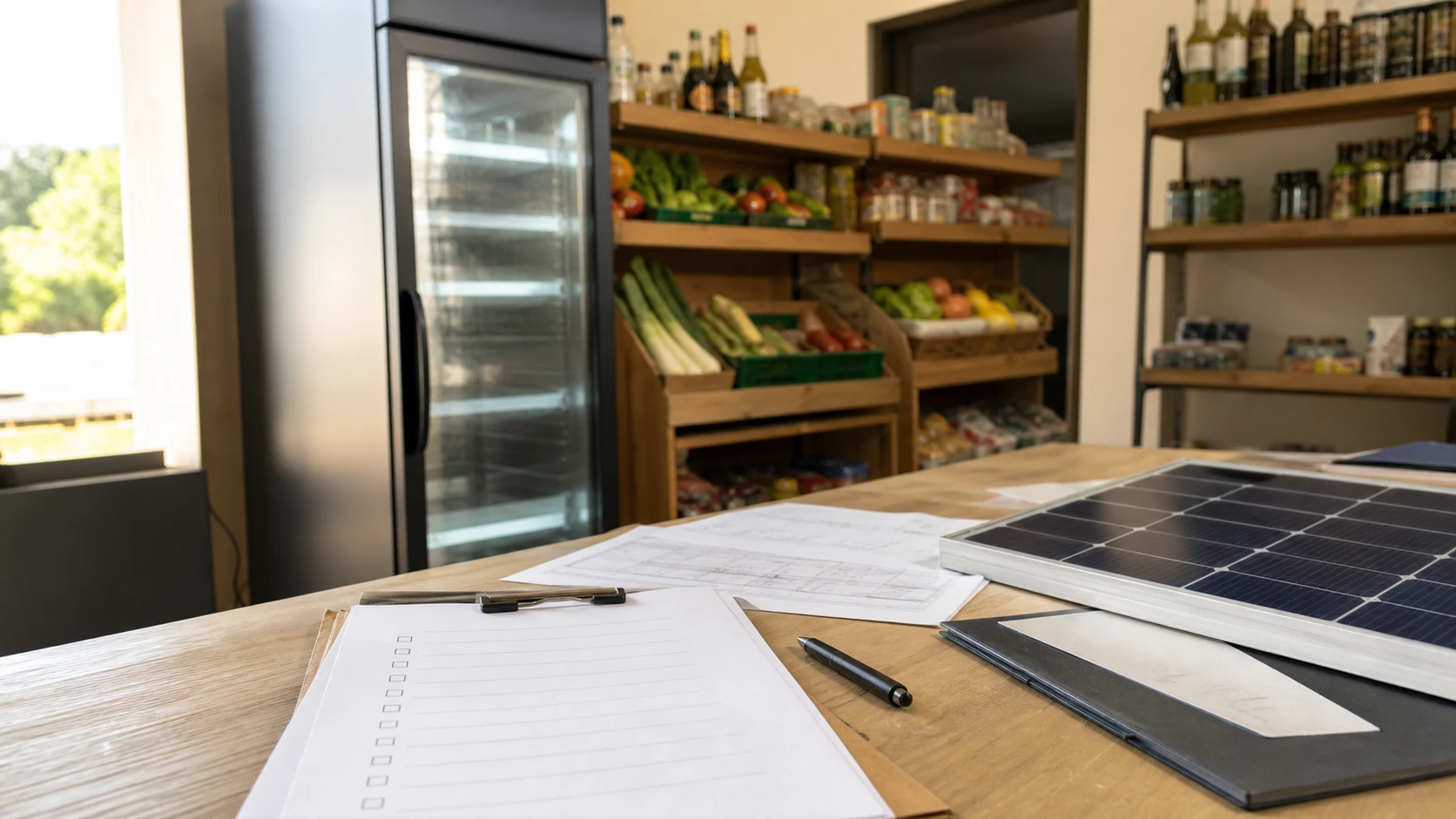
Comparison Checklist: Information to Prepare Based on the Type of Convenience Store
Not all convenience stores face the same constraints. The table below helps you compile the necessary data before commissioning a professional study. It is not a substitute for such a study: each parameter will be verified and evaluated by a professional based on the actual site.
| Criterion to be documented | Convenience store with commercial refrigeration (display cases, freezers) | Convenience store without a refrigerated section (dry goods) |
|---|---|---|
| Equipment Inventory | Number, type, and nameplate of each display case and walk-in freezer | Lighting, ventilation, cash register, and any small refrigerators |
| Operating Hours | Hours of operation for the public + continuous cooling operation (24 hours a day?) | During business hours only, with possible leftover food at night |
| Priority in the Event of a Network Outage | Is the cooling system the top priority to keep running? What is the maximum acceptable duration without power? | Which pieces of equipment should be given priority? |
| Roof or site constraints | Available space, orientation, type of roofing, access for maintenance | Same as above — often more flexibility if the roof area is unobstructed |
| Daily Consumption Profile | Peaks related to compressor startups, seasonal variations | Generally more consistent profile, but to be verified |
| Local Network Status | If the site experiences frequent outages, document their estimated frequency and duration | Same as above |
How to Use This Chart
Gather the data corresponding to your column before requesting a sizing study. An accurate inventory and documented time periods are the first factors that a small-scale solar study will evaluate in order to propose a configuration tailored to the site’s actual conditions.
Local Considerations for Your Convenience Store
Every commercial site has its own unique constraints that no standard sizing can account for. Before requesting a study, ask yourself—or ask your installer—the right questions.
Electrical System at Your Site
- Document any outages observed at your site : frequency, duration, and time frames. If your convenience store experiences power outages, this timeline will help you decide between a backup system and a storage system.
- Check whether your meter or contract allows you to feed power into the grid or imposes limits on output power.
Physical Environment
- Identify the sources of dirt specific to your location : proximity to an unpaved road, vegetation cover, seasonal humidity levels. Ask your installer what cleaning schedule would be appropriate for these conditions.
- Assess actual shading conditions : signs, nearby trees, adjacent buildings. An on-site survey is still essential.
Regulatory and Land Use Framework
- Check with the relevant local authority regarding the zoning or condominium regulations that apply to your roof.
- Check for any easements that could limit the usable area.
Operations Specific to Your Business
- Check which devices are operating according to your schedule : storefront lighting, air conditioning, electronic payment system. Distinguish between daytime and nighttime expenses.
To explore an uninterruptible power supply (UPS) solution suitable for a business office, visit the page Choose a solar power backup kit in Port-Gentil for your offices.
Take the next step in your convenience store solar project
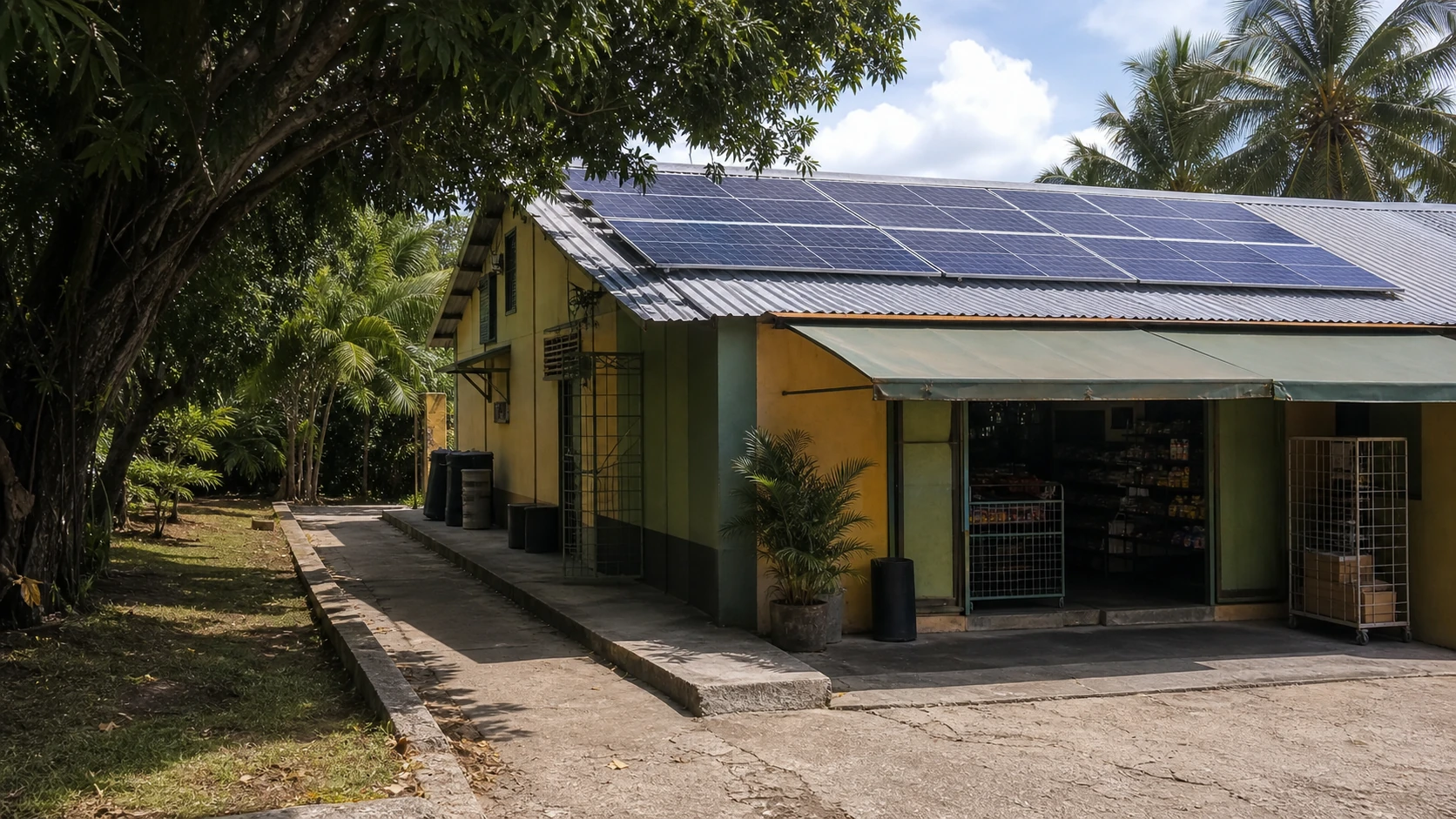
You now have a clear understanding of the information you need to gather before sizing a solar system for your convenience store: energy usage records, an inventory of critical equipment, roof or space constraints, and questions about the behavior of your current electrical grid.
The next concrete step involves compiling this data into a summary document and then forwarding it to a qualified professional for a feasibility study tailored to your site. An on-site assessment will determine whether your objectives—maintaining the cold chain, reducing reliance on a generator, and controlling energy costs—are achievable given your specific setup.
To get started, contact WOW2000 to discuss your project and work with us to determine the steps involved in an on-site technical assessment.
Publisher Transparency: This article is published by WOW2000, Organization, for informational and educational purposes. It is not a substitute for a technical site survey or the terms of an applicable contract. The publication and last-updated dates are automatically displayed by WordPress when the article is posted online.
Frequently Asked Questions — Solar Power for a Convenience Store
What information about my equipment should I gather before contacting an installer?
List every electrical appliance in your convenience store: refrigerated display cases, walk-in coolers, lighting, cash registers, and air conditioning. For each one, note the power rating indicated on the nameplate and the operating hours. This data forms the basis that any qualified engineering firm will use to assess your actual needs.
How should I describe my operating hours so that they are useful for the study?
Specify your hours of operation for the public, as well as the times when certain equipment remains on after closing. Check which devices operate according to your schedule and which run continuously. This distinction helps the installer differentiate between daytime and nighttime energy consumption.
What should I check regarding the roof or the available space?
Measure the usable area on the roof or on the ground. Identify potential obstacles: shadows cast by neighboring buildings, trees, and antennas. Also document the type of roof surface (metal, concrete, wood) and its overall condition. These physical constraints will guide the choice of mounting structure and the layout of the panels.
If my site experiences an outage, how do I report it?
Document the outages observed at your site: approximate frequency, typical duration, and times of day when they occur. Also note which equipment you consider a priority during these periods. This information allows the installer to assess whether a storage system should be included in the study.
Do we need to prepare any administrative documents before the study?
Gather your most recent electricity bills, the title deed or lease for the premises, and check with your local city hall or homeowners’ association to find out about any applicable zoning regulations. Each site may be subject to specific constraints that a technical study will take into account.