wow2000.com


How to Successfully Install Solar Panels in Akanda
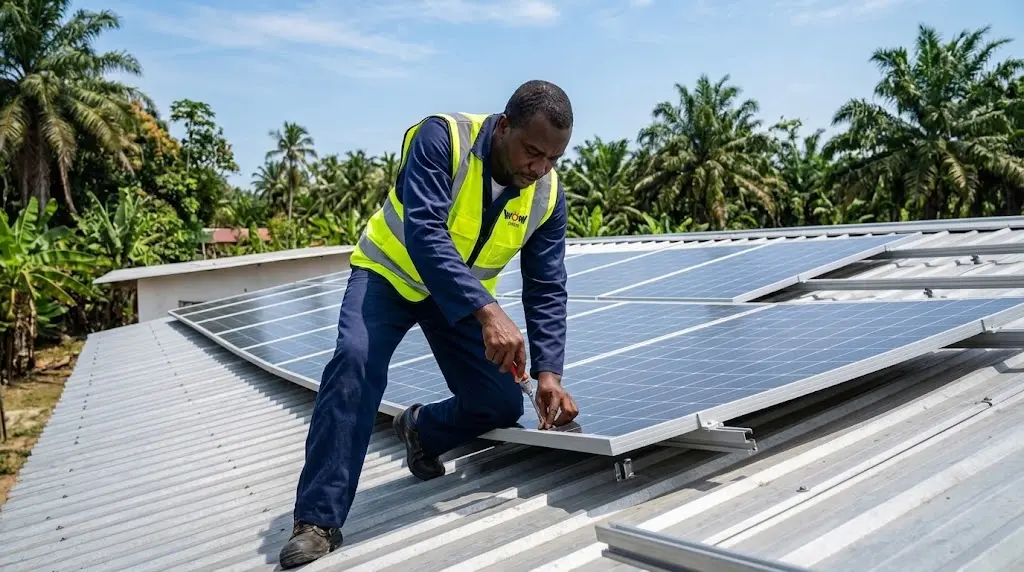
Installing solar panels on a roof is no small matter. The orientation of the modules, the cable gauge, the type of mounting hardware, and the inverter configuration—each of these factors directly influences the system’s actual power output and its long-term durability. In Akanda, local conditions—coastal topography, estuary winds, and a prolonged rainy season—create specific technical challenges that every installer must understand before beginning work.
This article provides a technical framework for understanding what distinguishes a successful installation from a subpar one—and what questions to ask an installer before entrusting them with your project.
To learn more about the categories of solutions offered by WOW2000, visit Our Solutions.
Preliminary site analysis—the step that many installers skip
Why Roof Orientation Affects Actual Energy Production
The roof orientation is the factor that most directly determines the daily energy production of the solar panels in Akanda. A panel facing due south in the Northern Hemisphere receives optimal solar radiation—but in Gabon, located slightly below the equator, the optimal orientation is due north. A roof facing east or west produces between 15 and 25% less than a properly oriented roof.
The tilt of the panels also affects energy production. For a location near the equator, such as Akanda, a tilt of 0 to 10 degrees is generally recommended—it maximizes the capture of zenithal radiation, which predominates in equatorial regions. Excessive tilt would reduce energy production while increasing the structural stress on the mounting system due to wind.
How to Estimate the Available Usable Roof Area on Your Roof in Akanda
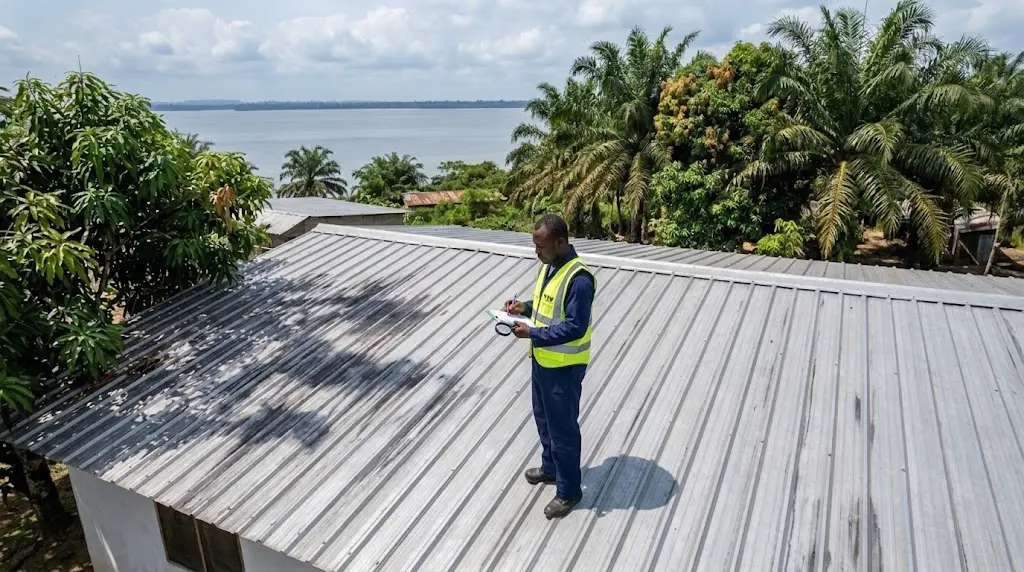
The usable area is not the same as the total roof area. Several factors reduce the usable area—the presence of a chimney, a rooftop air conditioner, an antenna, and areas shaded by trees or neighboring buildings. In Akanda, mature tropical trees—such as palm and mango trees—can cast shadows over significant portions of the roof at certain times of the day.
Partial shading has a particularly detrimental effect on solar power generation. In a series-connected panel array, a single partially shaded panel can reduce the output of the entire string. Accurately assessing shading at different times of the day and throughout the seasons is an essential step in the preliminary analysis.
Technical constraints specific to Akanda
Estuary winds—a critical control parameter
Akanda is exposed to winds from the Gabon Estuary—winds that can reach significant speeds during weather disturbances. These winds exert uplift forces on the panels that can cause inadequately sized fasteners to fail.
The mounting systems must be designed based on the maximum wind speed observed in Akanda. The IEC 61215 standard—which covers the mechanical strength of photovoltaic modules—includes static and dynamic load tests. An IEC 61215-certified panel has demonstrated its ability to withstand these stresses under standardized conditions. This certification must be verified in the manufacturer’s technical data sheet before any installation in Akanda.
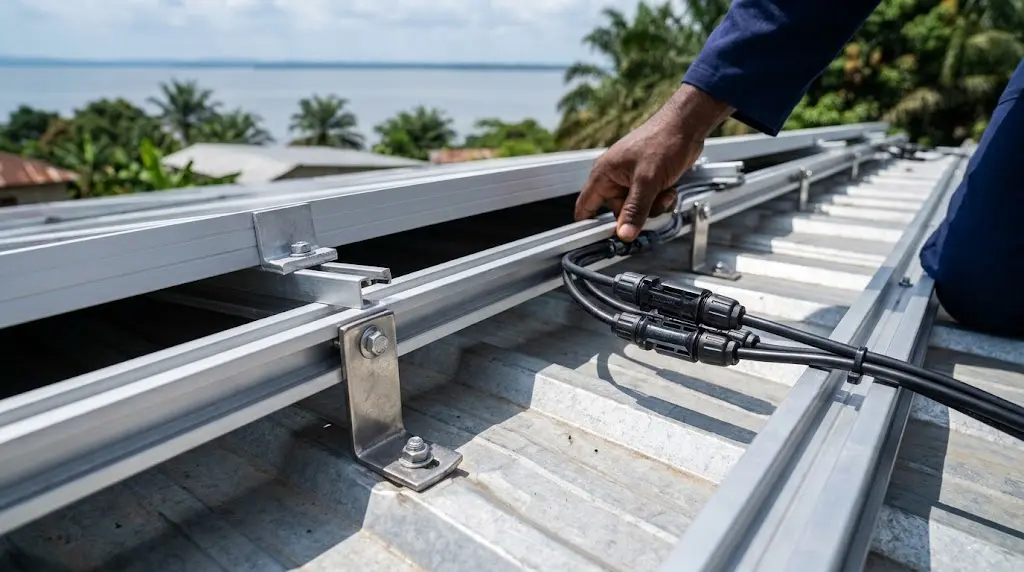
The fasteners themselves—aluminum rails, brackets, bolts—must be made of anodized aluminum or stainless steel to withstand corrosion caused by the estuary’s salty humidity. Untreated steel fasteners corrode within a few months in this environment.
Estuarine Humidity—Its Impact on Electrical Connections
Akanda’s high humidity and salty atmosphere accelerate corrosion of exposed electrical connections. MC4 connectors—standard in photovoltaic installations—must be certified to IP67 or IP68 standards to ensure adequate waterproofing under these conditions.
A corroded connection has electrical resistance that generates heat when current flows through it—a phenomenon known as a «hot spot.» This phenomenon can damage the panel and, in extreme cases, pose a fire hazard. Periodic inspection of electrical connections is particularly important in Akanda due to the local climate.
Electrical Wiring and Safety Features — What Protects Your Investment
Cable Cross-Section — A Technical Calculation That Should Not Be Overlooked
The cross-sectional area of the cables connecting the panels to the inverter must be calculated based on the maximum current and the length of the electrical path. A cable with an insufficient cross-sectional area has too high an electrical resistance—which results in energy losses in the form of heat and may pose a risk of overheating.
The formula for calculating the minimum cross-sectional area is as follows: cross-sectional area (mm²) = maximum current (A) × round-trip length (m) × resistivity of copper (0.0175 Ω·mm²/m) ÷ maximum allowable voltage drop (generally 3% of the nominal voltage).
For a standard installation in Akanda with rooftop panels and an indoor inverter, the cable length can easily reach 15 to 25 meters round trip—which requires a minimum cross-sectional area of 4 to 6 mm², depending on the system’s power rating. A 2.5 mm² cable installed under these conditions is undersized.
Essential Electrical Safety Measures
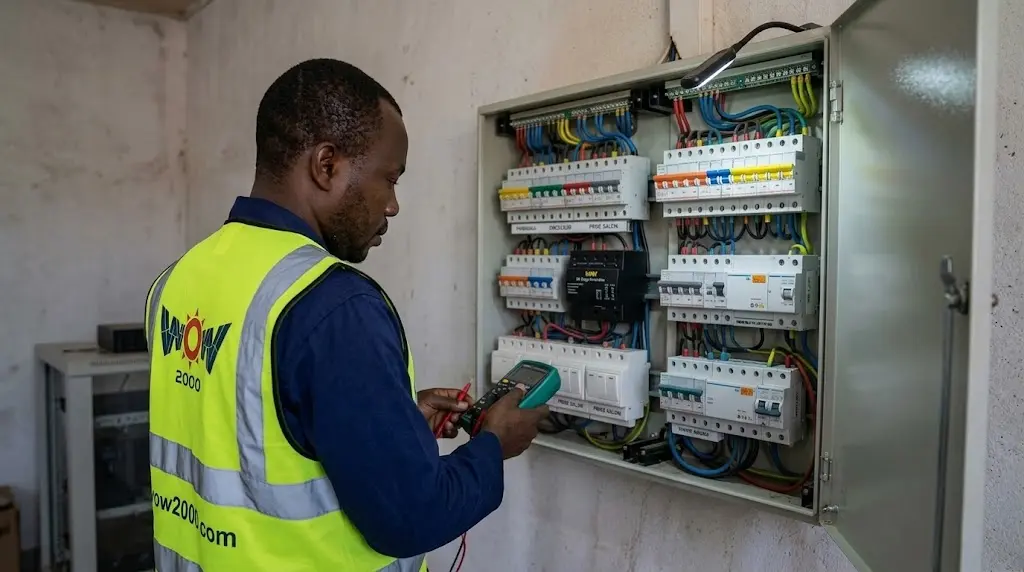
Three types of protective measures are essential for any solar installation in Akanda.
The surge protector on the panel side protects the system from lightning-induced power surges—a significant risk in the Akanda coastal area during the rainy season. It must be rated for the maximum voltage of the solar array.
The DC circuit breaker between the panels and the inverter allows the circuit to be shut off during maintenance work without any electrical risk. Photovoltaic panels generate electricity as soon as they are exposed to light—even diffused light—and cannot be turned off like a light switch.
The AC circuit breaker at the inverter output protects the home's internal electrical system from overcurrent caused by the solar system.
What to Check Before Signing a Contract with an Installer in Akanda
Before entrusting your installation to a service provider in Akanda, these questions will help you objectively assess their technical expertise—beyond mere sales pitches.
Technical Questions to Ask About Installation
| Question to Ask | What the Answer Reveals |
|---|---|
| What is the specified cross-sectional area of the DC cables, and how was it calculated? | A professional installer provides a value in mm² and explains the calculation. A vague answer indicates a lack of method. |
| What kind of fasteners do you use, and are they suitable for the winds in the Akanda Estuary? | The material—anodized aluminum or stainless steel—and wind resistance must be specified. |
| Are the connectors certified to at least IP67 for exposure to moisture? | Essential given the estuary's climate conditions. |
| Does the proposal include a surge protector on the panel side? | Its absence from a quote in Akanda is a red flag. |
| How do you handle partial shading if trees cast shadows on part of the roof? | A qualified installer will recommend optimizers or appropriate cabling. |
| Is the roof's waterproofing guaranteed after installation—and in writing? | The rainy season in Akanda is a real test of the quality of the mounts. |
Documents to Request Before Commissioning
A reputable installer must be able to provide, upon completion of the work, an electrical diagram of the system showing the actual measured values—voltage and current for each string of panels, the inverter’s output voltage, and the grounding value. These measurements serve as the system’s operational baseline—they make it possible to detect any deterioration during subsequent inspections.
As the’IEA PVPS Task 13, commissioning documentation is an essential step in ensuring performance traceability and facilitating long-term maintenance.
The Most Common Installation Errors in Akanda and Their Consequences
Incorrect panel tilt
Panels installed at an angle that is too steep for Akanda’s latitude produce less energy than estimated during the design phase. The loss can range from 10 to 20%, depending on how far the tilt deviates from the optimal angle. This error is irreversible if the mounts were installed rigidly—it can only be corrected by completely redoing the mounting system.
Under-sized wiring
Undersized wiring results in constant heat loss—each kilowatt-hour generated by the panels is partially dissipated as heat in the cables before reaching the inverter. These losses reduce the system’s overall efficiency over its entire lifespan.
A lack of grounding
Grounding metal components—panel frames, mounting rails, and the inverter enclosure—is a fundamental safety measure. Without proper grounding, an insulation failure can make the system’s metal structures dangerous to touch. This safety measure is often missing from installations carried out by electricians in Akanda who are not specialized in photovoltaics.
What You Need to Prepare to Get Started on Your Relocation Project to Akanda
Before contacting an installer, gathering this information will help ensure that you can have a detailed technical discussion—and get a quote tailored to your actual setup.
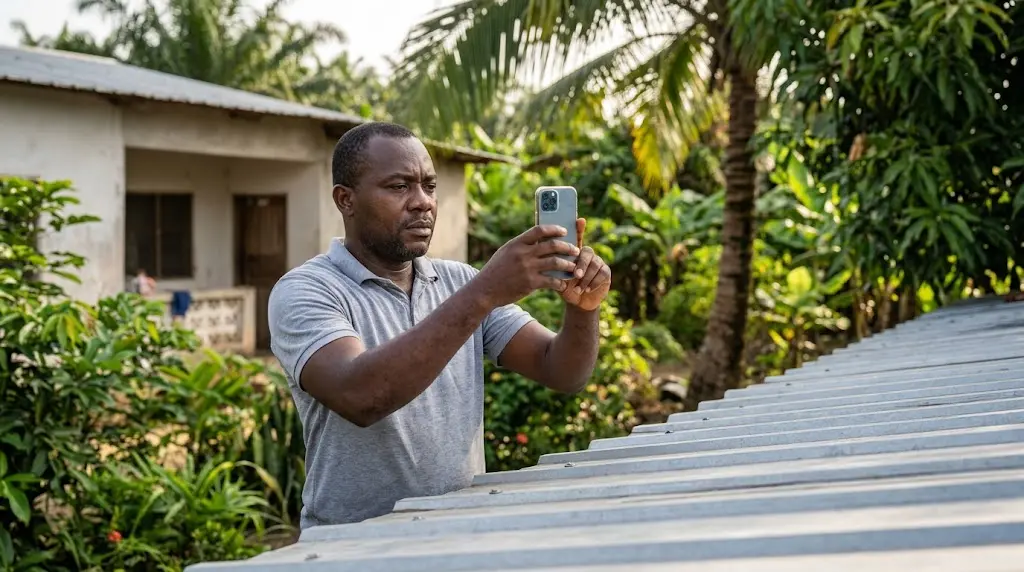
- Photos of your roof from various angles—front view, side view, and interior view if accessible—to assess the condition of the roof structure and roofing.
- The approximate orientation of your roof — the direction in which the main slope faces.
- The list of nearby trees and obstacles that are likely to cast a shadow on the roof at certain times of the day.
- Your most recent SEEG bill along with monthly consumption in kWh.
- The list of your priority devices along with their rated power in watts.
To prepare your complete application, see our article on How to Get a Free Quote for Solar Power for Your Home in Gabon.
You can contact the team via WhatsApp or via the page Contact Us.
Publisher Disclosure: This article is published by WOW2000 for general informational purposes. The technical specifications provided—cable cross-sections, inclinations, certifications—are general guidelines. The actual values for a specific installation in Akanda depend on the site characteristics, the selected equipment, and the installation conditions. Only an on-site technical study can determine the exact parameters.
Frequently Asked Questions — Solar Panel Installation in Akanda
What angle should solar panels be set at in Akanda?
For a location near the equator, such as Akanda, a tilt angle of 0 to 10 degrees is generally recommended to maximize the capture of zenithal radiation. The exact tilt angle depends on the roof’s orientation and mounting constraints. It is determined during the on-site technical inspection—applying a standard value without prior analysis can reduce energy production by 10 to 20%.
Why must fasteners at Akanda be made of anodized aluminum or stainless steel?
The salty atmosphere caused by the proximity of the Gabon Estuary accelerates the corrosion of untreated metals. Standard steel fasteners can corrode within a few months in this environment—posing a risk that the panels could become detached during windy conditions. Anodized aluminum and stainless steel resist this corrosion throughout the system’s service life.
Does partial shading on one panel affect the entire system?
Yes, in a system of panels wired in series. A single partially shaded panel can reduce the output of the entire string to which it belongs. Technical solutions—power optimizers, microinverters—can help limit this impact. Accurate assessment of shading at Akanda is therefore an essential step in the preliminary analysis.
Why is a lightning arrester particularly important in Akanda?
Akanda is a coastal area prone to tropical storms during the rainy season. Lightning can cause power surges in the panel cables—even without a direct strike. A surge protector rated for the voltage of the solar array protects the inverter and connected equipment from these surges.
How can I check to see if my system is properly grounded?
The ground connection can be verified using an insulation tester or a megohmmeter. The installer must measure the grounding resistance upon completion of the work and report the measured value. A grounding resistance of less than 5 ohms is generally considered satisfactory for a residential installation.