wow2000.com


How to Choose an Off-Grid Residential Solar Kit in Gabon?
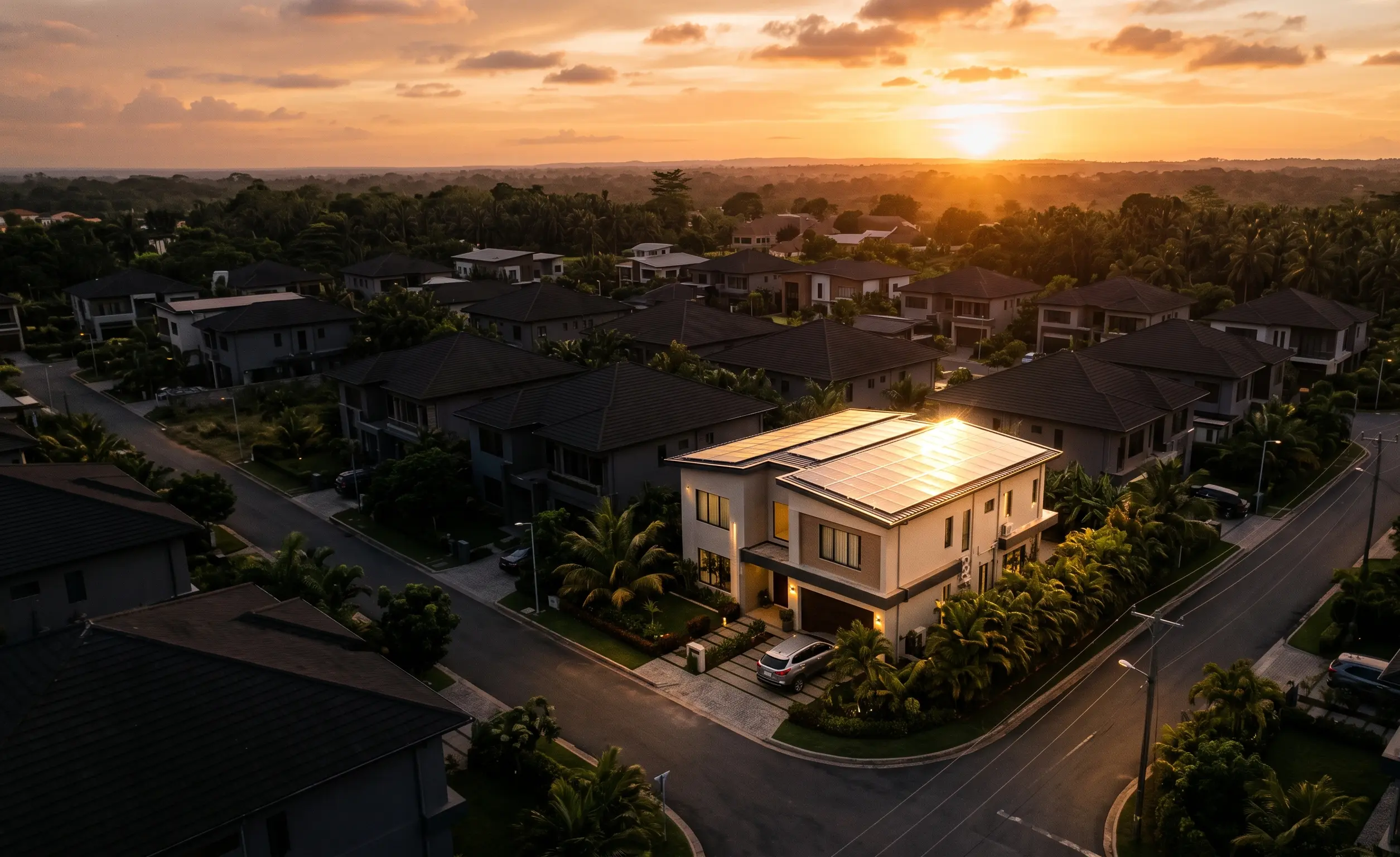
Choosing an off-grid residential solar kit in Gabon requires evaluating several technical factors before making a purchase. The wide variety of options available on the market—components, power ratings, and storage technologies—makes this decision complex without a proper framework for consideration. This article offers a method for identifying the essential criteria, understanding the role of each component, and gathering the necessary information before requesting a technical assessment.
To learn more about the categories of solutions offered by WOW2000, visit Our Solutions.
Understanding What a Stand-Alone Residential Solar Kit Is
Before comparing the available options, it’s helpful to clarify exactly what the term “off-grid residential solar kit” means in Gabon.
Definition and Scope
An off-grid residential solar kit is a set of components designed to generate, store, and distribute electricity in a home without relying on the external power grid. It differs from a grid-connected system in its ability to operate completely independently—including during power outages or in areas not served by the SEEG grid.
The components of a standalone kit
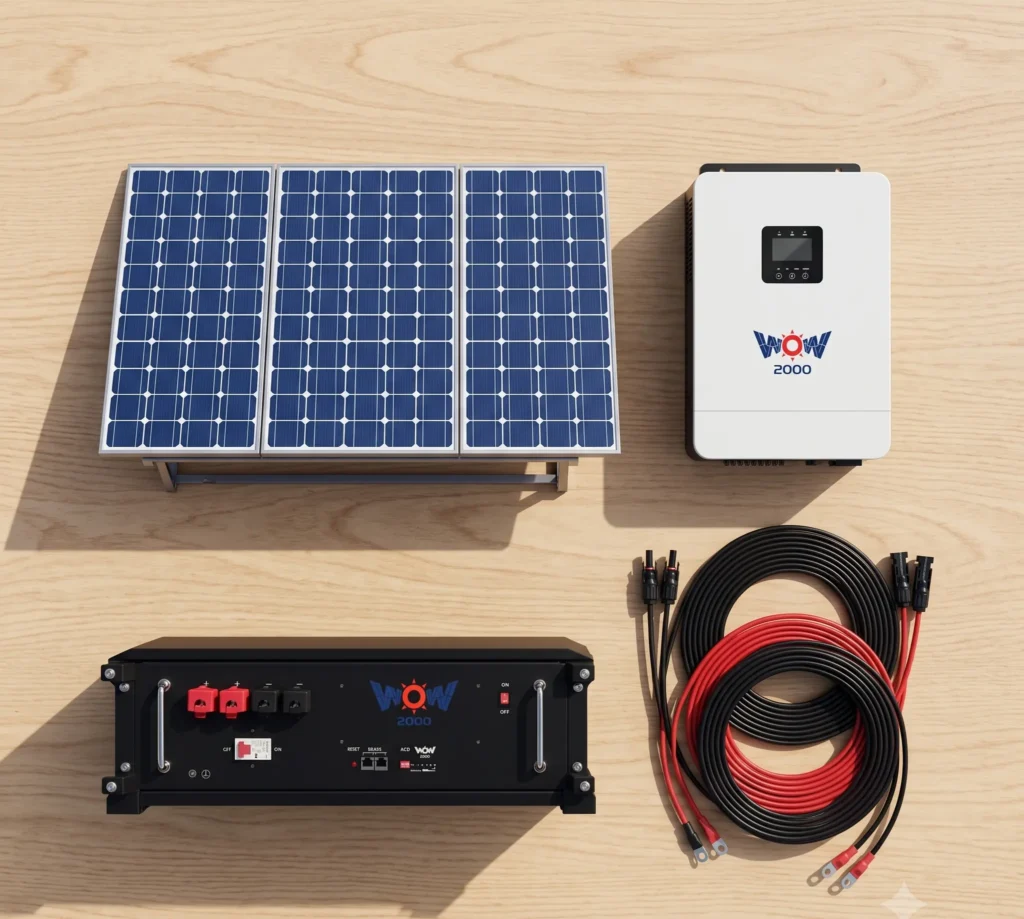
A complete off-grid residential solar kit typically consists of four main components that work together:
Solar Panels capture solar radiation and convert it into direct current. Their rated power, expressed in peak watts (Wp), determines the amount of energy produced under standard conditions.
The Inverter converts the direct current produced by the panels into alternating current that can be used by household appliances. In a stand-alone system, the inverter typically includes a charge controller that manages battery charging.
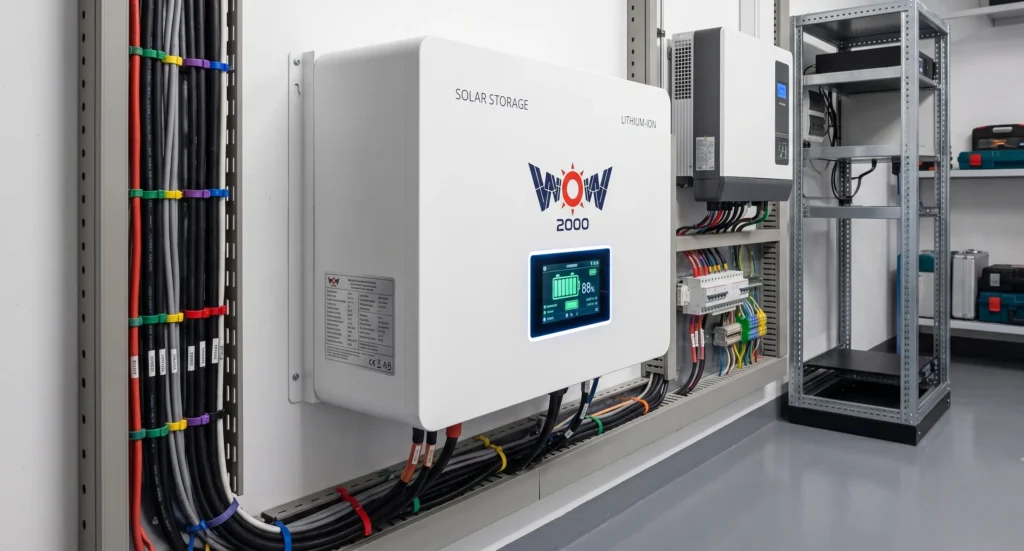
Batteries store the energy generated during daylight hours to release it at night or during cloudy periods. The storage capacity, measured in kilowatt-hours (kWh), determines the system’s runtime.
Wiring and Electrical Protections They connect the components and protect the system against power surges, short circuits, and overcurrent.
Key Criteria for Choosing a Kit
Assess Your Actual Energy Needs
The first factor to consider when choosing an off-grid residential solar kit in Gabon is the power output needed to meet your actual needs. This assessment is based on an inventory of your electrical appliances and their daily usage times.
For each appliance, note its rated power in watts—listed on the label or in the technical specifications—and estimate the number of hours it is used per day. The sum of these individual energy consumption figures gives you an estimate of your total daily energy consumption, expressed in watt-hours (Wh) or kilowatt-hours (kWh).
This calculation serves as the starting point for the system sizing. It is then refined during an on-site technical assessment that takes into account local sunlight levels, the orientation of the panels, and system losses.
Choosing the Right Storage Technology
The choice of battery technology directly affects the kit's long-term durability and performance.
Lead-acid batteries have a lower purchase price. However, their service life is shorter in tropical climates, where high temperatures accelerate their degradation. Their recommended maximum discharge depth is also lower.
Lithium Batteries offer a longer cycle life and a deeper discharge depth. Their temperature behavior is better suited to Gabon’s tropical conditions. For more information on this topic, see our article on the’Residential solar power with a lithium battery in Gabon.
Check Component Compatibility
An efficient off-grid residential solar kit depends on the technical compatibility of its components. An inverter, solar panels, and batteries from different manufacturers can work together, provided that their technical specifications—such as voltages, currents, and communication protocols—are compatible.
It is recommended that you check for compatibility in the technical documentation for each component before making a purchase, or have a qualified installer perform this check.
Prepare Your Application Before Choosing a Kit
Before contacting an installer or comparing quotes, a structured assessment of your needs makes it easier to evaluate your options and helps ensure you receive a proposal tailored to your specific situation.
| Item to be documented | What You Need to Know |
|---|---|
| Priority Devices | List each appliance along with its power rating in watts, as indicated on the label. Distinguish between essential appliances and convenience appliances. |
| Service Life | Estimate the number of hours each appliance is used each day. Multiply that number by the power rating to calculate the daily energy consumption in Wh. |
| Air Conditioning | Air conditioning often accounts for 40 to 60% of a household’s energy consumption. Note the power rating of each air conditioner and how often it is used. |
| Desired range | Decide how long you want to be self-sufficient without sunlight—one night, two nights. This duration directly determines the battery capacity. |
| Available space | Estimate the available roof area or outdoor space. A standard panel covers approximately 1.7 m² of area. |
| Orientation and Shading | Note the approximate orientation of your roof and identify any nearby obstacles—such as trees or buildings—that might cast shadows on the panels. |
| Electrical Panel | Check to see if your electrical panel is new and accessible. An outdated panel may need to be upgraded before installation. |
| Power Outages Observed | Keep track of the frequency and typical duration of power outages in your neighborhood. This information will help you determine the appropriate storage capacity. |
How to Use This Table
Fill in each line with the information available for your household. This information allows a qualified technician to recommend a kit tailored to your actual situation—without over- or under-sizing it. The more accurate your information is, the more relevant the proposed solution will be.

Considerations Specific to the Gabonese Context
Each site has its own unique characteristics that influence the sizing and performance of an off-grid residential solar kit in Gabon.
If you use air conditioners, their energy consumption often accounts for the largest share of a household’s energy demand. Including air conditioners in the scope of an off-grid system requires significantly larger solar panels and storage capacity. For more information on this topic, see our article on How to Power an Air Conditioner with Solar Energy in Gabon.
If your neighborhood experiences frequent and prolonged power outages, the storage capacity must be sized to cover the typical duration of outages. A battery capable of providing six hours of backup power and one capable of providing twelve hours represent very different investments.
If your roof has shading issues, the actual power output of the panels will be lower than the theoretical values. Nearby trees or adjacent buildings may reduce the actual amount of sunlight reaching the modules at certain times of day.
As the’International Energy Agency — IEA PVPS Task 13, the performance evaluation of a photovoltaic system is based on data specific to each installation. No generic sizing method can guarantee identical results from one site to another.
Next step: Prepare your request for a study
To make concrete progress on your project, gather the information listed in the table above and send it to WOW2000 to initiate a no-obligation technical consultation. The goal is to determine whether an off-grid residential solar kit can meet your household’s specific needs, given the conditions at your site.
To learn more about equipment reliability, see also our article on How to Ensure a Reliable Residential Solar System in Gabon.
You can contact the team via WhatsApp or via the form on the page Contact Us.
Publisher Disclosure: This article is published by WOW2000 for general informational purposes only. It is not a substitute for an on-site technical study or the contractual terms applicable to a specific project. The actual performance of a solar system depends on parameters specific to each installation.
Frequently Asked Questions — Off-Grid Residential Solar Kit
What is the difference between an off-grid solar kit and a grid-connected solar kit?
An off-grid kit operates independently of the grid thanks to battery storage. A grid-connected kit feeds solar power into the home’s electrical system but shuts down in the event of a power outage if no battery is installed.
Can components be added to an existing kit?
Yes, provided that the existing inverter and wiring are compatible with the new components. A qualified technician must verify this before any additions are made.
Does a stand-alone kit work during the rainy season?
Yes, to some extent. Production decreases on overcast days but does not stop entirely. Storage capacity must account for days with little sunlight.
How can you estimate the lifespan of a standalone residential solar kit?
The panels have a lifespan of 25 to 30 years. The batteries have a lifespan measured in cycles—this varies depending on the technology and conditions of use. The inverter generally has a shorter lifespan than the panels.
Does a stand-alone kit require regular maintenance?
Minimal maintenance is recommended—cleaning the panels and periodically checking the connections. The installer should provide specific instructions during commissioning.